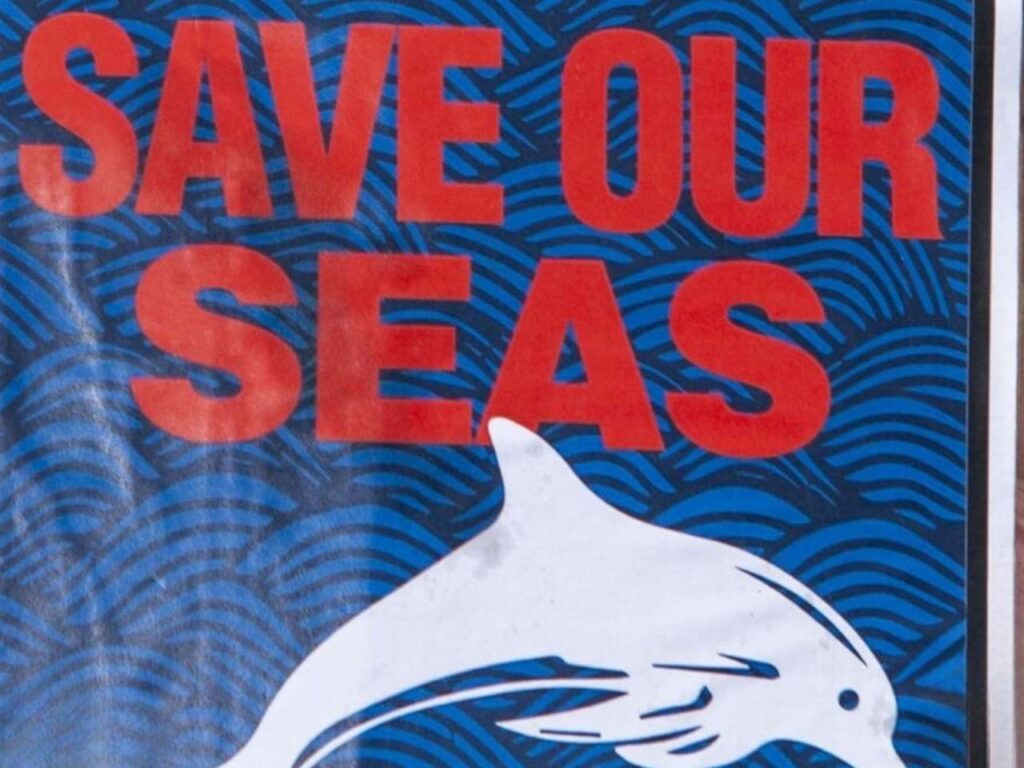
In a surprising but much welcomed announcement yesterday, government confirmed it will immediately halt all new oil and gas projects, focusing on climate change and redirecting investment into a bold and fully funded just transition which places household energy affordability and public transport at the centre.
“April Fools’!” says The Green Connection’s Advocacy Lead, Lisa Makaula. “While we wish that this was true for South Africans, the reality is, government still appears to present oil and gas in a way that overstates the benefits and understates the costs and risks, seemingly shaping national energy decisions in favour of profits for a few, over what’s good for the people. But for most South Africans, the consequences are no joke. Promises of cheaper fuel ignore the reality that prices are internationally determined, while a fuel pricing system riddled with regulatory gaps particularly around diesel continues to favour corporate interests and shift risk onto ordinary people.”
Unlike petrol, which has a strictly regulated retail price set by the Department of Mineral and Petroleum Resources (DMPR), diesel is a deregulated commercial product. The outdated assumption that diesel is an industrial product used primarily in construction, logistics, farming, and manufacturing, rather than a consumer necessity, ignores the fact that it is used to the transport people, food and other goods necessary for food security. This outdated regulatory distinction leaves consumers vulnerable to diesel price volatility and opportunistic pricing practices.
The Green Connection’s Outreach Ambassador, Neville van Rooy says, “This is exactly the case with TotalEnergies, where several media outlets reported on a communication to service station operators suggesting a phased diesel price increase ahead of 1 April 2026. These reports indicated increases of up to approximately R8 per litre in some instances. While according to further reports, TotalEnergies subsequently backtracked after opposition from the Fuel Retailers Association, in The Green Connection’s view this episode raises serious concerns about transparency, consumer protection, and the consequences of unregulated diesel retail pricing, during a period of extreme market volatility.”
While fuel station owners face rising wholesale costs, the suggestion to gradually hike prices early, could have forced consumers to absorb the shock of future increases, much earlier than needed. While the market should, in theory, self-regulate to remain competitive, when major wholesalers make such suggestions, it risks creating a price floor that punishes the working class.
“This is not an isolated incident,” says van Rooy. “The Green Connection has previously challenged the adequacy of public consultation processes in relation to offshore oil and gas projects involving TotalEnergies’. Viewed alongside the pre‑emptive diesel price hike, a clear pattern seems to emerge, that regulatory gaps can operate in ways that advance corporate interests, while communities are left to bear the social, environmental, and economic costs.”
Small-scale fisher from Port Nolloth, Walter Steenkamp says, “Unregulated diesel prices are a threat to the survival of small-scale fishing livelihoods. When fuel costs jump, a day of work at sea becomes unaffordable. The impact doesn’t stop with fishers it undermines food security and drives up transport costs for working families across our communities.”
Paraffin is another vital necessity, especially for low-income households, that is affected by international crude oil trends. Despite regulation through a Single Maximum National Retail Price, paraffin prices have risen sharply, disproportionately affecting households who lack access to affordable electricity.
One of the clearest examples of how the fuel pricing system serves corporate profits rather than the national interest is the operation of South Africa’s import-parity pricing framework, under which even locally produced fuels are priced with reference to international benchmarks. Under this framework, Sasol charges international prices for locally produced synthetic fuel, offering no relief to South Africans who are highly sensitive to fuel costs. A common misconception is that local production should mean cheaper fuel. However, under the Basic Fuel Price mechanism, fuel prices are calculated as though they were imported, including hypothetical costs for shipping and insurance.
“Offshore oil and gas exploration places a triple burden of economic, social, and environmental injustice on South Africa with small‑scale fishers and coastal communities paying the highest price. Environmental risks threaten the marine ecosystems that sustain livelihoods, while promised economic benefits often fail to materialise. Despite being sold as a solution to rising energy costs, any oil or gas discovered offshore would be priced in United States Dollars (USD) and sold at international market rates under existing trade frameworks. Domestic extraction therefore offers no protection against high prices, it deepens the Dollar trap, instead, allowing local resources to be extracted for global profit while South Africans remain exposed to geopolitical shocks they did not create,” adds Makaula.
According to The Green Connection, energy security is about justice, transparency and oversight not just supply. Yet government has failed to explain why diesel remains unregulated despite driving inflation, hurting small-scale fishers, farmers and public transport users, and raising food prices. South Africa needs a fuel pricing model that reduces dependence on volatile international markets, rather than seeming to protect corporate profits, while exposing households and small businesses to constant shocks.
According to van Rooy, “With the right support, South Africa could expand affordable renewable energy within a relatively short period lowering electricity costs, easing load-shedding, creating community-owned green jobs, and shifting transport to cleaner, cheaper energy. This transition would keep wealth local and place workers, coastal communities and historically marginalised people at the centre of energy decisions. As it is, 1 April is not going to be funny for most South Africans who will be hit very hard when the price of everything goes up, including electricity, food, transport already unaffordable to many. Recent temporary fuel-levy relief may soften the immediate impact but does not address the underlying structural issues in the fuel pricing system. Where is the energy justice we have been promised since 1994?”