Just more than a month into the new year and eco-justice organisations, The Green Connection, Natural Justice, and Masifundise are sounding alarm bells about yet another fossil fuel project application underway, warning of potentially severe environmental risks to marine biodiversity and serious socio-economic concerns for the coastal communities that depend on it.
After reviewing the Draft Scoping Report – for TotalEnergies EP South Africa’s (TEEPSA) proposed offshore oil and gas exploration drilling in the southern part of Block Deep-Water Orange Basin (DWOB), off the country’s West Coast – the eco-justice organisations also highlight the project’s impact on the country’s commitment to address the climate crisis and move toward a just energy transition.

The Green Connection’s Strategic Lead, Liziwe McDaid, emphasizes government’s responsibility to make informed decisions that serve the public interest. “If crucial data is missing – information essential for fair and sensible decision-making – then government must reject the reports and applications. Now more than ever, as the climate crisis worsens, energy poverty persists, and food insecurity grows, the risks associated with oil and gas exploration may simply be too high. South Africans, especially those who depend on the ocean for food, livelihoods, and their way of life, cannot afford to sacrifice vital marine ecosystems. We need government to recognise that the world is moving toward a new era of innovation and sustainable alternatives that do not compromise ecosystem health.”
The organisations say that TEEPSA’s argument, that the proposed project aligns with South Africa’s climate policies, is flawed. TEEPSA cannot ignore the full lifecycle of the project in its Environmental Impact Assessment (EIA) because exploration leads to production, which results in more oil and gas, and this means more carbon emissions and worsening climate change. Therefore, trying to separate exploration from production, to avoid climate scrutiny, is legally indefensible. The science is clear: fossil fuel extraction drives climate change, making this project neither necessary nor desirable under National Environmental Management Act 107 of 1998 (NEMA) principles.
David Mtshali from Natural Justice’s Defending Rights Programme says: “The Draft Scoping Report’s failure to identify oil and gas extraction activities as a factor to be assessed in the need and desirability evaluation, will result in an inadequate assessment of the proposed project’s overall need and desirability. This oversight will compromise the integrity of the environmental
assessment process and will result in non-compliance with the country’s laws and regulations on climate change and the environment in general.”
As part of the DWOB South project, TEEPSA plans to drill up to seven wells in an area spanning nearly 30,000 km² between Saldanha Bay and Kleinzee, with drilling depths reaching 3,900 metres. Experts warn that exploratory drilling at such depths carries a heightened risk of blowouts, raising concerns about South Africa’s ability to contain an oil spill of this magnitude.
McDaid warns, “This project, because it goes deeper, seems more dangerous and even riskier than the infamous Deepwater Horizon well, where a catastrophic oil spill has caused long-term harm to marine ecosystems and local coastal communities.”
Mtshali adds: “The continued pursuit of oil and gas as demonstrated by this proposed project, undermines the fundamental right of individuals to have the environment protected for the benefit of both current and future generations. Such projects are neither needed nor desirable, especially now when the world is facing a climate crisis.”

As the public participation process for this project unfolds, The Green Connection, Natural Justice, and Masifundise urge South Africans to hold decision-makers accountable. The future of the country’s energy system should not be dictated by corporate profits but by sustainable development that ensures economic and environmental justice for all.
“This is about our communities, our oceans, and our future,” say the organisations. “We cannot allow reckless fossil fuel expansion to rob the people of their rights and livelihoods, especially as life has already become harder, with the cost of living quickly becoming almost completely unaffordable for most.”
BENDING OVER BACKWARDS, DMRE GIVES KARPOWERSHIPS ANOTHER BREAK
30 September 2021 was supposed to be the commercial close – a date set by the Department of Mineral Resources and Energy (DMRE) – for bidders in the Risk Mitigation Independent Power Producers Procurement Programme (RMI4P).
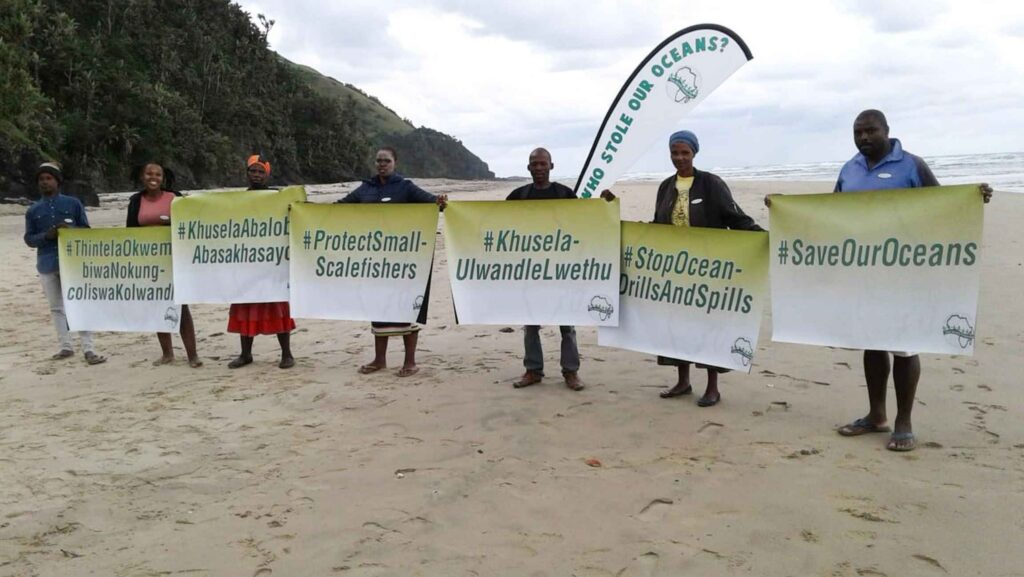
TOSACO EIA MET WITH PUSHBACK FROM CIVIL SOCIETY, TO PROTECT THE OCEAN AND SMALL-SCALE FISHER LIVELIHOODS
This week, The Green Connection submitted its comments critiquing several aspects of the Environmental Impact Assessment (EIA) process, particularly the lack of procedural fairness, as well as the conclusions reached – notwithstanding information gaps and scientific uncertainty – that should form part Tosaco Energy’s request to undertake various activities in Block 1, off the West Coast.
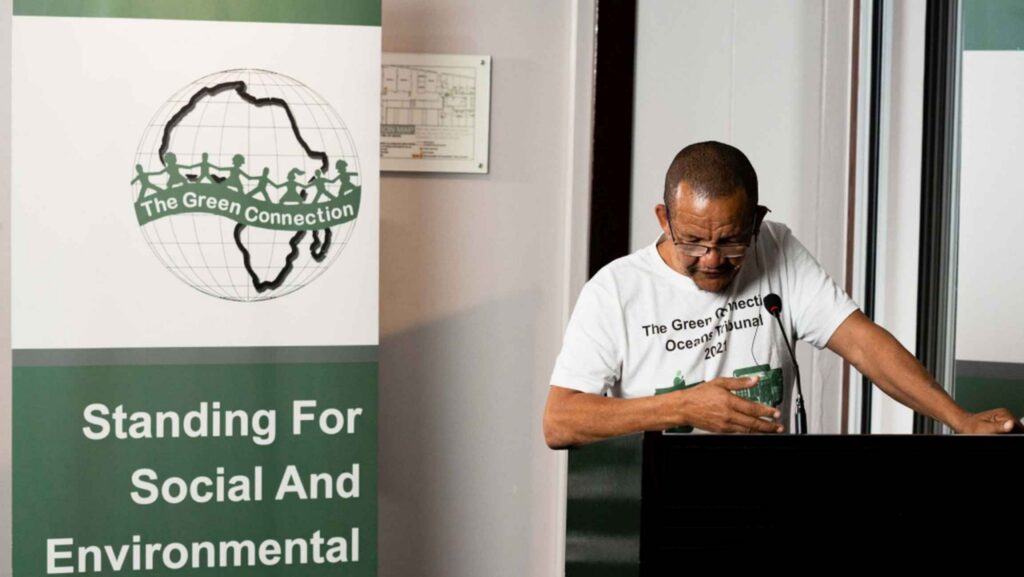
RECENTLY GRADUATED GREEN CONNECTORS, EQUIPPED FOR THE POLLS AND READY TO WEIGH-IN ON COP26
Following their recent graduation from The Green Connection’s Legacy Champions Programme, these newly empowered Green Connectors say they feel equipped with the necessary advocacy skills to make positive changes in their communities, starting with their vote in the local elections (1 November) and weighing in on the discussions around COP26 (which starts on 31 October) – as part of their efforts to oppose oil and gas developments in the country and offshore.
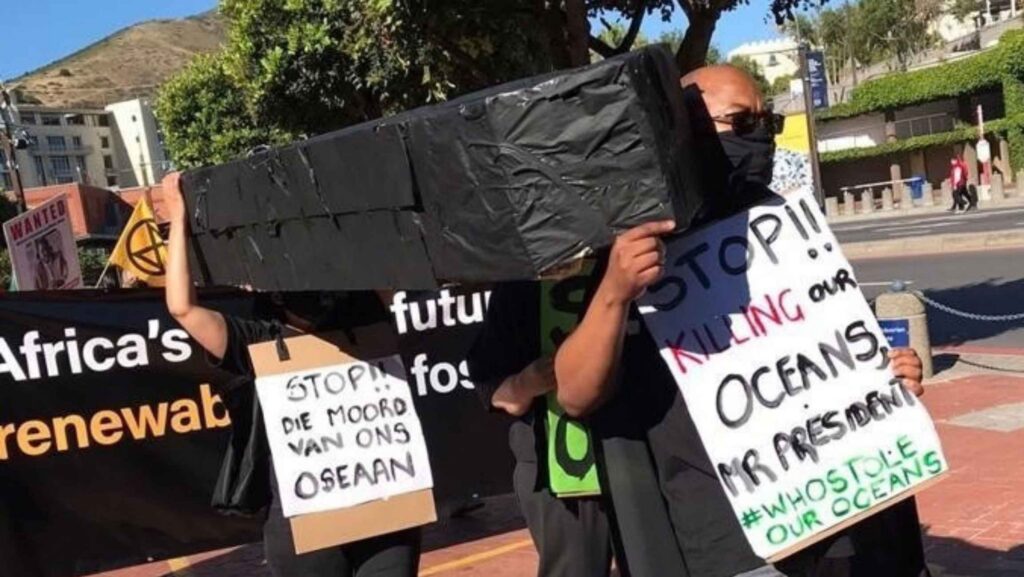
GREEN CONNECTION’S ‘FUNERAL FOR THE CLIMATE’ (AFRICAN ENERGY WEEK) AND COMMENT ON YESTERDAY’S BUDGET SPEECH
This week (10 November 2021), we joined other environmental defenders in Cape Town to peacefully demonstrate outside the African Energy Week #AEW2021 conference venue demanding an end to fossil fuels and the immediate pivot toward the just transition to a renewable energy future.
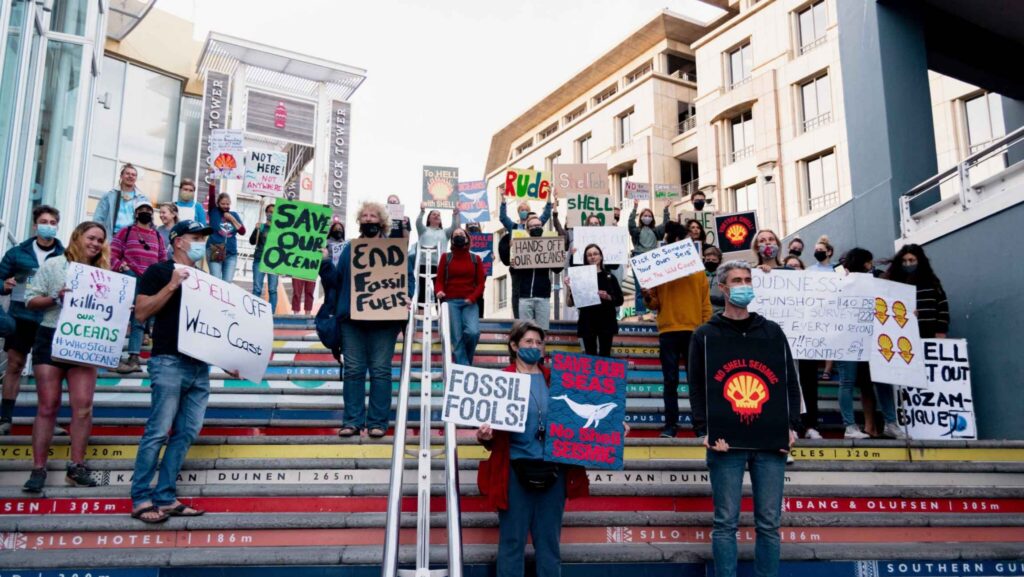
CLOSE TO 200 PEOPLE RISE AT CRACK OF DAWN TO PROTEST THE ARRIVAL OF SHELL’S SEISMIC MONSTER, AMAZON WARRIOR
On Sunday morning, (21 November 2021), before the crack of dawn, nearly 200 concerned environmental defenders took to the Waterfront to get a glimpse of Shell’s seismic testing vessel, Amazon Warrior, as it made its way into Cape Town harbour. The vessel travelled down the West coast of Africa, on its way to the Wild Coast, to conduct seismic surveys for an estimated five (5) months.
ENVIRONMENTALISTS DOUBLE-UP ON EFFORTS TO OPPOSE UPCOMING AND FURTHER SEISMIC TESTING IN SOUTH AFRICA’S OCEANS
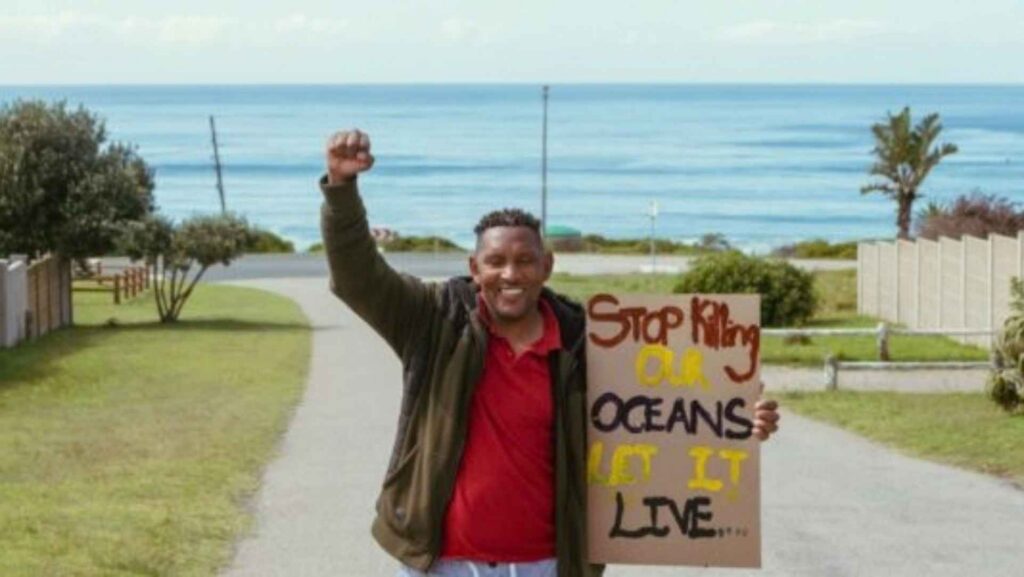
As the groundswell of opposition against Shell’s upcoming 3D seismic survey off the Transkei builds, the Green Connection – an ecojustice NGO that supports small-scale fishers in advocating for their livelihoods – reacted with astonishment to a press statement issued by the Department of Mineral Resources and Energy (DMRE) on 9 December 2021.


