Part of National Energy Regulator of South Africa’s (Nersa) public hearings (on Friday, 24 January), regarding Eskom’s proposed Retail Tariff Plan (RTP), The Green Connection’s Strategic Lead, Liz McDaid says, “Affordable, reliable and accessible electricity is not merely an economic issue but is fundamental to ensuring citizens’ human rights. It should meet societal needs and serve as a catalyst for economic growth, while also respecting ecological limits. The proposed tariff plan exposes how outdated and inequitable South Africa’s current electricity system and pricing mechanisms really are and clearly shows that we are out of sync with the urgent need to shift to a decentralised and sustainable energy system.”
The Green Connection joins the Southern African Faith Communities’ Environment Institute (SAFCEI) and groundWork, strongly critiquing Eskom’s latest proposal. According to The Green Connection, what is needed is a comprehensive stakeholder process where the entire country can engage on electricity and energy issues. This should cover pricing and policy and look at how to finance the entire generation and supply system in a way that ensures that electricity is affordable for and accessible to ordinary people. We especially need to ensure that there are proper subsidies for marginalised and vulnerable people.
McDaid points to Eskom’s persistent top-down approach – where government and industry seem to make all the major energy decisions – as a huge problem because it leaves civil society perpetually reacting to tariff and other energy-related proposals rather than proactively engaging in forward-thinking and proper long-term planning. The Green Connection argues that a comprehensive national stakeholder engagement process is urgently needed to develop a robust electricity financing and pricing framework that better aligns with the interests of all South Africans, in terms of costs, social equity, and sustainability.
McDaid highlights further issues with the proposed tariff restructuring, saying that it must reflect the true cost of supply. For instance, time-of-use (TOU) tariffs (which charge more for electricity used at peak times) might be useful for balancing demand but do not account for socio-economic disparities. She points out that lower-income households often cannot shift their electricity usage to off-peak times to take advantage of lower tariffs.
The Green Connection also opposes Eskom’s push to increase the fixed portion of the tariff because it appears to force people to pay even when they do not use electricity from the grid. Liz McDaid says, “this would be like charging customers to simply enter a shop, regardless of whether or not they buy anything. This makes no sense, especially since households with self-generation reduce demand on Eskom and contribute to national energy security. Their tariffs should rather reflect actual backup needs, with higher per-unit charges based on usage during specific periods”.
Furthermore, The Green Connection highlights that much of Eskom’s debt stems from ill-conceived projects such as Medupi and Kusile coal-fired power station projects, which were driven by industrial demand and tainted with corruption allegations. These have become more of a burden than a benefit for South Africans, who ultimately pay for the massive delays, cost overruns, and inefficiencies, in addition to suffering environmental damage and debilitating health impacts.
“South Africa’s energy future must prioritise people and planet over profit. A fair system would calculate the true cost of supplying electricity, set a per-unit price, and ensure equity through measures like cross-subsidies or targeted Treasury support for low-income households. This is why we advocate for a just energy transition, driven by good governance and environmental sustainability, and which promotes a decentralised energy system,” McDaid concludes.

BENDING OVER BACKWARDS, DMRE GIVES KARPOWERSHIPS ANOTHER BREAK
30 September 2021 was supposed to be the commercial close – a date set by the Department of Mineral Resources and Energy (DMRE) – for bidders in the Risk Mitigation Independent Power Producers Procurement Programme (RMI4P).
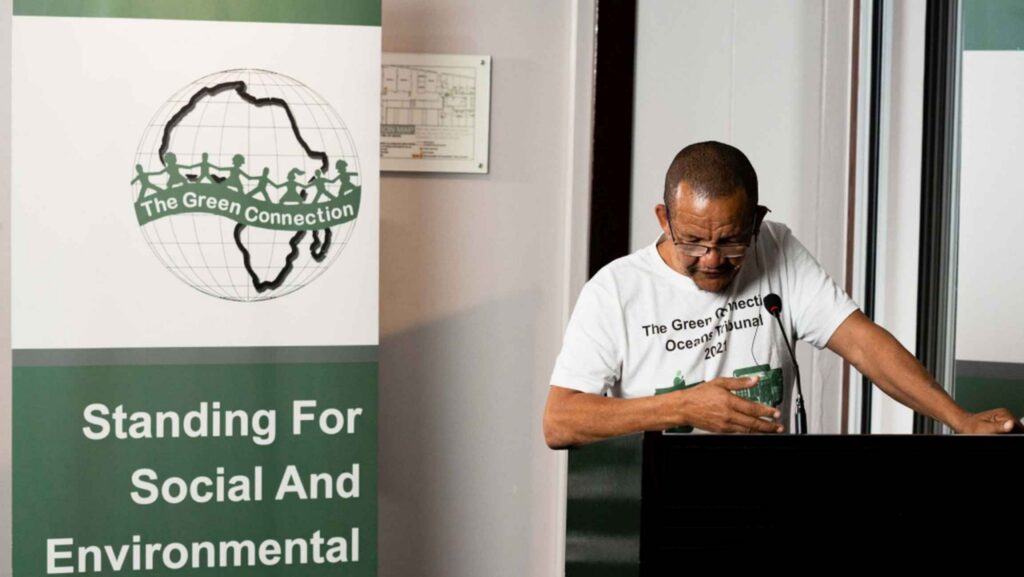
TOSACO EIA MET WITH PUSHBACK FROM CIVIL SOCIETY, TO PROTECT THE OCEAN AND SMALL-SCALE FISHER LIVELIHOODS
This week, The Green Connection submitted its comments critiquing several aspects of the Environmental Impact Assessment (EIA) process, particularly the lack of procedural fairness, as well as the conclusions reached – notwithstanding information gaps and scientific uncertainty – that should form part Tosaco Energy’s request to undertake various activities in Block 1, off the West Coast.

RECENTLY GRADUATED GREEN CONNECTORS, EQUIPPED FOR THE POLLS AND READY TO WEIGH-IN ON COP26
Following their recent graduation from The Green Connection’s Legacy Champions Programme, these newly empowered Green Connectors say they feel equipped with the necessary advocacy skills to make positive changes in their communities, starting with their vote in the local elections (1 November) and weighing in on the discussions around COP26 (which starts on 31 October) – as part of their efforts to oppose oil and gas developments in the country and offshore.
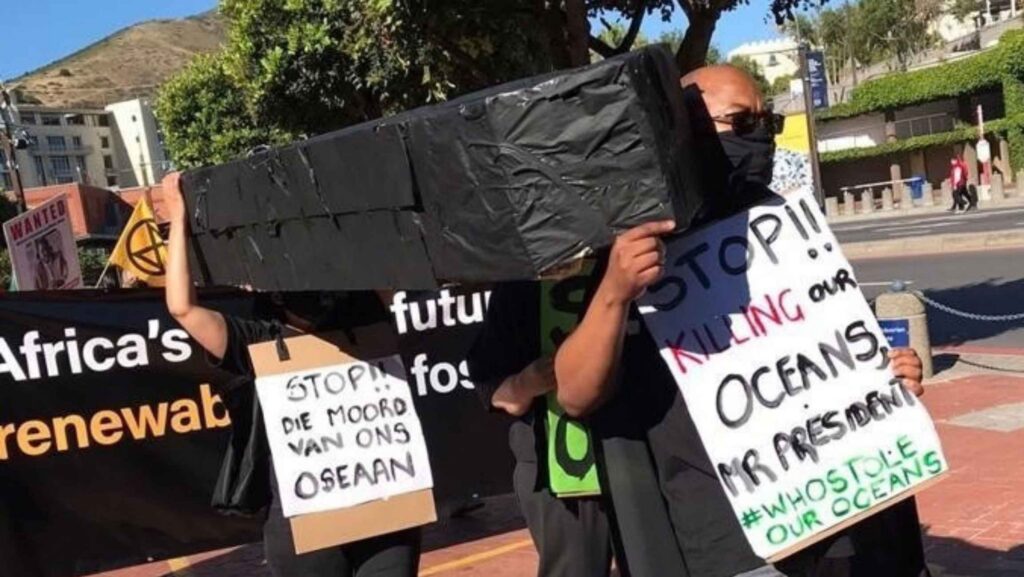
GREEN CONNECTION’S ‘FUNERAL FOR THE CLIMATE’ (AFRICAN ENERGY WEEK) AND COMMENT ON YESTERDAY’S BUDGET SPEECH
This week (10 November 2021), we joined other environmental defenders in Cape Town to peacefully demonstrate outside the African Energy Week #AEW2021 conference venue demanding an end to fossil fuels and the immediate pivot toward the just transition to a renewable energy future.
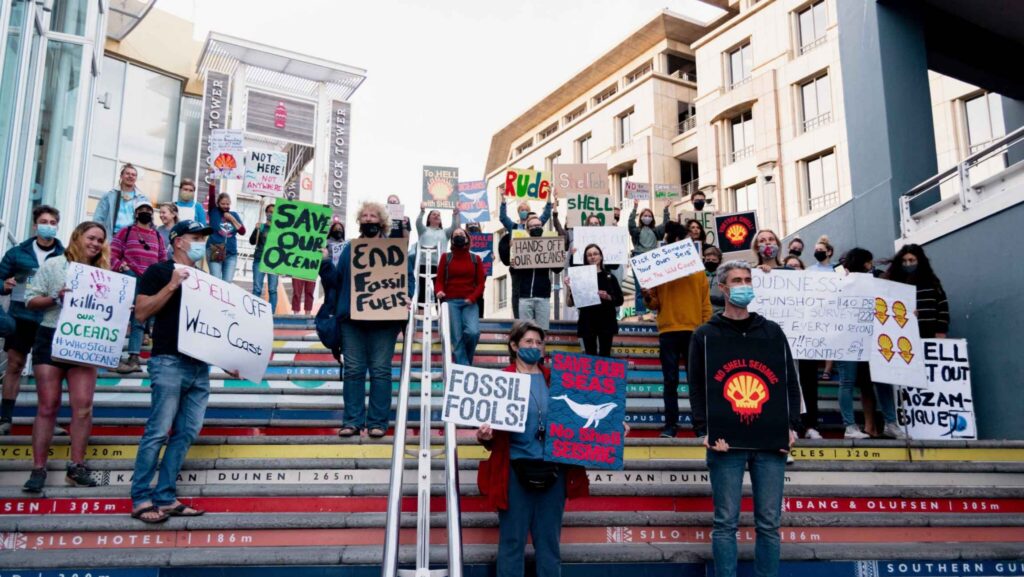
CLOSE TO 200 PEOPLE RISE AT CRACK OF DAWN TO PROTEST THE ARRIVAL OF SHELL’S SEISMIC MONSTER, AMAZON WARRIOR
On Sunday morning, (21 November 2021), before the crack of dawn, nearly 200 concerned environmental defenders took to the Waterfront to get a glimpse of Shell’s seismic testing vessel, Amazon Warrior, as it made its way into Cape Town harbour. The vessel travelled down the West coast of Africa, on its way to the Wild Coast, to conduct seismic surveys for an estimated five (5) months.
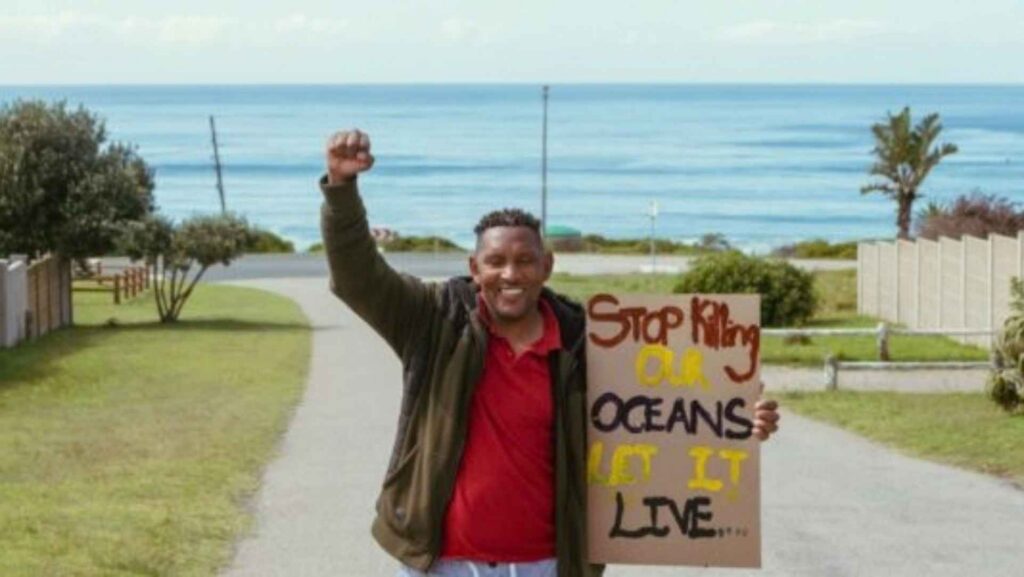
ENVIRONMENTALISTS DOUBLE-UP ON EFFORTS TO OPPOSE UPCOMING AND FURTHER SEISMIC TESTING IN SOUTH AFRICA’S OCEANS
As the groundswell of opposition against Shell’s upcoming 3D seismic survey off the Transkei builds, the Green Connection – an ecojustice NGO that supports small-scale fishers in advocating for their livelihoods – reacted with astonishment to a press statement issued by the Department of Mineral Resources and Energy (DMRE) on 9 December 2021.
