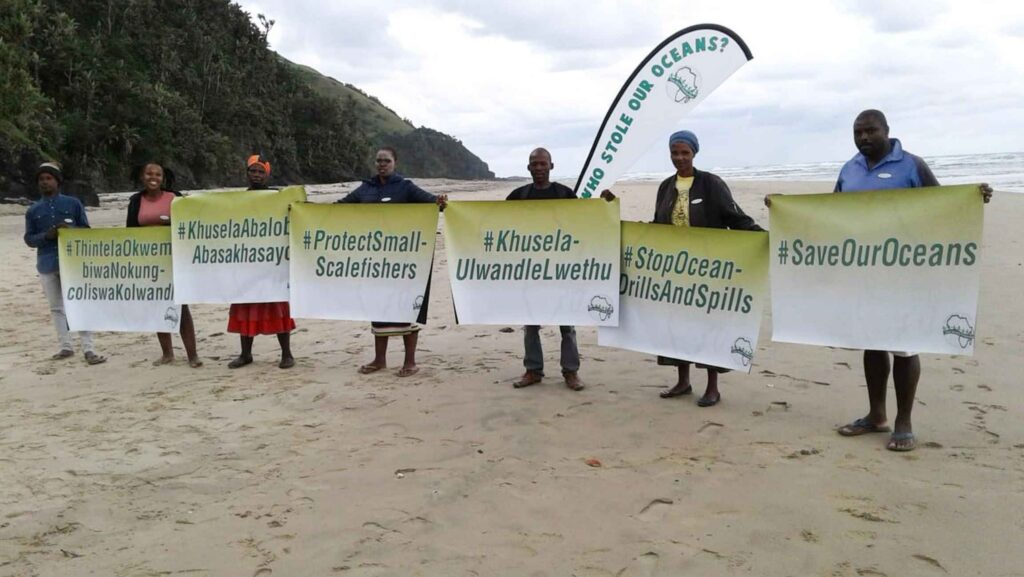
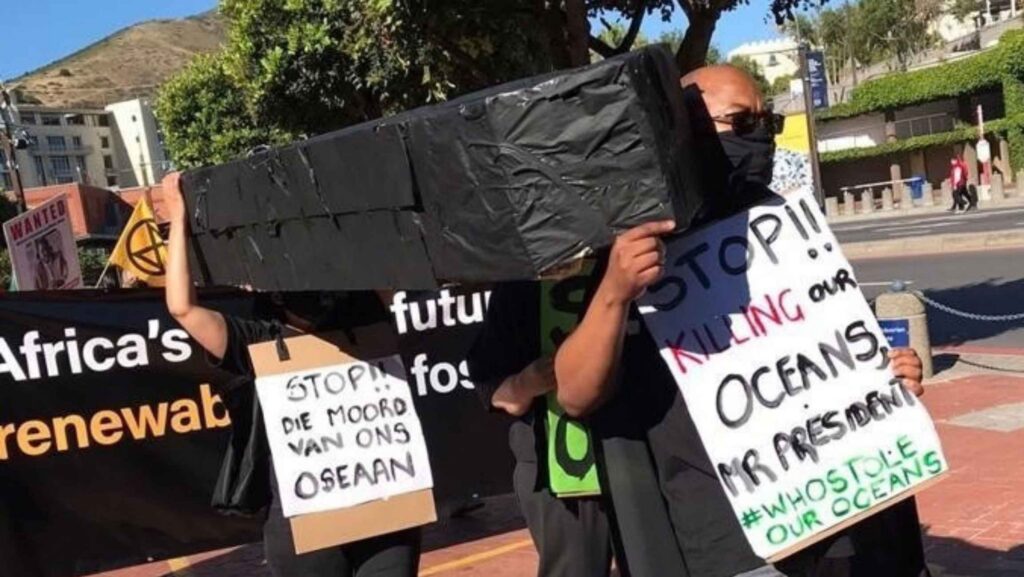
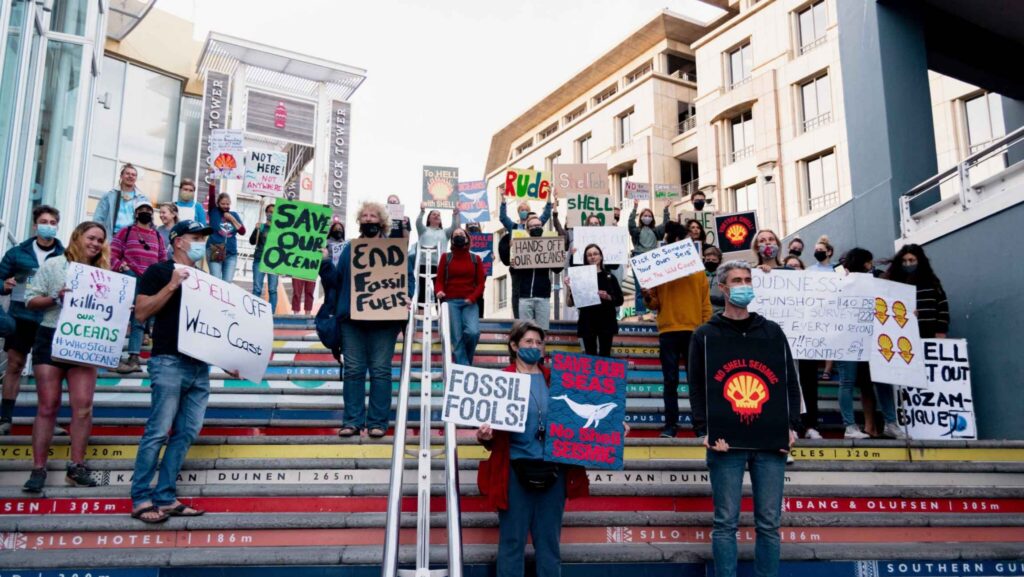
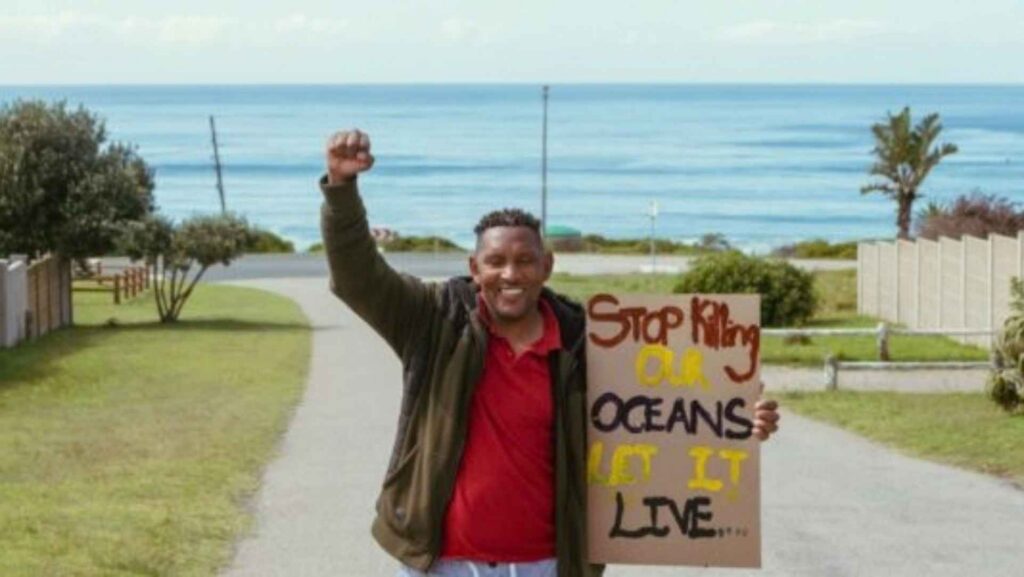
In a letter to President Ramaphosa, the country’s five (5) Goldman Environmental Prize winners – Liziwe McDaid and Makoma Lekalakala (2018), Desmond D’Sa (2014), Jonathan Deal (2013), and Bobby Peek (1998) call on government to immediately withdraw the National Petroleum Company Bill, in addition to stopping all oil and gas exploration off South Africa’s coastline. These globally acknowledged environmental leaders who all work to empower and equip grassroots communities to defend their environmental rights call on President Cyril Ramaphosa to take a decisive lead on climate action. They say that South Africa must urgently engage Africa’s leadership at COP28 to take the lead on phasing out fossil fuels on the continent and not fall into the trap of false solutions like Carbon Capture and Storage.
Mineral Resources and Energy Minister Gwede Mantashe released a draft Bill for public comment outlining the establishment of the South African National Petroleum Company (SANPC), with himself as the sole shareholder. The draft law, if passed, would combine iGas, PetroSA and the Strategic Fuel Fund into one SOE. This, in effect, aims to promote further fossil fuel development, at a time when countries should be divesting, in line with multilateral international commitments. This state company’s functions include that it will “be a developer, operator and owner of major energy infrastructure across the energy value chain for market entry and transmission and to pursue Liquefied Natural Gas (LNG) regasification, gas transmission and gas to power…”
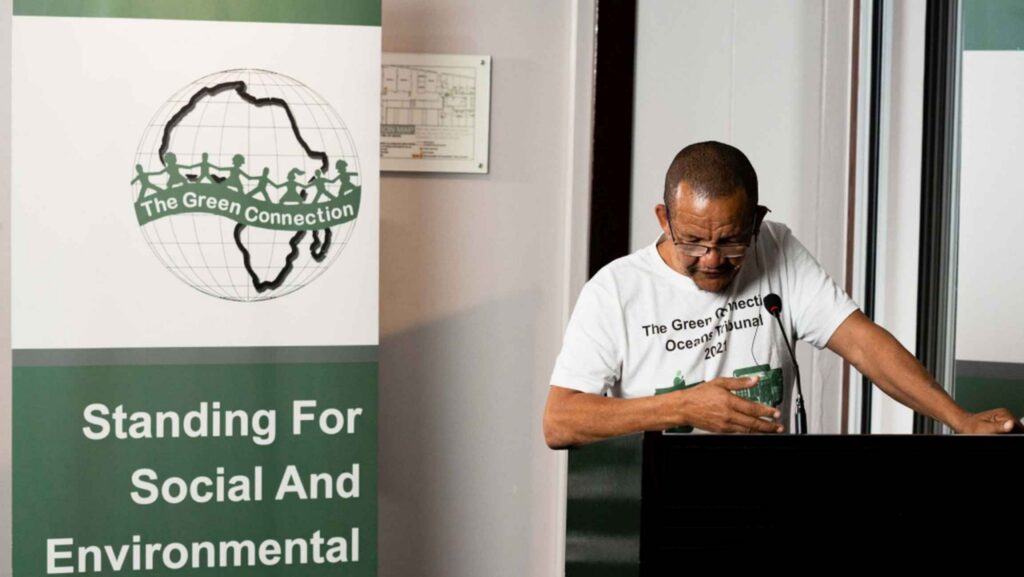
Strategic Lead at The Green Connection, Liziwe McDaid says, “We have to ask, why on the eve of COP28, where our government is going to negotiate for money to address loss and damage from climate impacts that we currently experience and where we are trying to get money to move away from fossil fuels in a just energy transition? Why is it that the same time government publishes a piece of legislation for a national oil company, which will obviously take in the wrong direction, which is to encourage more fossil fuels? We believe this is hypocritical and therefore ask, if government is serious about addressing climate change and the Just Energy Transition, that the President withdraws this legislation.”
South Africa is extremely vulnerable to climate change and many communities have already felt its devastating effects. From 2015 to 2017, the Western Cape faced a severe and prolonged drought, which cost the economy roughly ZAR15 billion, representing 3.4% of provincial Gross Domestic Product (GDP) and 0.3% of national GDP in 2018. In April 2022, Durban was struck by a flood which is described as the most catastrophic natural disaster – in terms of lives lost, homes and infrastructure damaged or destroyed and economic impact – yet recorded in KwaZulu-Natal. And this year, in June and September, many parts of the Western Cape experienced severe flooding.
Director at Earthlife Africa, Makoma Lekalakala says, “We must wean ourselves off our dependence on fossil fuels, and fast. The just transition means a complete overhaul of how we do things, and what we do over the next three to five 3-5) years will determine whether South Africa will move forward or fall behind in the global transition from fossil fuels. And because our environmental struggles are linked to our social struggles, South Africans need government to rather spend its time, effort and money on sustainable, renewable energy and to prepare and equip communities to fully participate in the transition. Adding another National Petroleum Company is a move in the wrong direction and contradicts the spirit of COP. This Bill will potentially destroy the marine and coastal biodiversity, thus robbing people of their livelihoods and sustainable living, that has been protected for centuries.”
Director at groundWork Bobby Peek says, “The South African government’s confused position between wanting to roll out renewables and a just transition, while simultaneously continuing its pursuance of oil, gas and coal – this is a normal elite contradiction that aims to silence those seeking a just transition. Is this done to make all believe that they are serious? For decades, both at home in South Africa and at COP, this contradiction has been evident. This is why the COP continues to fail the people. As Professor Patrick Bond says, “They talk left but walk right.” This continues to be the modus operandi of both the COP and the South African politic. They say they want a just transition but then continue to pursue the very things that caused it.”
Finance for Loss and Damage is a key focus for this year’s COP28. It is estimated that by 2030 developing countries will require annual financial support ranging from $200 billion to $580 billion to address the costs associated with loss and damage. African countries, in particular, have a significant adaptation gap. This means that African countries generally have neither the resources, nor the fiscal space required to cover the costs of implementing the adaptation required to limit loss and damage.
The estimated costs of the damage caused by the floods in Western Cape this year totalled well over R1-billion, with an additional R1.4-billion in estimated damages to the agricultural sector, and another R500-million due to the damage to the provincial road network. However, the full costs for this year’s floods are still unclear.
CEO at Treasure Karoo Action Group, Jonathan Deal says, “Africa’s short-term future may need some fossil fuels, but its long-term sustainability lies in the hands of ethical and courageous leaders who can connect the honeybee to the food on their plates. The environment is the real economy.”
Desmond D’Sa from the South Durban Community Environmental Alliance (SDCEA) says, “President Ramaphosa must do the right by the country and its people. We should not be taking loans from the World Bank to continue keeping the fossil fuel dynasty alive. We urgently need change to address global warming which is the cause of the climate crises affecting our poor and marginalized communities the most.