PROGRAMME
LEGACY
Find Your Voice, Lead the Change: Advocacy Skills for Green Connectors.
The Legacy Programme focuses on advocacy in particular. Whereby it provides shared information, participatory learning, execution of workshops and mentoring for environmental activists from local community groups, with the aim of helping them to amplify their voices to solve their local environmental justice issues. A major focus in this project is advocacy in Parliament, and making the link between local and national, in order to enhance effectiveness and achieve results. An enabling environment will be built for civil society to connect with the right people to make the changes necessary for sustainable development. Since its launch in 2021, the Legacy Programme has grown into a strong and expanding platform for environmental justice advocacy and is currently supporting its fourth cohort of community-based activists and leaders working to drive sustainable change at both local and national level.


Overview
At local government level, councilors may attempt to address local delivery issues, but environmental issues often straddle different geographic boundaries and fall under the provincial or national sphere of government. Complaining to local councillors does not necessarily lead to any change, and activists despair as their best efforts fall on deaf ears. Environmental justice activists have not used Parliament optimally to ensure that Members of Parliament hold the executive to account and ensure government actions are in the interests of people’s needs. At a local council level, there seems to be a similar paralysis. The Green Connection believes that empowering people to participate in decisions that affect their environment is the only way that truly sustainable development occurs. The programme objective is therefore to create a network of passionate and skilled Green Connectors young people, and women in particular to engage civil society in finding its voice.
Empowering young activists, and women in particular, to intervene in the policy and legislative space, so that decision-making processes are strengthened to ensure good governance in the natural environment, conservation and environmental justice spheres is central to the vision of Legacy.
The programme helps young people to develop evidence to support their demands and communicate those to local municipalities, Parliament, and national government. It helps them mobilise their communities to join eco-justice campaigns and find the right channels for addressing eco-injustices. Channels and initiatives such as; clean-ups, pickets, and awareness raising, through the use of digital and traditional media as a platform to amplify their voice in good governance and decision-making around sustainable development.
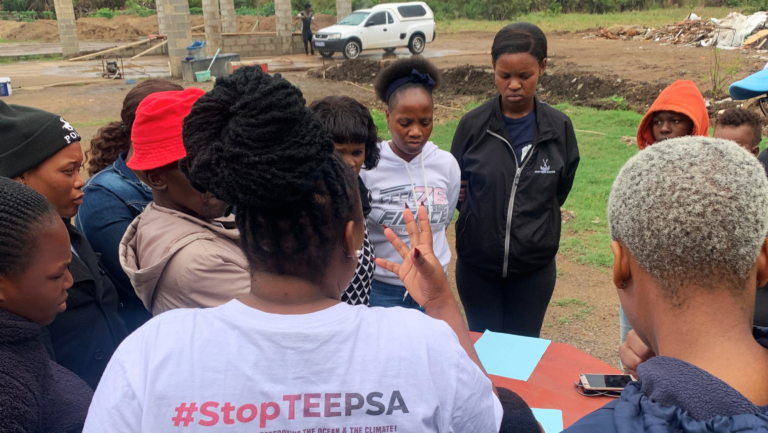
The Programme has delivered 14 advocacy skills-building workshops that equipped Legacy participants with the knowledge and practical tools to advocate for environmental justice within their communities. Training covered advocacy fundamentals, speaking truth to power, the Bill of Rights, building effective partnerships, Parliament and the judicial system, environmental impact assessments (EIAs) and public participation, local government processes, media, climate change, offshore oil and gas exploration, fundraising and resource mobilisation, monitoring and evaluating.


Watch In English
Kyk in Afrikaans
Bukela NgesiXhosa
In this way the programme hopes to achieve an improvement in environmental governance and advocacy. Many communities in both urban and rural environments are desperately seeking a voice, and the means by which to engage with local authorities or institutions around issues that directly impact their lives. For example, energy matters (energy poverty/the cost of electricity; making a difference in the nuclear power debate; and investment by municipalities in solar power) and environmental issues, often related to the climate crisis (pollution; wetland conservation; and Environmental Impact Assessments pertaining to urban projects). Key themes already identified are ocean protection, and support of the livelihoods of small-scale fishers and coastal communities against deep-sea oil and gas extraction, and protection of the water-scarce Karoo and its unique biodiversity against agricultural impacts and the ongoing threat of fracking.


In this way the programme hopes to achieve an improvement in environmental governance and advocacy. Many communities in both urban and rural environments are desperately seeking a voice, and the means by which to engage with local authorities or institutions around issues that directly impact their lives. For example, energy matters (energy poverty/the cost of electricity; making a difference in the nuclear power debate; and investment by municipalities in solar power) and environmental issues, often related to the climate crisis (pollution; wetland conservation; and Environmental Impact Assessments pertaining to urban projects). Key themes already identified are ocean protection, and support of the livelihoods of small-scale fishers and coastal communities against deep-sea oil and gas extraction, and protection of the water-scarce Karoo and its unique biodiversity against agricultural impacts and the ongoing threat of fracking.
Achievements
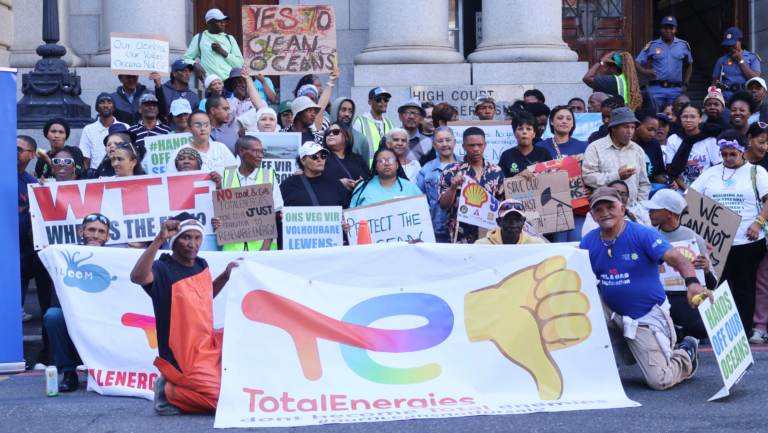
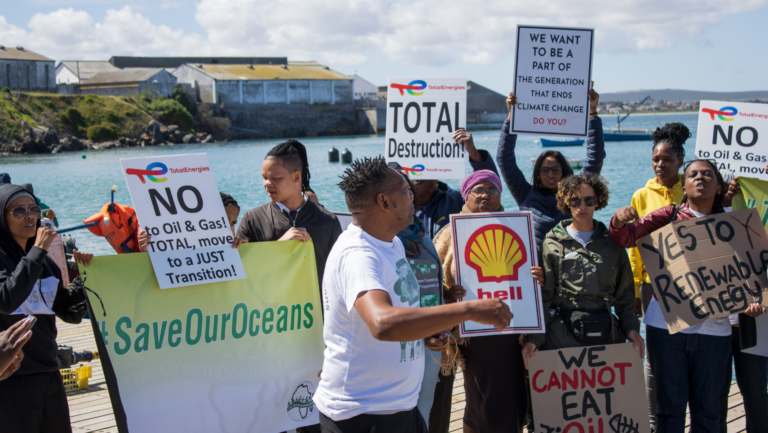
Legacy participants contributed to national advocacy efforts against Karpowerships and Total Energies Exploration and Production South Africa block 567 exploration. Through protests and public mobilisation across the Northern Cape, Western Cape, Eastern Cape, KwaZulu-Natal and Gauteng, communities demonstrated widespread opposition to these projects, contributing to increased public scrutiny and the eventual withdrawal of the companies proposed operations.
Legacy participant organised a fracking workshop on the impacts on water, in central Karoo, for the community members in Beaufort West.
In the Western Cape, Legacy participants and The Green Connection arranged meetings with local action groups and mobilized World Ocean Day protest and picketing in Saldanha, Langebaan, and Paternoster. Additionally, Saldanha Bay Legacy participants wrote a letter of complaint about the failings of the Karpowerships Environmental Impact Assessment (EIA) process within their area. This resulted in the suspension of the EIA and the eventual Department Forestry, Fisheries and the Environment (DFFE) rejection of the EIA.
Legacy participant from Western Cape, in Langebaan held interviews with fishermen. Additionally, participants took part in a webinar with Coastal Links provincial leaders, thus engaging them to participate in the opposition against karpowerships, and even had meeting with the Minister of DFFE on fisher’s issues.
In Western Cape, a Legacy participant from Knysna established a co-management committee, and task team, to coordinate with provincial level around oil and gas, and fishers’ rights. He received an appointment with the mayor and SANParks.
In the Eastern Cape Legacy participants from Port St Johns succeeded in getting a councillor who is opposed to oil and gas nominated for elections. – Many of the Legacy participants formed successful and impactful partnerships with local civil society organizations.
In KwaZulu-Natal, Legacy participants from Umgababa and Mtwalume organised a community awareness event to share information to local residents about environmental and social risks associated with offshore oil and gas exploration.
Legacy participant from Northern Cape, Port Nolloth used the power of storytelling to inspire environmental action by featuring in the documentary SPOILED which highlights the need to protect South Africa's oceans from offshore oil and gas exploration. The documentary received a Silver Award at the International Tourism Film Festival Africa 2026.
Testimonials

Sasekani Khosa
“Through the Green Connection, I started a programme fighting illegal dumping, pollution, and environmental degradation. This is where I have started to protect my environment rights and those of my community.”

Taitum Lee Manuel
“We thank the Green Connection and Coastal Links for assisting us with mobilising and raising awareness regarding public participation meetings, license applications, and making sure our communities understand what these decisions would mean for us as a community.”

Barend Fredericks
“With the help of The Green Connection we are better equipped to opposed oil and gas exploration, as well as the laws and regulations that act as barriers to indigenous people’s right to access natural resources and erase an entire history.”
Sikhulile Mbunambe
“Being part of the programme helped me understand my rights and gave me the confidence to stand up for them.”
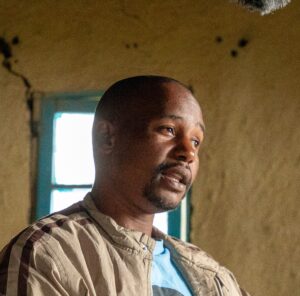
Ezile Jiba
“Through the programme, I learnt that we can use the environment in a sustainable way by protecting it while meeting our needs and making sure it remains healthy for future generations.”

Bulelwa Mkuli
“The programme taught me that we should learn from other countries that have experienced the impacts of oil and gas exploration. Their experiences show the harm these activities can cause to ecosystems, and we should use those lessons to protect our own environment.”
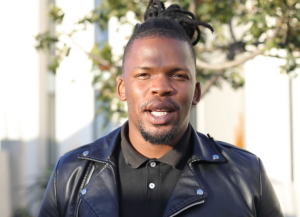
Siyabulela Gqalana
“Through The Green Connection, I gained a better understanding of the Bill of Rights and my rights as a citizen. I also learned why it is important to protect the ocean and defend the rights of people who rely on it for their livelihoods and cultural heritage.”
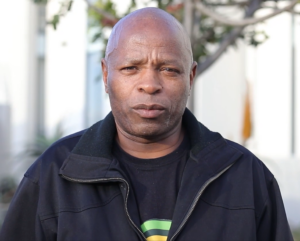
Zakhele Nkamisa
“Through the programme, I gained a deeper understanding of my rights as a small-scale fisher. I now feel empowered to speak up and advocate for myself whenever those rights are threatened or overlooked.”
Programme Team Members
Lisa Makaula - Advocacy and Programmes Lead
Quote that motivates her work: “You must be the change you wish to see in the world.” Mahatma Gandhi
Lisa Makaula has worked within the ecojustice space, from a media and advocacy perspective. She prides herself in working towards good governance and sustainable development.
Warren Blouw - Legacy Programme Coordinator
Warren Blouw has a background in environmental activism and community engagement. Advocating against fracking and offshore oil and gas, through emphasising the need to invest in renewable energy sources.
Vuyiseka Mani - Legacy Programme Mentor
Quote that motivates her work: “A mentor must always guide, never push. It was my job to listen to them, offer my perspective, and encourage them to pursue the ideals they believed to be true.” John Wooden
Vuyiseka Mani has been working in advocating for environmental justice. Along with efforts to stop gender based violence & femicide.
With your partnership, the Legacy Programme can continue equipping community-based environmental activists with the knowledge, skills, and networks to advocate effectively for social and environmental justice.
