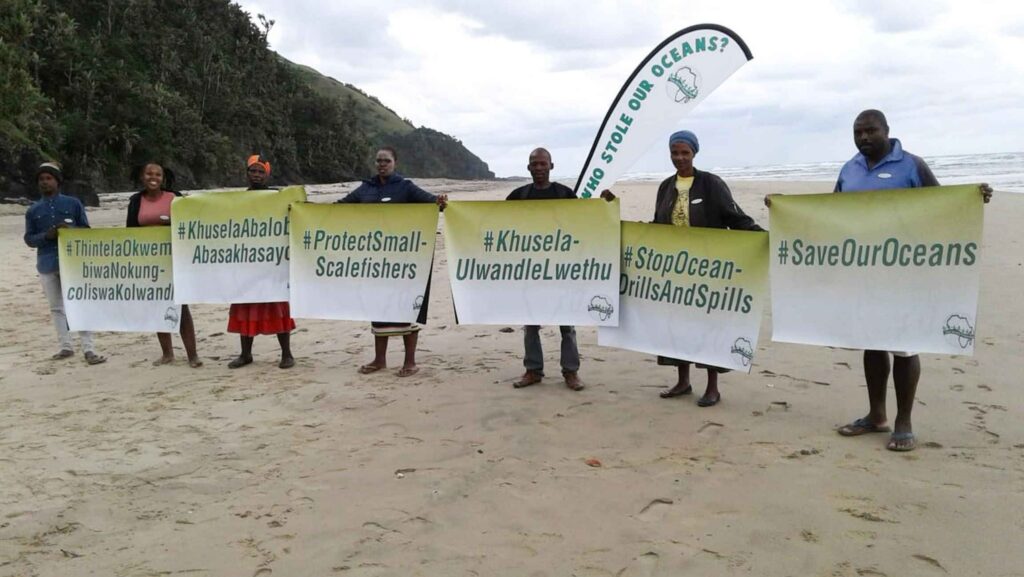
Last week (14 November 2024), The Green Connection, Aukotowa Fisheries Primary Co-Operative, and Natural Justice launched another legal challenge against activities that could worsen climate change and negatively impact environmental health, which could affect fisher livelihoods. This time, the applicants have launched a judicial review of decisions to grant authorisation to TGS Geophysical Company to conduct seismic surveys off South Africa’s Western and Northern Cape coastlines. This case challenges decisions made by the Department of Mineral and Petroleum Resources, as well as the subsequent dismissal of internal appeals by the Department of Forestry, Fisheries and the Environment.
“With World Fisheries Day (21 November) observed this week and global climate discussions ongoing at COP29, it is critical to confront the environmental and social risks posed by seismic surveys,” says Liz McDaid, Strategic Lead at The Green Connection. “The ocean is an acoustic world, with marine species relying on sound for communication, navigation, and survival. Seismic surveys disrupt this delicate balance by blasting some of the loudest sounds on the planet underwater, with airgun noise, in some cases, detectable as far as 4,000 kilometres away. Yet, the Environmental Impact Assessment (EIA) fails to address how far this noise will travel and its broader implications for marine life.” McDaid highlights that existing evidence links such noise to devastating effects, from hearing loss and stress in marine mammals to death in fish and zooplankton. “This isn’t just about individual species; seismic noise can disrupt entire ecosystems, affecting predator-prey dynamics and potentially leading to biodiversity collapse. Small-scale fishers, who depend on a healthy ocean, are particularly vulnerable,” she warns.
The EIA also neglects key issues, such as the variability in habitat sensitivity and the far-reaching impact of noise pollution on Critical Biodiversity Areas and Marine Protected Areas. “The report overlooks how seismic noise propagates over vast distances, disrupting ecosystems well beyond the project area. It downplays the risks, failing to apply the precautionary principle or recommend comprehensive acoustic modelling. Ignoring these risks could have irreversible consequences for marine ecosystems and the livelihoods tied to them,” McDaid notes

Pointing to the mounting impacts of climate change on fishing livelihoods, Steenkamp adds, “What my father caught 36 years ago in a single day is now unimaginable. Fishers like us, who travel 20 to 30 kilometres offshore to chase snoek during the season, are facing longer and more dangerous journeys to catch smaller hauls. This is not sustainable.”
The applicants argue that the authorisation also disregarded cumulative risks, particularly the overlapping seismic survey blocks in the project area. These risks were not adequately studied or mitigated, leaving marine ecosystems vulnerable to severe and long-lasting damage.
Moreover, they say that government’s decisions failed to consider the global climate crisis, ignoring the reduced necessity for oil and gas exploration as the world shifts toward cleaner energy alternatives.
For generations, small-scale fishers along South Africa’s West Coast have been stewards of the ocean. However, they have faced exclusion, economic marginalisation and have witnessed the environmental degradation as a result of climate change and poor environmental governance. “Under apartheid and even now, fishing rights have been concentrated in the hands of commercial interests, sidelining communities like ours,” says Steenkamp. “This seismic survey is yet another encroachment, and we are standing up to say ‘enough.’”
South Africa is at a critical juncture. The country’s Constitution and environmental laws demand that decisions like these serve people and the planet. This case is about holding decision-makers accountable to those principles.

BENDING OVER BACKWARDS, DMRE GIVES KARPOWERSHIPS ANOTHER BREAK
30 September 2021 was supposed to be the commercial close – a date set by the Department of Mineral Resources and Energy (DMRE) – for bidders in the Risk Mitigation Independent Power Producers Procurement Programme (RMI4P).
TOSACO EIA MET WITH PUSHBACK FROM CIVIL SOCIETY, TO PROTECT THE OCEAN AND SMALL-SCALE FISHER LIVELIHOODS
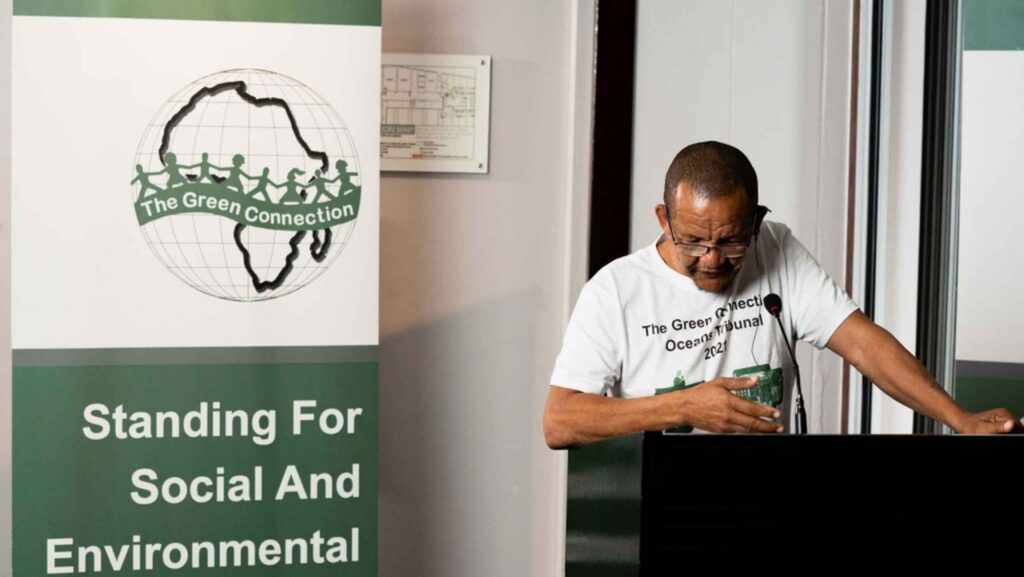
This week, The Green Connection submitted its comments critiquing several aspects of the Environmental Impact Assessment (EIA) process, particularly the lack of procedural fairness, as well as the conclusions reached – notwithstanding information gaps and scientific uncertainty – that should form part Tosaco Energy’s request to undertake various activities in Block 1, off the West Coast.

RECENTLY GRADUATED GREEN CONNECTORS, EQUIPPED FOR THE POLLS AND READY TO WEIGH-IN ON COP26
Following their recent graduation from The Green Connection’s Legacy Champions Programme, these newly empowered Green Connectors say they feel equipped with the necessary advocacy skills to make positive changes in their communities, starting with their vote in the local elections (1 November) and weighing in on the discussions around COP26 (which starts on 31 October) – as part of their efforts to oppose oil and gas developments in the country and offshore.
GREEN CONNECTION’S ‘FUNERAL FOR THE CLIMATE’ (AFRICAN ENERGY WEEK) AND COMMENT ON YESTERDAY’S BUDGET SPEECH
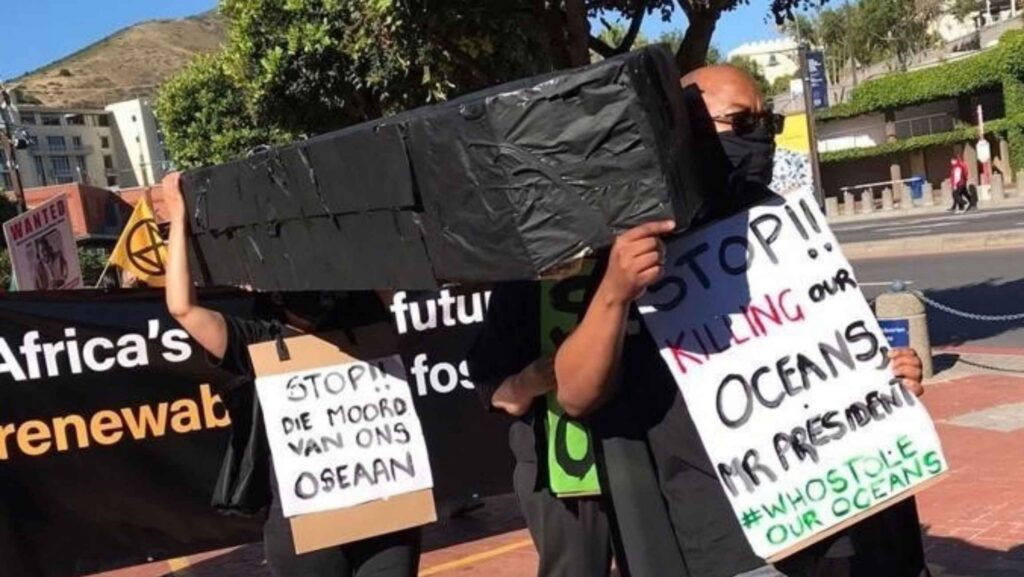
This week (10 November 2021), we joined other environmental defenders in Cape Town to peacefully demonstrate outside the African Energy Week #AEW2021 conference venue demanding an end to fossil fuels and the immediate pivot toward the just transition to a renewable energy future.
CLOSE TO 200 PEOPLE RISE AT CRACK OF DAWN TO PROTEST THE ARRIVAL OF SHELL’S SEISMIC MONSTER, AMAZON WARRIOR
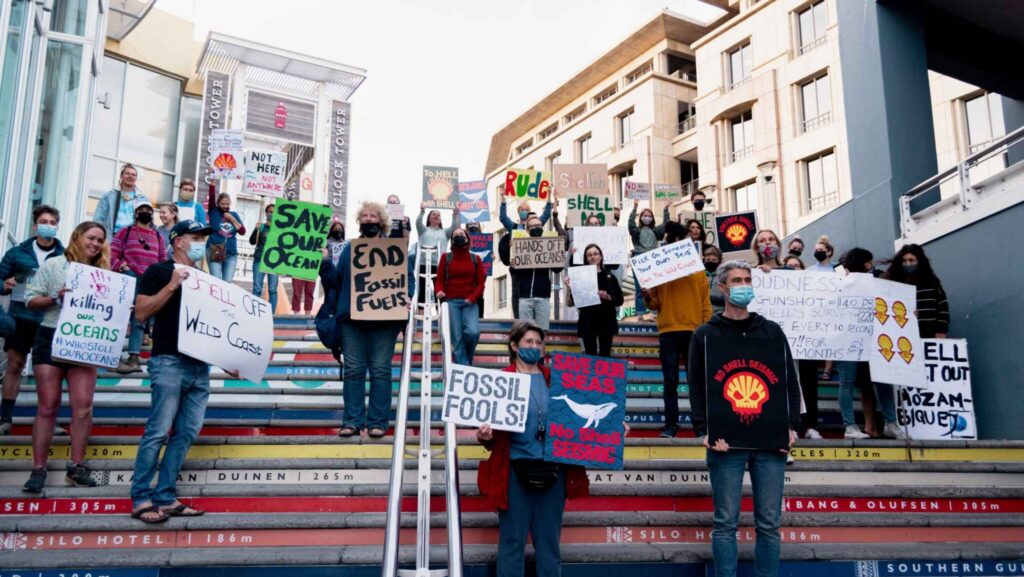
On Sunday morning, (21 November 2021), before the crack of dawn, nearly 200 concerned environmental defenders took to the Waterfront to get a glimpse of Shell’s seismic testing vessel, Amazon Warrior, as it made its way into Cape Town harbour. The vessel travelled down the West coast of Africa, on its way to the Wild Coast, to conduct seismic surveys for an estimated five (5) months.
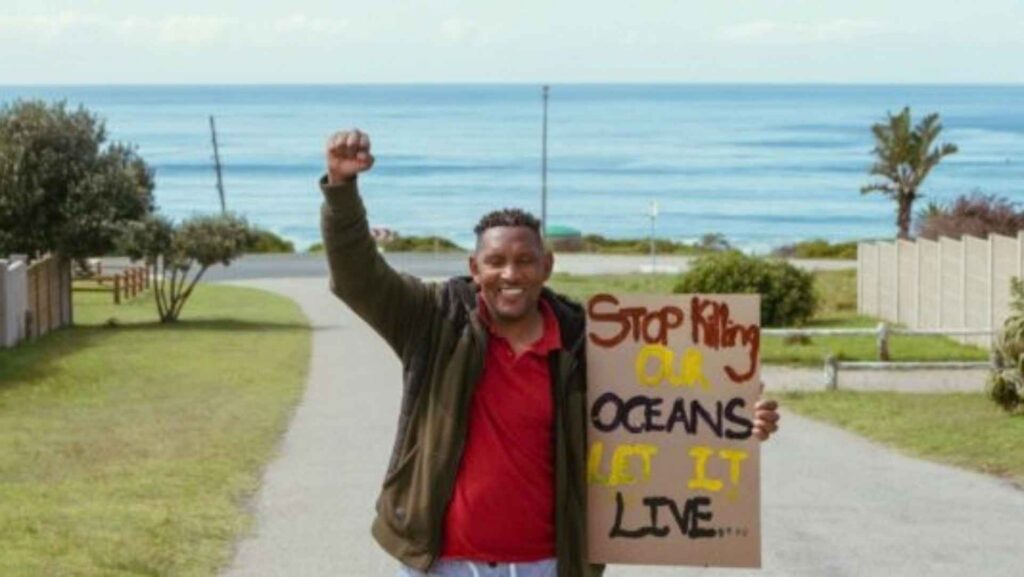
ENVIRONMENTALISTS DOUBLE-UP ON EFFORTS TO OPPOSE UPCOMING AND FURTHER SEISMIC TESTING IN SOUTH AFRICA’S OCEANS
As the groundswell of opposition against Shell’s upcoming 3D seismic survey off the Transkei builds, the Green Connection – an ecojustice NGO that supports small-scale fishers in advocating for their livelihoods – reacted with astonishment to a press statement issued by the Department of Mineral Resources and Energy (DMRE) on 9 December 2021.
