With little more than seven (7) years till 2030 – by which time the world should have dramatically curbed its greenhouse gas (GHG) emissions, as part of a global effort to keep global warming below 1.5°C – The Green Connection says that it will continue to oppose government’s worrying offshore oil and gas aspirations. In its comments on the Draft Scoping Report (DSR) sent yesterday, regarding TEEPSA’s application to undertake exploration well drilling in Block 567, off the West Coast of South Africa, the eco-justice organisation points out that instead of starting new fossil fuel projects, which will contribute to carbon dioxide (CO2) and methane (CH4) emissions well into the future, South Africa should be focused on moving toward a just transition to renewable energy.
According to The Green Connection’s Community Outreach Coordinator Neville van Rooy, “What is most concerning is that, without the people’s knowledge, South Africa’s oceans have been divided into blocks that are being leased off to foreign companies who aim to exploit this necessary resource for unnecessary offshore oil and gas. It seems that the government has put a lot of faith in the development potential of oil and gas, even with compelling evidence to the contrary. Not only will it worsen the climate crises, but these projects will also potentially result in higher unemployment since it could directly threaten the livelihoods of the thousands of small-scale fisher families and their ability to work.”
According to the National Environmental Management Act (NEMA), an Environmental Impact Assessment (EIA) must include a motivation for the need and desirability for a proposed development, and the overall cost should be acceptable to society. Since social and economic development should only be promoted if it is justified – and it can only be justified if it fits in with society’s broader needs and interests and does not exceed ecological limits (such as exacerbating climate change) – South Africa should only choose the development options that provide the most benefit and causes the least damage, in both the short- and long-term.
The Green Connection’s Strategic Lead Liziwe McDaid says, “Unfortunately, this scoping report must rely on South Africa’s outdated Integrated Resource Plan (IRP) 2019, which is a major part of the problem, since it still calls for an energy mix that relies too heavily on fossil fuels. Worse still, the widespread belief that natural gas could serve as a feasible transition fuel to help us move from a fossil fuel-based energy system to one that relies more on sustainable renewable energy, is deeply problematic. Since the next 20 years present a critical window for addressing the climate crisis, it is not desirable for the country to continue to rely too heavily on fuels that will inevitably add to GHG emissions, such as natural gas, which includes methane.”
Methane is particularly dangerous since it makes up approximately 70-90% of natural gas emissions and is projected to have more than eighty (80) times the impact of CO2. An increased dependency on gas (especially in electricity generation) will lead to increased emissions of climate warming GHGs, and methane (CH4) in particular.
McDaid says, “Another issue with the scoping report is that it does not provide enough detail about what impacts to expect in a scenario where oil or gas is found, especially since this is what these companies are hoping for. The report only considers the impacts during the exploration phase but not, however, during the extraction phase or after. We believe that a more holistic assessment of all the potential impacts that could be expected should be included to better assess the overall desirability of the project. Since we are in a climate emergency, should commercially exploitable oil or gas be found, we believe it is also critical to include the subsequent climate change risks, as well.”
The organisation also adds that it is concerned that the scoping report does not include even a broad assessment of the economic impacts of a major spill, which incidentally is acknowledged in the report as the greatest potential risk associated with oil and gas exploration. However, understanding these impacts beforehand would be crucial when making the decision to authorize the project or not. This assessment should include but not be limited to the potential economic impacts on small-scale fishers and communities that are dependent on the oceans for their livelihoods.
The Green Connection adds that ramping up oil and gas production is not aligned with national and international climate action policies and plans, especially at a time when South Africa should reduce its reliance on fossil fuels. How long will these projects still be ongoing? The organisation believes that the opportunities that will emerge from renewable energy have a far better chance of stimulating development and growing the economy, as well as creating many jobs (since the sector remains largely untapped), while protecting the environment.
According to the latest report from the Intergovernmental Panel on Climate Change (IPCC), beyond projects already committed as of 2021, there is no need for investment in new fossil fuel supply, as we work towards net zero. Unless there are immediate, rapid and large-scale reductions in GHG emissions, the IPCC estimates that limiting warming to close to 1.5°C or even 2°C will be out of reach. UN Secretary-General António Guterres says, “…the truly dangerous radicals are the countries that are increasing the production of fossil fuels. Investing in new fossil fuels infrastructure is moral and economic madness’.
“As one of the top 20 global GHG emitters, still highly dependent on fossil fuels – South Africa’s energy sector alone is estimated to contribute about 84 percent (%) to the country’s overall GHG emissions – the country must make substantial emission cuts to contribute its fair share to global emission reductions (including CO2 and methane),” says van Rooy.
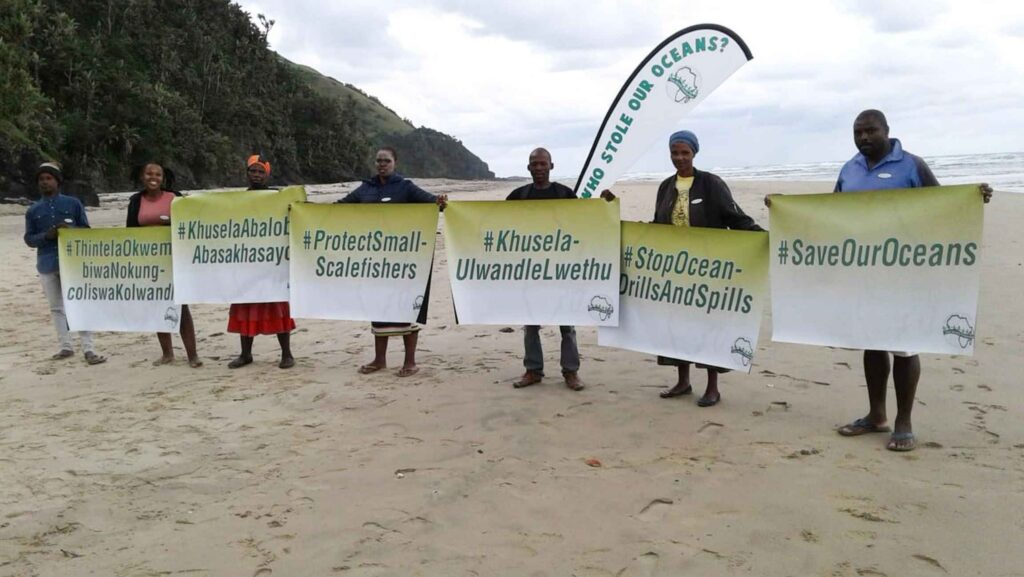
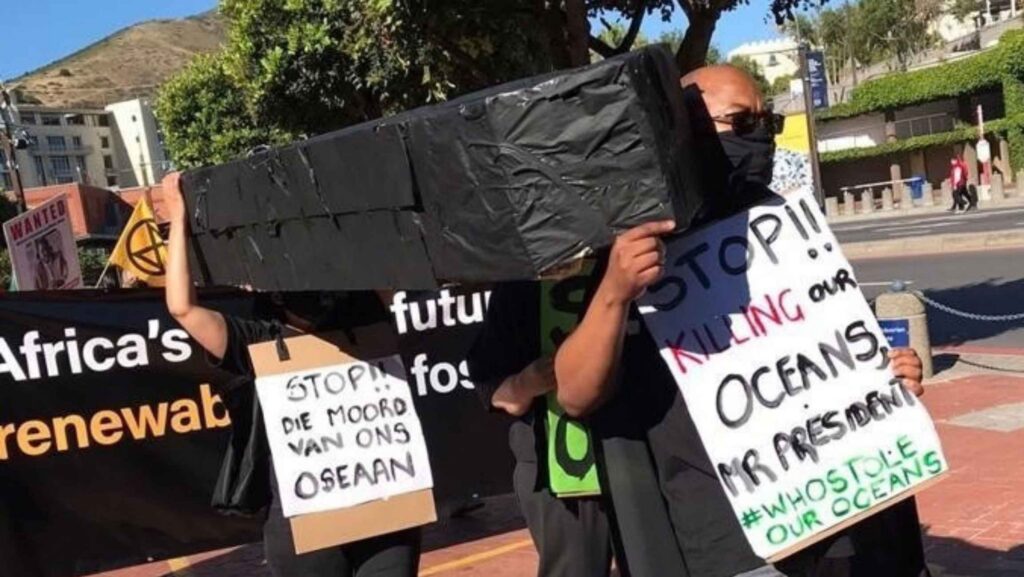
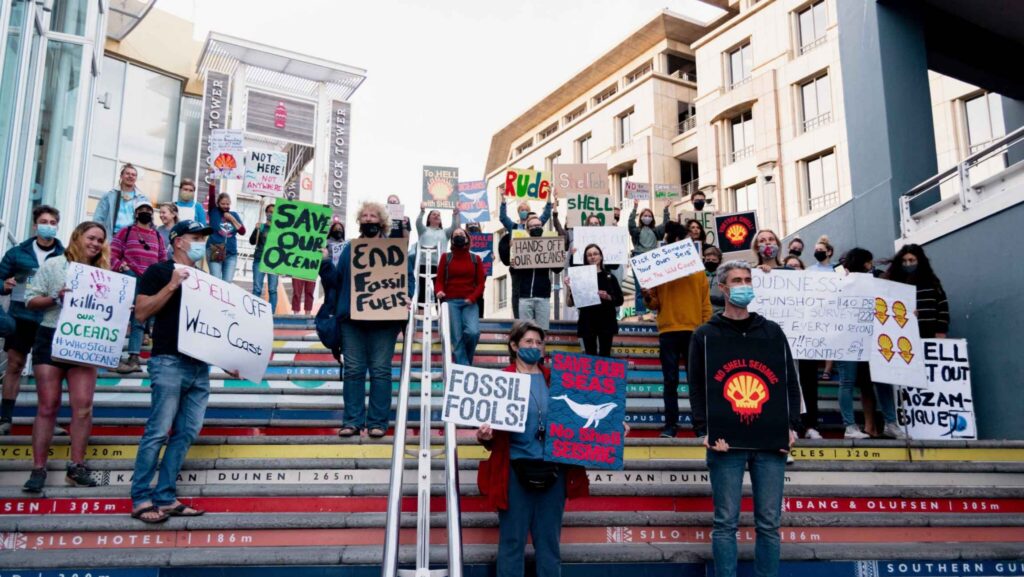
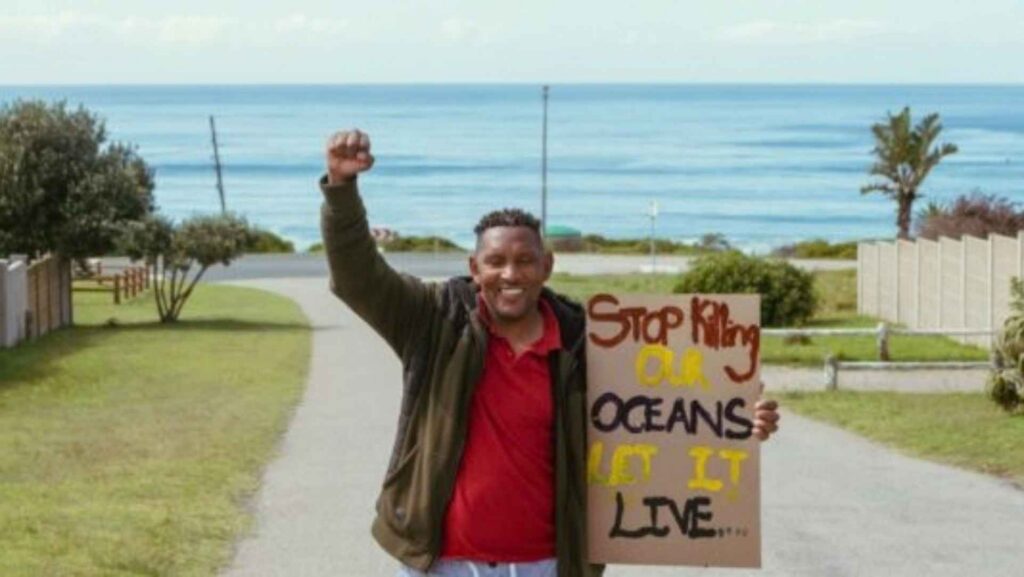
Coastal communities, who are most affected, say they are against plans to pursue more offshore oil and gas because of the threats to the ocean and their livelihoods, and also to their way of life. They say that these companies have no idea of the impacts they could suffer if the ocean is harmed and if they are restricted access. Concerned about potential harm to marine life and ecosystems and the subsequent effect on their livelihoods if any of these should be harmed, small-scale fishers and coastal communities say they want meaningful consultation regarding all oil and gas project proposals.