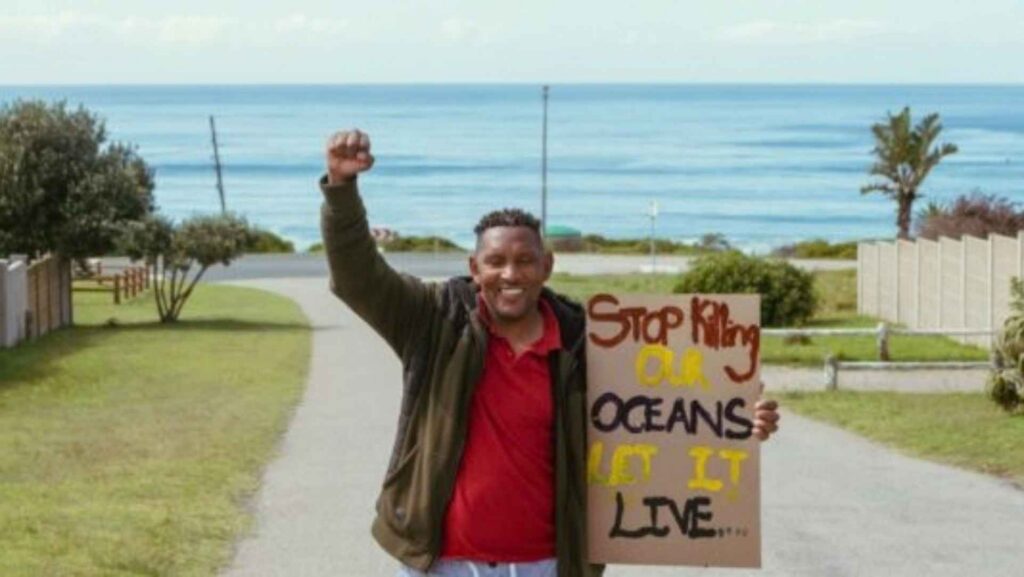
Today (Monday 7 February), small-scale fishers from the West Coast – joined by The Green Connection – head to the Western Cape High Court, in a bid to stop the seismic blasting which likely commenced in the region in January 2022, in search for oil and gas reserves. The third court action of its kind in less than two months, the latest urgent interdict was initiated by small-scale fisher communities from Saldanha, Langebaan, Lamberts Bay, Port Nolloth and St. Helena Bay on the West Coast. Similar to the case brought against the Minister of Mineral Resources and Energy in December by communities on the Wild Coast, small-scale fishers on the West Coast urgently require Searcher GeoData UK to halt its seismic blasting, for fear that it will harm the marine ecosystem, along with the livelihoods of those who depend on it. According to the legal team, the fishers have told the court that Searcher’s operation is unlawful since it did not seek an environmental authorisation in terms of South Africa’s environmental legislation, which it is legally required to do. Searcher also did not consult with any small-scale fishing communities along the West Coast, despite the impact that the survey will have on snoek and other line fish species, the mainstay of West Coast fishing communities. According to The Green Connection’s Community Outreach Coordinator Neville van Rooy, “Our government cannot ignore the overwhelming outcry from so many under-threat fishing communities, especially along the coastline, who now must consistently rely on the judicial system to protect them from harmful, unjust State decisions. The time has come for this government to smell the snoek and to make better choices regarding the country’s economic development. It cannot be that our government is willing to flush tens of thousands of small-scale fisher livelihoods down the drain and claim that this is for the good of the people.”
Small-scale fishers on the West Coast are in court on Monday, due to concerns about the impact that the Searcher seismic survey will have on snoek and other line fish species, the mainstay of West Coast fishing communities. Small-scale fisher woman from Langebaan Coastal Links Solene Smith says that she is pleased that the court case is happening so quickly, since court proceedings can often be long-drawn-out processes. Smith, who is an applicant in the case says, “I am not alone in my desire to keep our oceans safe from oil and gas operations. Over the past few months, it has become evident that many people here and abroad recognise our oceans as a resource that must be protected. For traditional fishers, who have been living from the ocean for hundreds of years, the ocean is more than just a resource that sustains our livelihoods and keep our families going. For us, who have lost family members and ancestors at sea, the ocean is part of our heritage, which we believe is worth protecting. We will continue to fight to be recognised by yet another government, as worthy citizens, who are actively contributing to our country’s development and economy.”
Small-scale fishers told the court that Searcher’s seismic operations are unlawful since it did not seek an environmental authorisation in terms of South Africa’s environmental legislation, nor did it consult with any small-scale fishing communities along the West Coast.
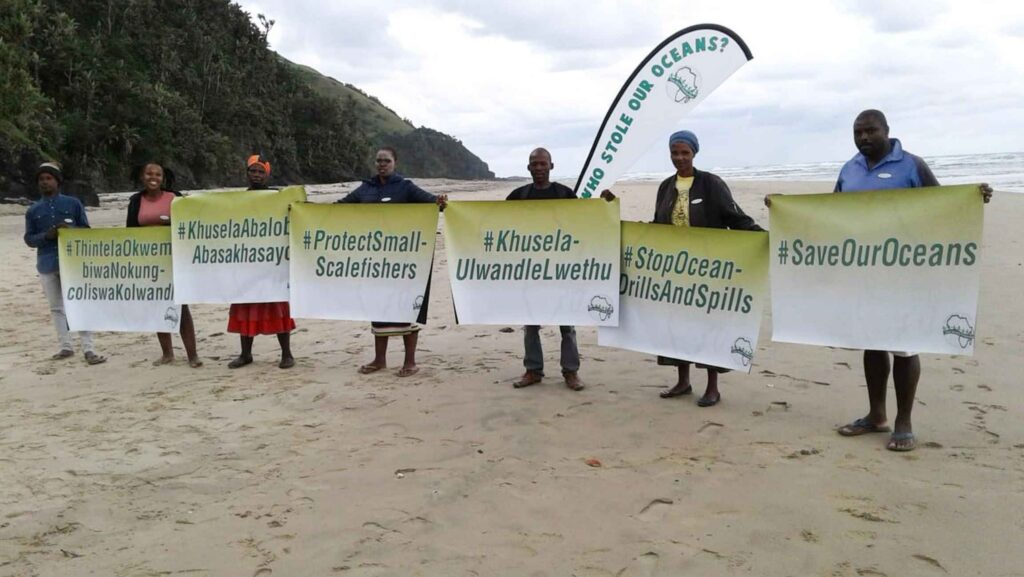
Christian Adams, a small-scale fisher from Steenberg Cove in the West Coast and member of the South African Small-Scale Fishers Collective (SASSFC), is also an applicant in the case. Adams says, “Mr. Mantashe, you continue with these development things without consulting us. You talk about Karpowerships, with no consultation. Ibubhesi gas field? Again, no consultation. When will you come to the fisher’s and consult with us? You are threatening our only source of livelihood. I sincerely hope that through the court – which seems to be the only way we can ensure just and ethical actions from our government – we will be able to stop this survey from continuing because clearly our government is not listening to us. How is it possible that the biggest polluter on the continent, South Africa, continues to chase of fossil fuels in our oceans, whilst as a country we are blessed with unbridled sunshine all year round and with wind which has kept me at home more times than I can count?” Small-scale fishers in St. Helena Bay and Elandsbaai held pickets on Sunday. Fisher woman and Chair of Coastal Links Saldanha (and also one of the applicants) Carmelita Mostert says, “What I want to see is that all the plans for offshore oil and gas are squashed for good and that any desire to pursue it, is extinguished forever. Not only will more of these fossil fuels affect the climate crisis, but as people who have always made our living and life from the sea, we cannot risk the damage. This is why it is so important that government hears us on this issue. We need the ocean to put food on the table for our families and since it is woven into our heritage, we must keep it safe for our children and for future generations. Therefore, as the small-scale fishers who will be most affected by these harmful proposals, we say keep your hands off our oceans. There will be no fish to eat, once the drilling starts.” According to marine expert Professor Merle Sowman, the reconnaissance permit granted a to Searcher Geodata covers a vast area off the west coast of South Africa and constitutes one of the most productive marine systems in the world. The high primary production of this ecosystem makes it a unique region in terms of biodiversity, fisheries production and conservation. “Government must recognise the economic, social and historic value of our small-scale fishers and it must acknowledge that its short-sighted ‘Gas Plan’ would have devastating effects on these communities. Furthermore, this gas aspirations, which will keep the country’s energy generation in the fossil era, will only make the climate crisis worse, leaving these already-vulnerable communities even worse off,” adds van Rooy.
The court case has also garnered support from other communities. Ntsindiso Nongcavu from Coastal Links says that small-scale fishers in Eastern Cape stand in solidarity with the West Coast communities. He says, “We believe that the legal team will represent us fishers well tomorrow in the Western Cape High Court and we believe that the court proceedings will give us a way forward that favours us as the coastal communities. Since our elected government continues to betray us by allowing foreign companies to destroy our oceans, we must stand together and speak as one to protect our marine animals. We want our children to see that if people come together, they can conquer the injustices in the country.”
30 September 2021 was supposed to be the commercial close – a date set by the Department of Mineral Resources and Energy (DMRE) – for bidders in the Risk Mitigation Independent Power Producers Procurement Programme (RMI4P).
This week, The Green Connection submitted its comments critiquing several aspects of the Environmental Impact Assessment (EIA) process, particularly the lack of procedural fairness, as well as the conclusions reached – notwithstanding information gaps and scientific uncertainty – that should form part Tosaco Energy’s request to undertake various activities in Block 1, off the West Coast.
Following their recent graduation from The Green Connection’s Legacy Champions Programme, these newly empowered Green Connectors say they feel equipped with the necessary advocacy skills to make positive changes in their communities, starting with their vote in the local elections (1 November) and weighing in on the discussions around COP26 (which starts on 31 October) – as part of their efforts to oppose oil and gas developments in the country and offshore.
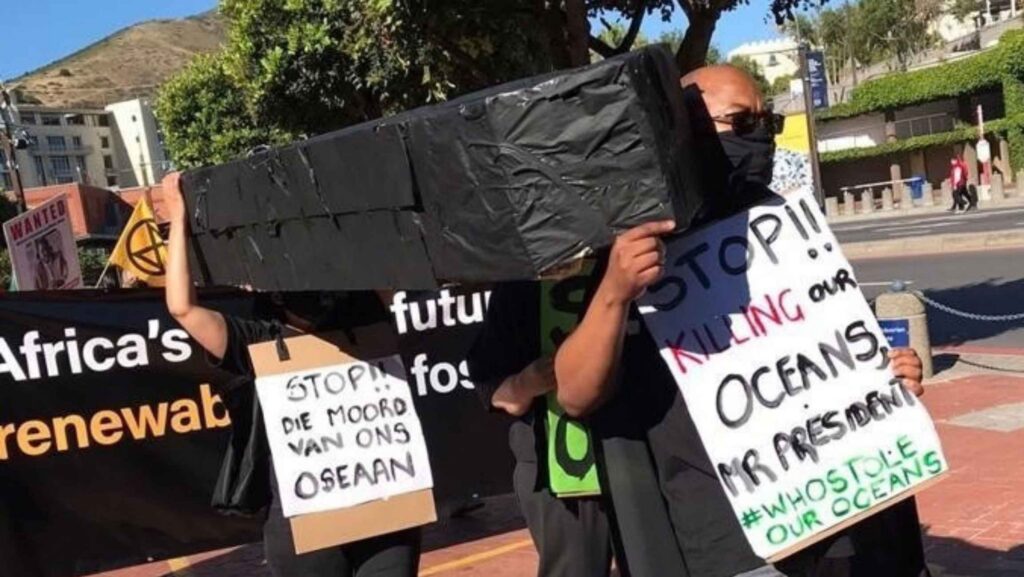
This week (10 November 2021), we joined other environmental defenders in Cape Town to peacefully demonstrate outside the African Energy Week #AEW2021 conference venue demanding an end to fossil fuels and the immediate pivot toward the just transition to a renewable energy future.
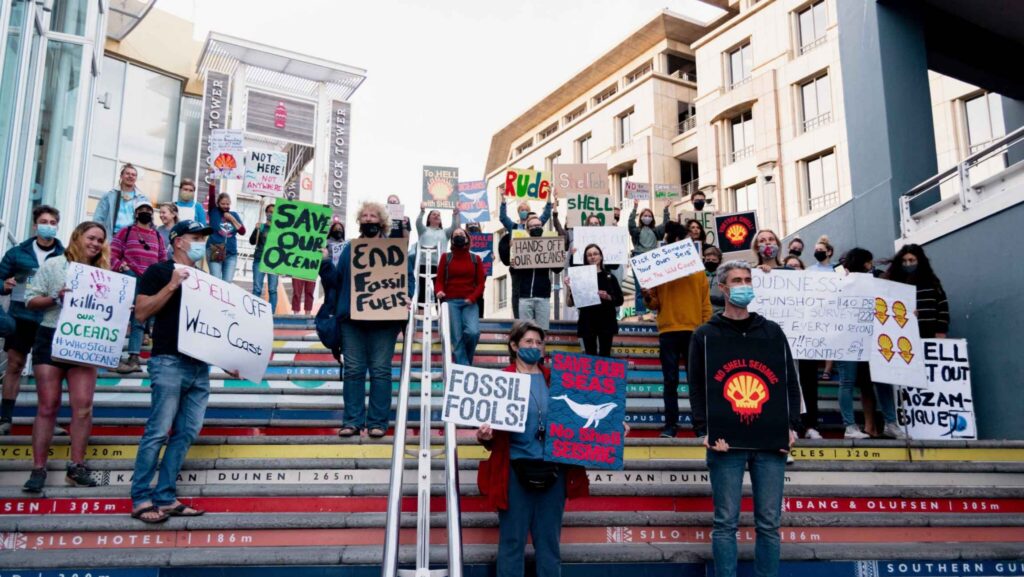
On Sunday morning, (21 November 2021), before the crack of dawn, nearly 200 concerned environmental defenders took to the Waterfront to get a glimpse of Shell’s seismic testing vessel, Amazon Warrior, as it made its way into Cape Town harbour. The vessel travelled down the West coast of Africa, on its way to the Wild Coast, to conduct seismic surveys for an estimated five (5) months.
As the groundswell of opposition against Shell’s upcoming 3D seismic survey off the Transkei builds, the Green Connection – an ecojustice NGO that supports small-scale fishers in advocating for their livelihoods – reacted with astonishment to a press statement issued by the Department of Mineral Resources and Energy (DMRE) on 9 December 2021.