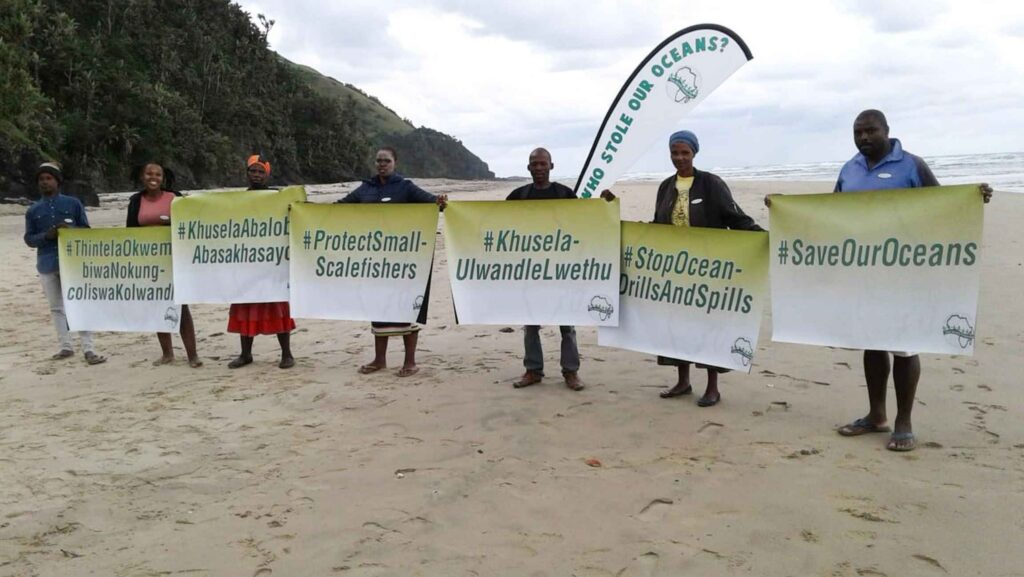
In November, COP27 sees world leaders and other important decision-makers meet to discuss global efforts to address the climate crisis. Recent press reports have revealed that the country is the world’s 13th biggest source of climate-warming greenhouse gases and has pledged to reduce these emissions to net zero by 2050. Yet, the government continues to promote offshore oil and gas exploitation. This begs the question – is the government committed to addressing climate change, or committed to exploiting fossil fuels? It can’t be both, and it has become glaringly obvious that it is up to the people of South Africa to intervene to put a complete stop to any future seismic survey operations.
At this moment, we The Green Connection are gearing up to ward off Searcher’s second attempt to conduct seismic surveys in the ocean off the West Coast. The proposed 3D seismic survey area is around 30 000 km2 and the project would last for approximately 127 days, which may heavily disrupt and harm delicate marine ecosystems, causing risk of physical damage to marine animals and massively affecting entire small-scale fishing communities within the survey area.
This month we submitted our comments on the Searcher draft Basic Assessment Report (BAR). One of the issues raised was of underwater noise, whereby the impacts of noise on all species should be assessed including potential impacts on the migration of snoek, and juvenile turtles, that are in turn dependent on other species. Marine Ecologist and Associate Professor (Department of Biological Sciences, UCT) Colleen Maloney, in her support of the Searcher urgent interdict seismic survey case, in her affidavit stated that the ecosystem off the west coast of South Africa is one of the world’s most productive marine environments, with several nursery grounds for fishes, and an abundance of fishes, large crustacean zooplankton and squids that further support top predator populations, such as seabirds and marine mammals. This ecosystem must be protected at all costs. It is simply not in the interests of the citizens of South Africa to expose our oceans and coasts to the detrimental impacts of seismic surveys, nor to the increased risk of a potentially catastrophic major oil spill during exploration drilling – or during subsequent production operations, should commercially exploitable oil or gas reserves be discovered.
If our government is not going to step up, it is up to the members of the public to join organisations movements through; signing petitions, joining and organising protests, formally lodging their opposition to seismic surveys and take oil and gas companies to court. If it seems impossible, know that it is not. The first attempt by Searcher to blast our oceans was stopped when the company was taken to court by community and civil society applicants and the Western Cape Division of the High Court granted an order interdicting Searcher from continuing the seismic survey. The court ruled against Searcher on the 1st of March, as they failed to meaningfully consult small-scale fishers, communities and other affected groups and failed to conduct an environmental impact assessment. The same occurred in the Shell Wild Coast seismic survey case. The court agreed with those opposing the Shell survey that no proper consideration was given to climate change impacts of the proposed exploration. The court referred to expert testimony that stated that ‘authorising new oil and gas exploration, with its goal of finding exploitable oil and/or gas reserves and consequently leading to production, is not consistent with South Africa complying with its international climate change commitments’. In other words, even if oil and gas are found, we will not be able to burn them because the climate change impacts go directly against our – and global – climate change goals.
Despite their first defeat in the courts, Searcher have neglected to make any mention of this in their EIA application, and – rather duplicitously – their reconnaissance permit application is described as a new application.
Nevertheless, the 2021 Searcher victory, and the Shell victory, are testament to the fact that when we join up, rise up and speak up, we can hold the government accountable, and we can protect our oceans and our rights as custodians of our oceans. In the upcoming Medium-Term Budget Policy Statement (MTBPS), we hope the government will highlight how they will stop investing in offshore oil and gas, in order to decarbonise the economy.

BENDING OVER BACKWARDS, DMRE GIVES KARPOWERSHIPS ANOTHER BREAK
30 September 2021 was supposed to be the commercial close – a date set by the Department of Mineral Resources and Energy (DMRE) – for bidders in the Risk Mitigation Independent Power Producers Procurement Programme (RMI4P).
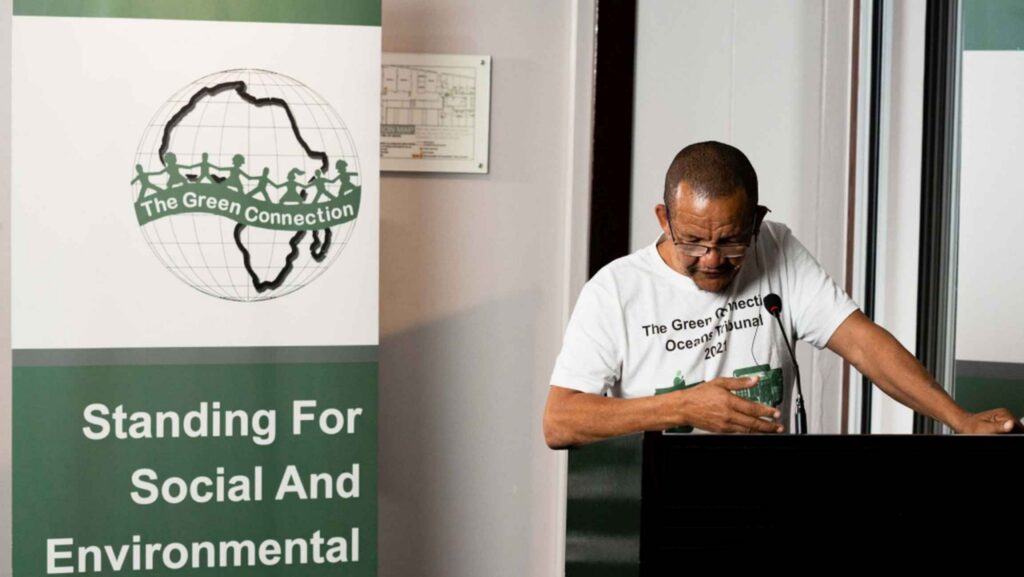
TOSACO EIA MET WITH PUSHBACK FROM CIVIL SOCIETY, TO PROTECT THE OCEAN AND SMALL-SCALE FISHER LIVELIHOODS
This week, The Green Connection submitted its comments critiquing several aspects of the Environmental Impact Assessment (EIA) process, particularly the lack of procedural fairness, as well as the conclusions reached – notwithstanding information gaps and scientific uncertainty – that should form part Tosaco Energy’s request to undertake various activities in Block 1, off the West Coast.

RECENTLY GRADUATED GREEN CONNECTORS, EQUIPPED FOR THE POLLS AND READY TO WEIGH-IN ON COP26
Following their recent graduation from The Green Connection’s Legacy Champions Programme, these newly empowered Green Connectors say they feel equipped with the necessary advocacy skills to make positive changes in their communities, starting with their vote in the local elections (1 November) and weighing in on the discussions around COP26 (which starts on 31 October) – as part of their efforts to oppose oil and gas developments in the country and offshore.
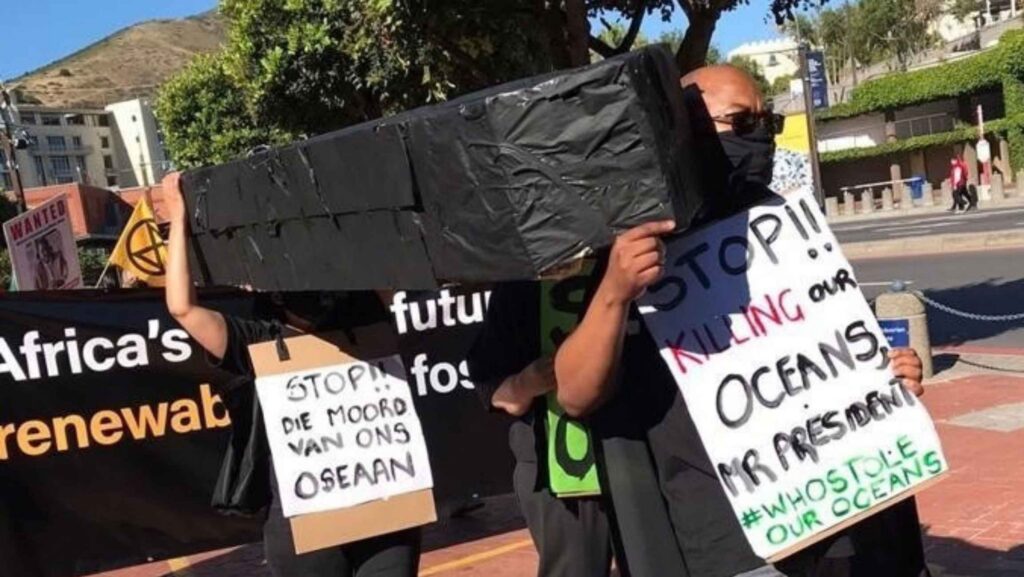
GREEN CONNECTION’S ‘FUNERAL FOR THE CLIMATE’ (AFRICAN ENERGY WEEK) AND COMMENT ON YESTERDAY’S BUDGET SPEECH
This week (10 November 2021), we joined other environmental defenders in Cape Town to peacefully demonstrate outside the African Energy Week #AEW2021 conference venue demanding an end to fossil fuels and the immediate pivot toward the just transition to a renewable energy future.
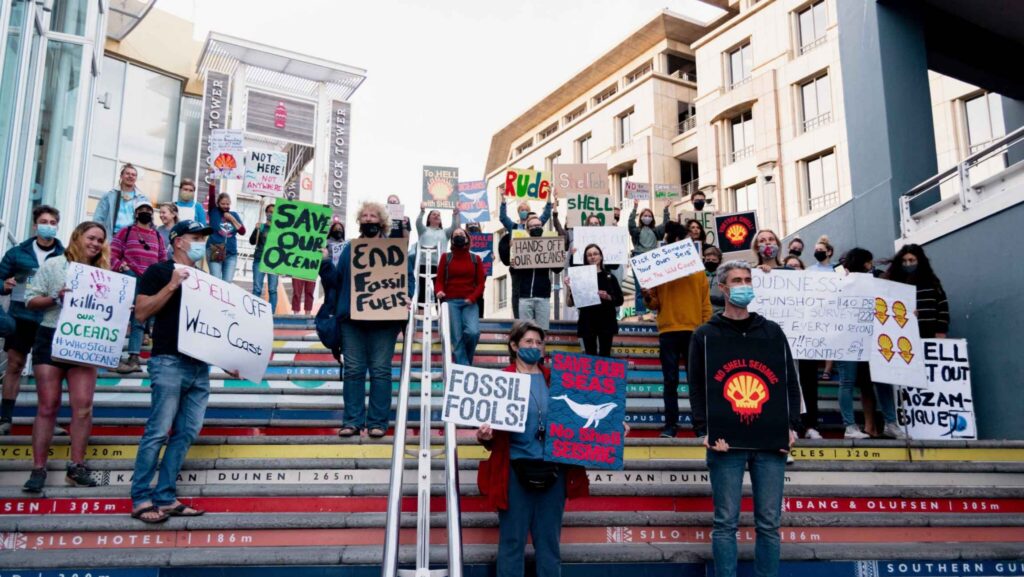
CLOSE TO 200 PEOPLE RISE AT CRACK OF DAWN TO PROTEST THE ARRIVAL OF SHELL’S SEISMIC MONSTER, AMAZON WARRIOR
On Sunday morning, (21 November 2021), before the crack of dawn, nearly 200 concerned environmental defenders took to the Waterfront to get a glimpse of Shell’s seismic testing vessel, Amazon Warrior, as it made its way into Cape Town harbour. The vessel travelled down the West coast of Africa, on its way to the Wild Coast, to conduct seismic surveys for an estimated five (5) months.
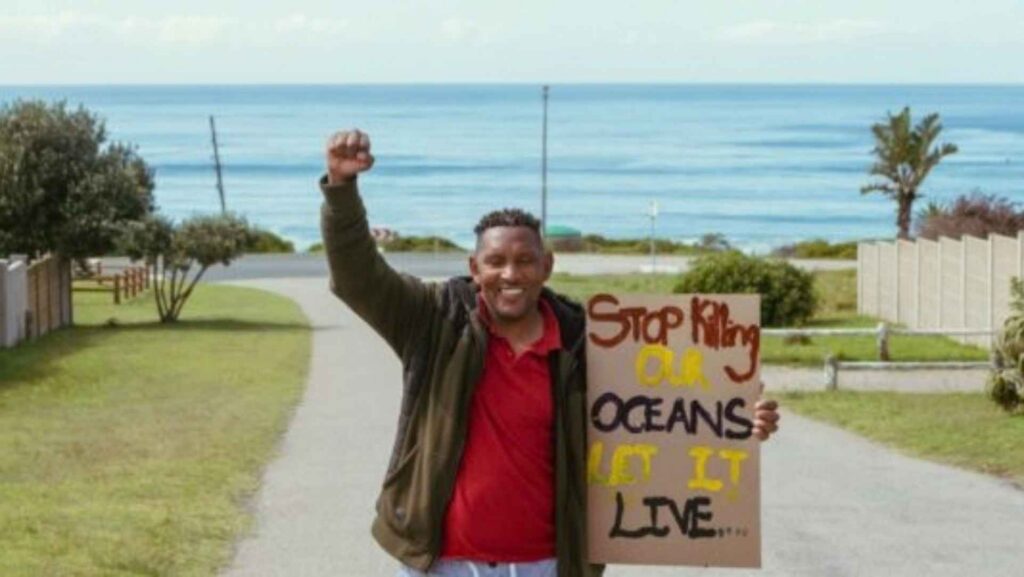
ENVIRONMENTALISTS DOUBLE-UP ON EFFORTS TO OPPOSE UPCOMING AND FURTHER SEISMIC TESTING IN SOUTH AFRICA’S OCEANS
As the groundswell of opposition against Shell’s upcoming 3D seismic survey off the Transkei builds, the Green Connection – an ecojustice NGO that supports small-scale fishers in advocating for their livelihoods – reacted with astonishment to a press statement issued by the Department of Mineral Resources and Energy (DMRE) on 9 December 2021.
