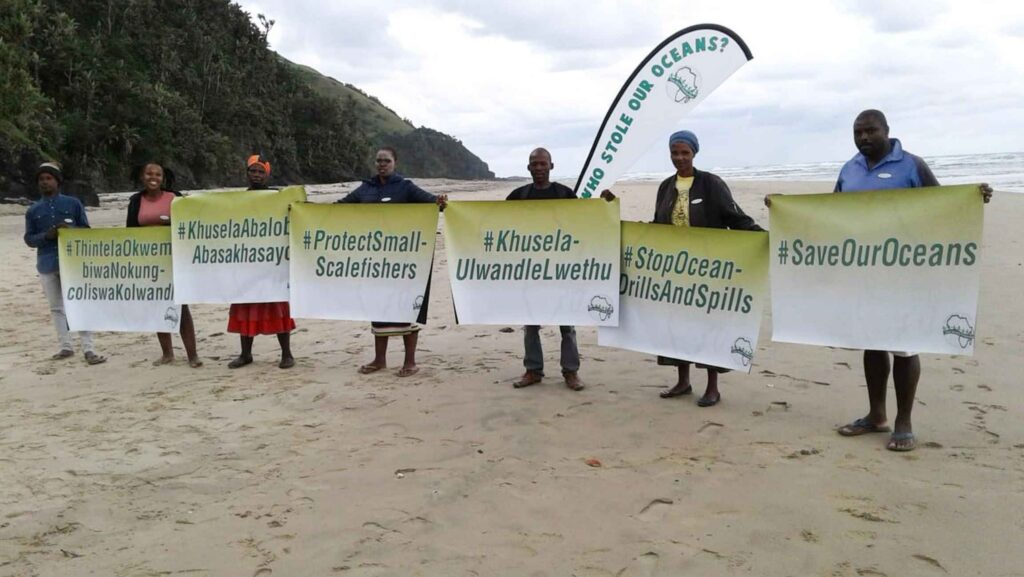
The Green Connection says that Minister Gwede Mantashe’s excuses and blame shifting about the terrible state of Eskom and the country’s failing energy systems are unacceptable. 29 June 2022, unscheduled Cabinet Meeting in Parliament, the eco-justice organisation says that citizens are right to blame the government since it has been in control of the state utility and the country’s energy decisions for the past 28 years, and it is clearly failing in these responsibilities. The NGO adds that it is disturbing that in three decades, the government has failed to develop and implement a proper energy plan for the country, which would ensure affordable and widespread energy access, would come online much sooner, and help adapt to climate change.
The Green Connection’s Community Outreach Coordinator Neville van Rooy says, “After more than 4 years as the Minister responsible for ensuring the country’s energy security, we believe that Mantashe is also failing in his role. While citizens are calling for energy choices that are more aligned to the just transition, the Department of Mineral Resources and Energy (DMRE) seems set on promoting big ticket fossil fuels projects. South Africa has an Integrated Resource Plan (IRP) for electricity, which calls for increased renewable energy. And while the IRP, as it exists, does need updating, we have seen a definite hesitance from the department to roll it out.”
According to The Green Connection, Minister Mantashe does not seem to be willing to engage in meaningful consultation with some stakeholders, such as small-scale fishers, seemingly in favour of progressing government’s undesirable energy projects. These projects do not provide an adequate solution to the energy crisis and could directly lead to job losses for small-scale fishers, in addition to causing environmental damage. Since DMRE seems hellbent on making energy-related decisions (often bad) without meaningful consultation with civil society and small-scale fishers, the Minister should take responsibility for his role in the country’s failing energy systems.
The Green Connection’s Strategic Lead Liziwe McDaid says, “Why does South Africa not have an Integrated Energy Plan (IEP) yet? Since 2020, we have been calling on the President to enact section 6 of the National Energy Act, to ensure that the Minister develops the energy plan, which is reviewed annually and published in the Government Gazette. However, without section 6 enacted, the country is stuck with outdated plans that still largely ignores renewable energy, while still relying heavily on carbon-emitting fossil fuels. Integrated energy planning is a core part of the just transition, but without a lawful IEP in place, it is difficult to see how South Africa will make the orderly transition from relying on unsustainable fossil fuels and nuclear energy, to the sustainable renewable energy future we need. President Ramaphosa practically had to twist the Minister’s arm to speed up adding electricity to grid, by relaxing regulations to allow 100mw generation without a license.”
“Sadly, because of his apparent love affair with oil and gas, he seems to be more of a minister of oil and gas rather than the Minister of Energy (which consists of more than just fossil fuels). Civil society has increasingly had to rely on the courts to stop ongoing bad energy decisions. Not only is The Green Connection taking government to court to argue against the Karpowership SA deal – which seems to have Minister Mantashe’s unwavering support, but which we believe is not in the public interest – we also had to go to court, with small-scale fishers, to defend their rights against Searcher’s seismic surveys, while other communities had to stand their ground against government and Shell,” says van Rooy.
He asks, “When will citizens see this government take accountability for its actions? If we continue like this, with everyone pointing fingers at someone else, then who can we count on to lead us out of this mess? And we must be realistic, it is not only the country’s energy that is in a mess. The disintegration of our public transport systems and the increasing threat to water and sanitation systems, are further examples of the country’s weak governance structures.”
“It is counter-productive to have a government that does not take accountability for their responsibilities, shifting blame to everyone else, but themselves. This democracy is failing because our decision makers do not seem to understand that their decisions have consequences and that they are accountable to the people. If our ‘leaders’ are not willing to take responsibility, then maybe they should not be in such powerful positions. Those in power should be willing to accept the consequences of their actions, otherwise they should not be there,” McDaid concludes.

BENDING OVER BACKWARDS, DMRE GIVES KARPOWERSHIPS ANOTHER BREAK
30 September 2021 was supposed to be the commercial close – a date set by the Department of Mineral Resources and Energy (DMRE) – for bidders in the Risk Mitigation Independent Power Producers Procurement Programme (RMI4P).
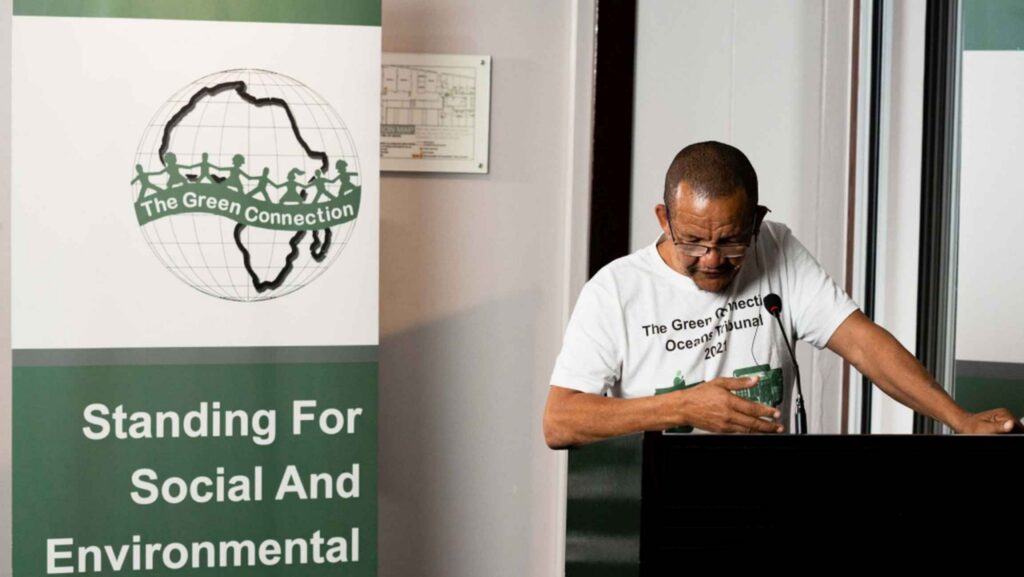
TOSACO EIA MET WITH PUSHBACK FROM CIVIL SOCIETY, TO PROTECT THE OCEAN AND SMALL-SCALE FISHER LIVELIHOODS
This week, The Green Connection submitted its comments critiquing several aspects of the Environmental Impact Assessment (EIA) process, particularly the lack of procedural fairness, as well as the conclusions reached – notwithstanding information gaps and scientific uncertainty – that should form part Tosaco Energy’s request to undertake various activities in Block 1, off the West Coast.

RECENTLY GRADUATED GREEN CONNECTORS, EQUIPPED FOR THE POLLS AND READY TO WEIGH-IN ON COP26
Following their recent graduation from The Green Connection’s Legacy Champions Programme, these newly empowered Green Connectors say they feel equipped with the necessary advocacy skills to make positive changes in their communities, starting with their vote in the local elections (1 November) and weighing in on the discussions around COP26 (which starts on 31 October) – as part of their efforts to oppose oil and gas developments in the country and offshore.
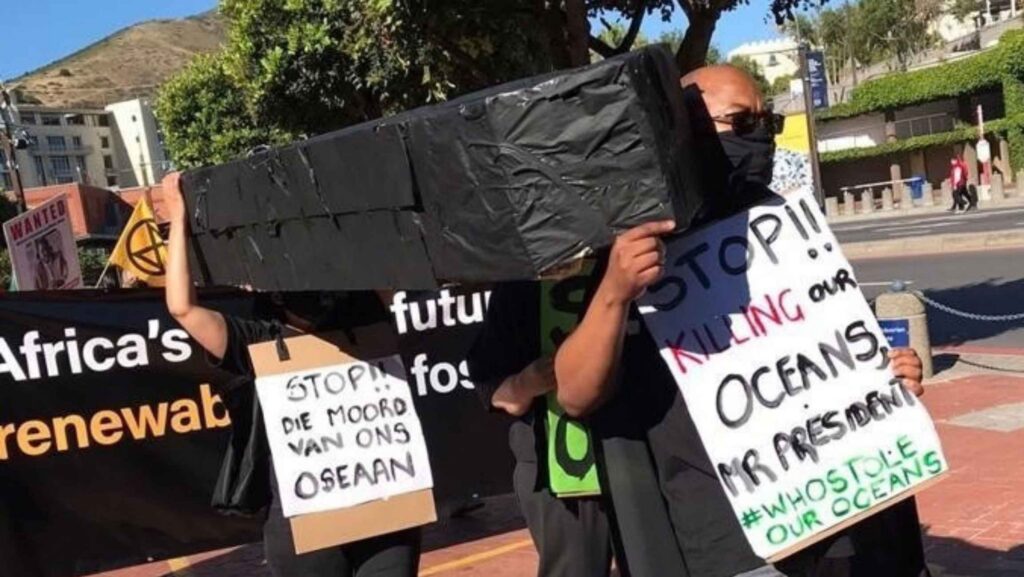
GREEN CONNECTION’S ‘FUNERAL FOR THE CLIMATE’ (AFRICAN ENERGY WEEK) AND COMMENT ON YESTERDAY’S BUDGET SPEECH
This week (10 November 2021), we joined other environmental defenders in Cape Town to peacefully demonstrate outside the African Energy Week #AEW2021 conference venue demanding an end to fossil fuels and the immediate pivot toward the just transition to a renewable energy future.
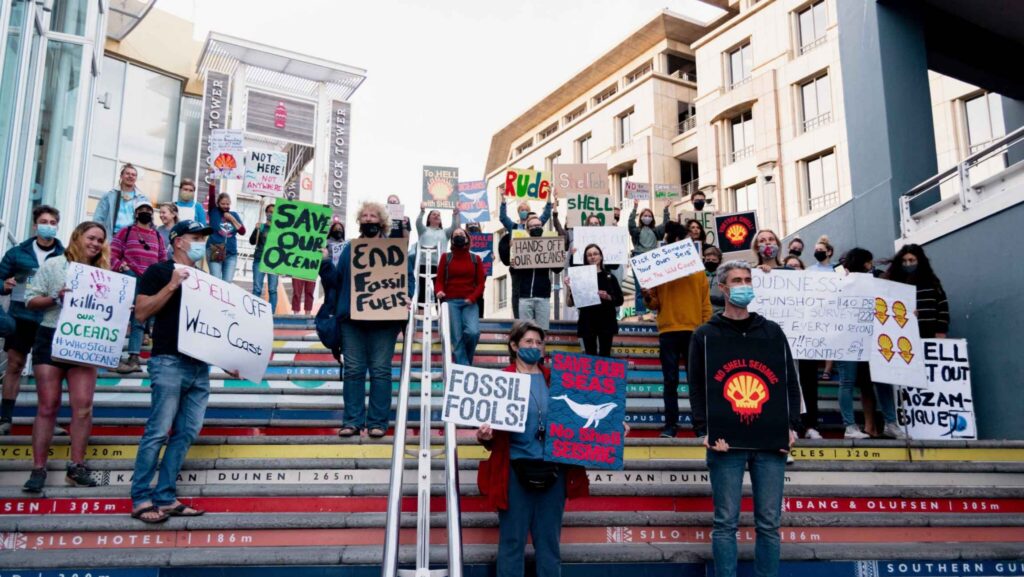
CLOSE TO 200 PEOPLE RISE AT CRACK OF DAWN TO PROTEST THE ARRIVAL OF SHELL’S SEISMIC MONSTER, AMAZON WARRIOR
On Sunday morning, (21 November 2021), before the crack of dawn, nearly 200 concerned environmental defenders took to the Waterfront to get a glimpse of Shell’s seismic testing vessel, Amazon Warrior, as it made its way into Cape Town harbour. The vessel travelled down the West coast of Africa, on its way to the Wild Coast, to conduct seismic surveys for an estimated five (5) months.
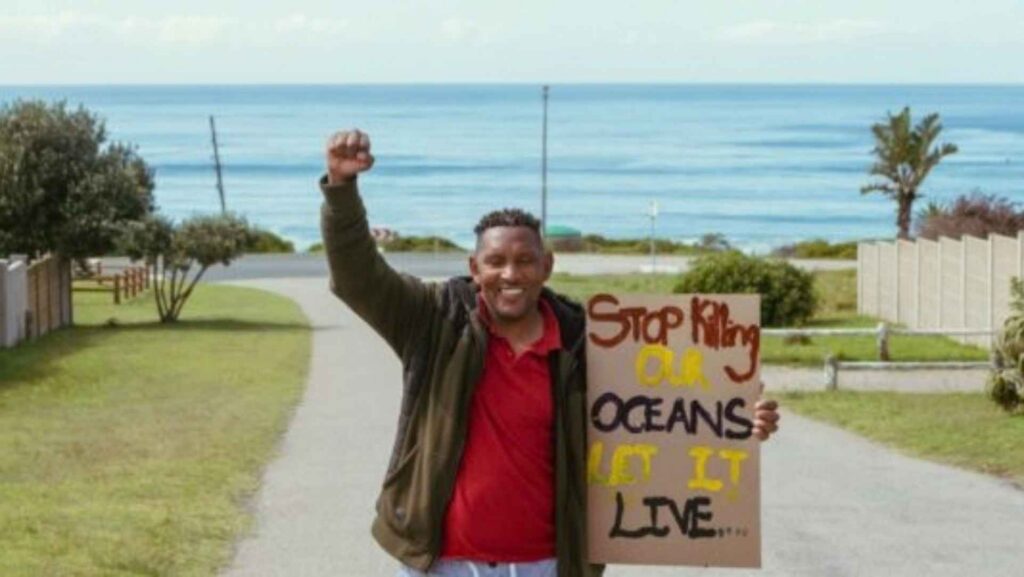
ENVIRONMENTALISTS DOUBLE-UP ON EFFORTS TO OPPOSE UPCOMING AND FURTHER SEISMIC TESTING IN SOUTH AFRICA’S OCEANS
As the groundswell of opposition against Shell’s upcoming 3D seismic survey off the Transkei builds, the Green Connection – an ecojustice NGO that supports small-scale fishers in advocating for their livelihoods – reacted with astonishment to a press statement issued by the Department of Mineral Resources and Energy (DMRE) on 9 December 2021.
