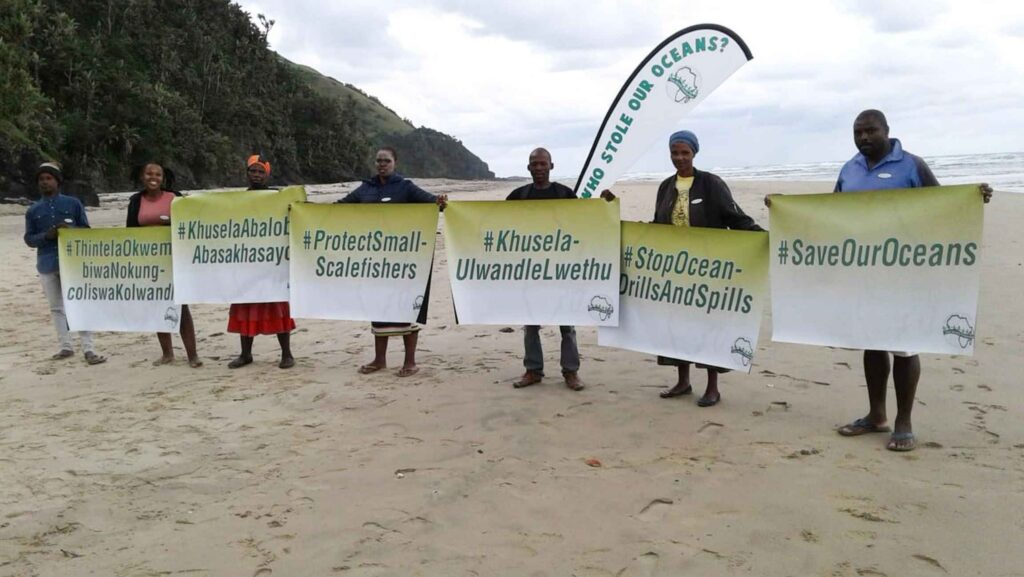
On 24 February, small-scale fishers from communities in the West Coast – joined by The Green Connection – were back in court, to finally put a stop to Searcher’s seismic blasting of the west and south-west coast of South Africa. The Western Cape High Court heard arguments to decide if the ban – which took effect on 7 February when the Honourable Justice Thulare directed Searcher to discontinue any activities related to the seismic survey – will remain in place.
The Green Connection’s Strategic Lead Liziwe McDaid says, “It really is beautiful to see the law in action, as we did today. Our advocate argued our case strongly, showing that communities were not meaningfully consulted. It was argued by our advocate that the Mineral and Petroleum Resources Development Act had not been followed – since it requires environmental authorisation – and Searcher seemed unable to counter that in argument. The precautionary principle was highlighted, which requires that a risk-averse approach be followed. Now we wait for the judgement, which we hope will come through early next week, not only to vindicate our small-scale fishers but also so that they can get back to their livelihoods.”
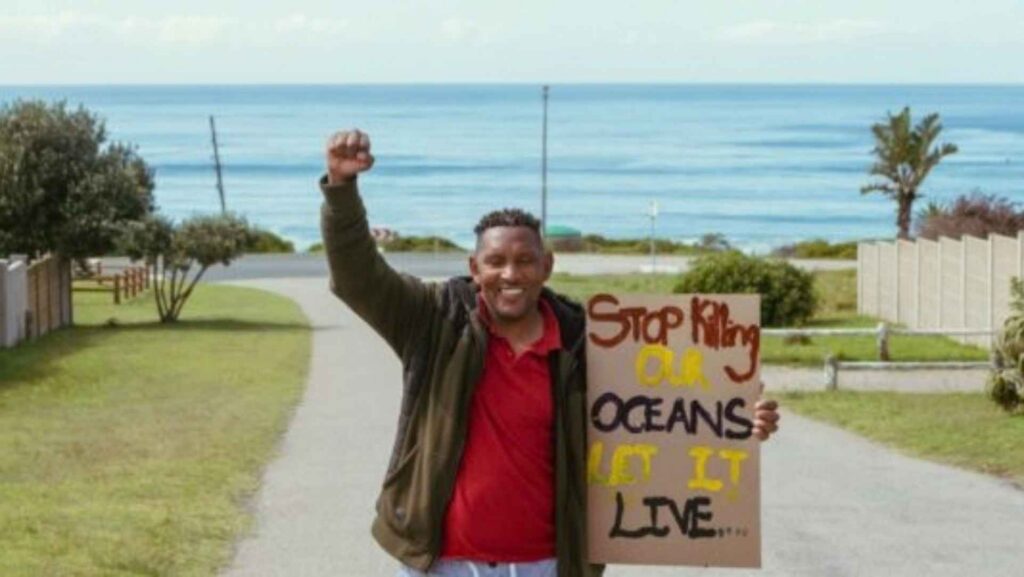
On 14 February following Searcher’s attempt to have the ‘interim’ interim interdict lifted – which was supposed to be in place till 7 March – the court ordered the ban to stay in place. However, the court case to hear the interdict was brought forward from 7 March to 24 February. Today, small-scale fishers from around the country held a number of picket demonstrations, in a show of solidarity. The fishers are calling for an end to government’s drive to pursue harmful offshore oil and gas exploration and drilling, which inevitably includes seismic testing. They believe that any development, through an ocean’s economy, should have fisher folk at its heart.
“We are pleased that Searcher has said it is unlikely that they would come back for further seismic surveys in SA, unless there is business certainty. We hope this serves as a lesson for oil, gas, and any other companies wanting to do business with South Africa. The law is there to protect the people and as companies whether local or foreign, along with our government, should follow our country’s laws. This means following the required processes, which includes meaningful participation with interested and affected parties, before any decisions have been made,” says McDaid.
Searcher was granted a reconnaissance permit in terms of section 74 of the Mineral and Petroleum Resources Development Act 2002 (MPRDA) by the Petroleum Agency of South Africa (PASA) on 9 November 2021. However, the MPRDA requires that environmental authorisation before activities can commence.
Small-scale fisher from Steenberg Cove in the West Coast and an applicant in the case, Christian Adams says, “The area that Searcher wants to continue blasting is a particularly rich and productive ecosystem. This part of the ocean plays an integral role in sustaining the livelihoods of small-scale fishers like me, who live along this part of the coast. Snoek and hake are very popular with local consumers and represent the mainstay of the income of fishers. Expert reports state that the behaviour of the snoek may be disrupted due to the seismic blasting, and it may also affect their feeding grounds and reproduction behaviours, which may affect the future survival of the fish.” Adams is a member of the South African Small-Scale Fishers Collective (SASSFC) and Fishers United.
According to The Green Connection’s Community Outreach Coordinator Neville van Rooy, “We trust that the law will once again be on the side of the small-scale fishers who are fighting for their right, not only to sustain but also to decide their own livelihoods. We do not see any development as progress, if it threatens or endangers our rich, yet delicate marine ecosystems or if it risks dismantling thousands of livelihoods that have been established over many generations.”
Ntsindiso Nongcavu from Coastal Links says that small-scale fishers in Eastern Cape stand in solidarity with the West Coast communities. He says, “As small-scale fishers in Port St John’s under The Green Connection’s Legacy Project, we support West Coast communities and environmental activists. We stand with fellow fishers of the Western Cape as they wait to hear what the judge has to say. We condemn Shell and Searcher’s plans to drill our oceans in search for oil and gas. We believe that our fish will go extinct, when they are already under threat due to climate change, and the next generation will be robbed of their heritage.
Government must listen to the people. We must decide what kind of development we want. We have cooperatives that have existed since 2018 but these have not been put to use. I believe that this is how we can boost the economy, if only government were to invest in them. We could create employment opportunities where some fish, others process and so on.
Unity is power. The oceans belong to us, not the rich. Not foreign businesses. Government needs to respect those who voted them into power. That is us, not these foreign companies. Our government must put our interests forward, otherwise we will find an alternative government.”

BENDING OVER BACKWARDS, DMRE GIVES KARPOWERSHIPS ANOTHER BREAK
30 September 2021 was supposed to be the commercial close – a date set by the Department of Mineral Resources and Energy (DMRE) – for bidders in the Risk Mitigation Independent Power Producers Procurement Programme (RMI4P).
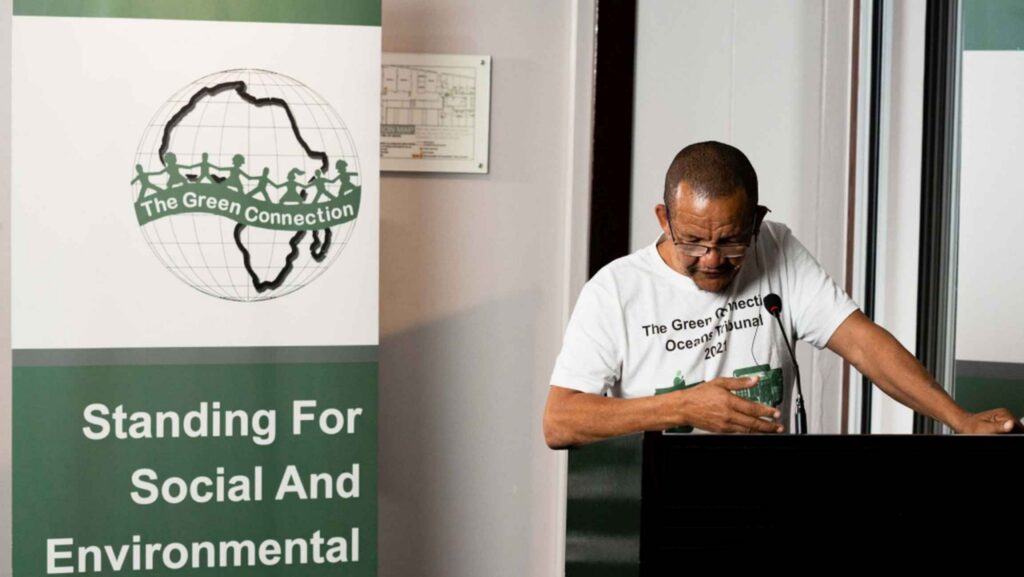
TOSACO EIA MET WITH PUSHBACK FROM CIVIL SOCIETY, TO PROTECT THE OCEAN AND SMALL-SCALE FISHER LIVELIHOODS
This week, The Green Connection submitted its comments critiquing several aspects of the Environmental Impact Assessment (EIA) process, particularly the lack of procedural fairness, as well as the conclusions reached – notwithstanding information gaps and scientific uncertainty – that should form part Tosaco Energy’s request to undertake various activities in Block 1, off the West Coast.

RECENTLY GRADUATED GREEN CONNECTORS, EQUIPPED FOR THE POLLS AND READY TO WEIGH-IN ON COP26
Following their recent graduation from The Green Connection’s Legacy Champions Programme, these newly empowered Green Connectors say they feel equipped with the necessary advocacy skills to make positive changes in their communities, starting with their vote in the local elections (1 November) and weighing in on the discussions around COP26 (which starts on 31 October) – as part of their efforts to oppose oil and gas developments in the country and offshore.
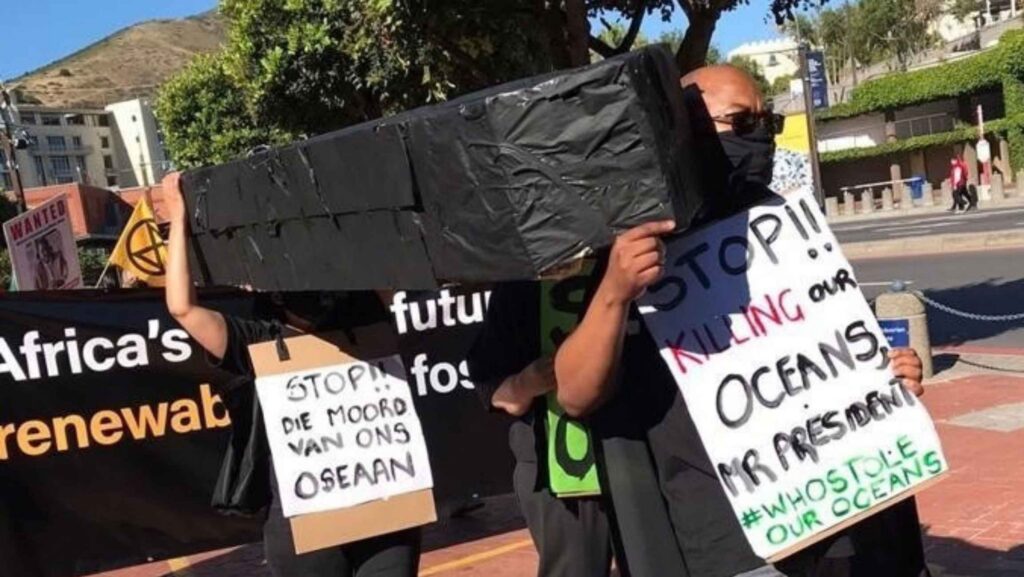
GREEN CONNECTION’S ‘FUNERAL FOR THE CLIMATE’ (AFRICAN ENERGY WEEK) AND COMMENT ON YESTERDAY’S BUDGET SPEECH
This week (10 November 2021), we joined other environmental defenders in Cape Town to peacefully demonstrate outside the African Energy Week #AEW2021 conference venue demanding an end to fossil fuels and the immediate pivot toward the just transition to a renewable energy future.
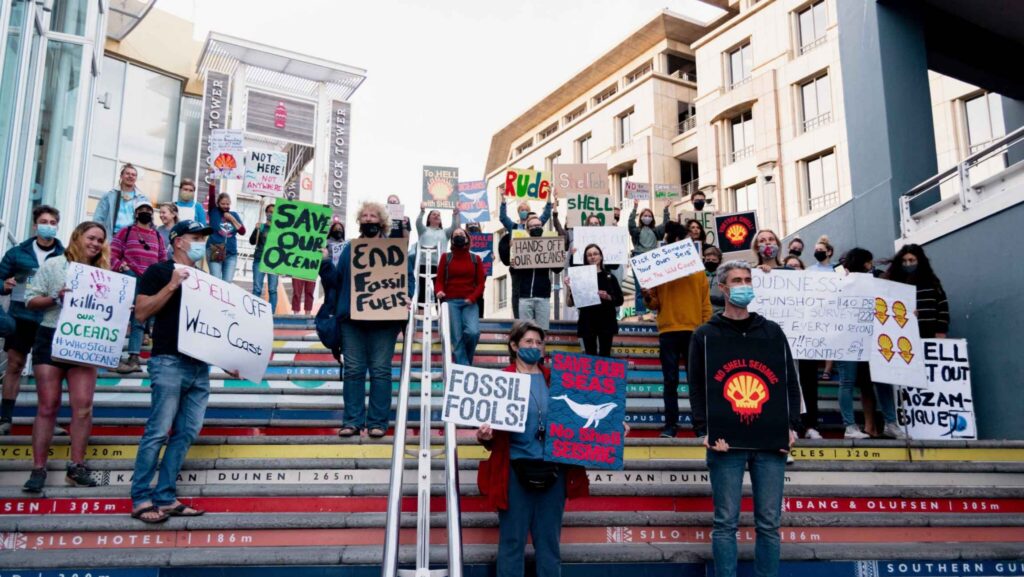
CLOSE TO 200 PEOPLE RISE AT CRACK OF DAWN TO PROTEST THE ARRIVAL OF SHELL’S SEISMIC MONSTER, AMAZON WARRIOR
On Sunday morning, (21 November 2021), before the crack of dawn, nearly 200 concerned environmental defenders took to the Waterfront to get a glimpse of Shell’s seismic testing vessel, Amazon Warrior, as it made its way into Cape Town harbour. The vessel travelled down the West coast of Africa, on its way to the Wild Coast, to conduct seismic surveys for an estimated five (5) months.
ENVIRONMENTALISTS DOUBLE-UP ON EFFORTS TO OPPOSE UPCOMING AND FURTHER SEISMIC TESTING IN SOUTH AFRICA’S OCEANS
As the groundswell of opposition against Shell’s upcoming 3D seismic survey off the Transkei builds, the Green Connection – an ecojustice NGO that supports small-scale fishers in advocating for their livelihoods – reacted with astonishment to a press statement issued by the Department of Mineral Resources and Energy (DMRE) on 9 December 2021.
