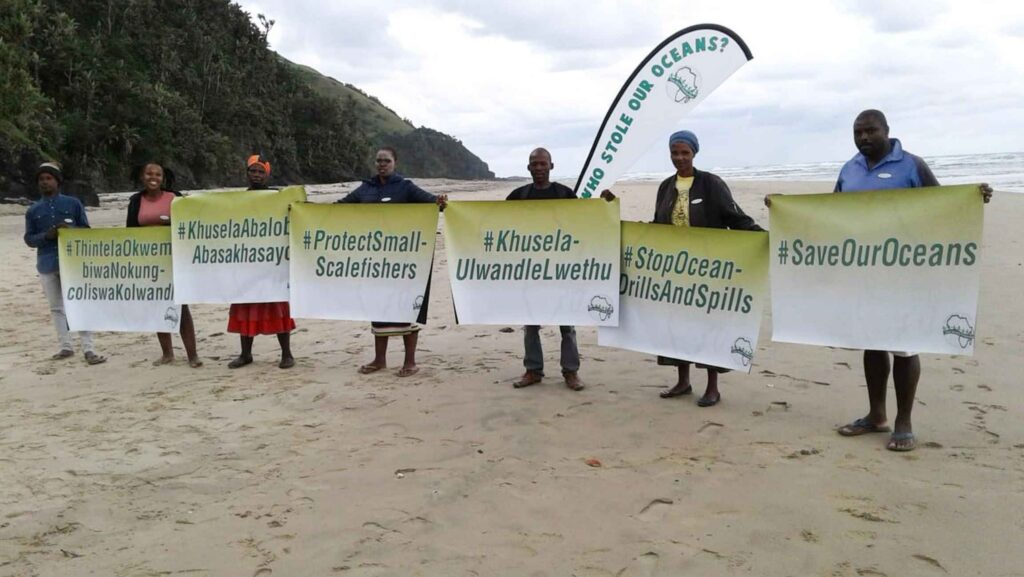
The Green Connection says it is disappointed that the Department of Mineral Resources and Energy (DMRE) has decided to grant environmental authorisation to TEEPSA – to drill up to five exploration wells in Blocks 5/6/7 off the South-West coast of South Africa, including in riskier deep-water locations (at depths of up to 3.2 km). “It is always disappointing when government appears to choose profits over the needs of the people, while also ignoring government responsibility to address climate change (at the very least, not to do things that will make it worse). We also see it as irresponsible for the department to downplay the risks associated with a major oil spill, which we highlighted in our comments on the Draft Scoping Report as this could have devastating consequences for ocean and coastal ecosystems, coastal communities and the Cape,” says the eco-justice organisation. The Green Connection will study and likely appeal the decision.
Incidentally, this week is the thirteenth (13th) anniversary of BP’s devastating Deepwater Horizon environmental disaster, very recent evidence that catastrophic wellhead blow-outs can and do happen. In addition to the loss of 11 lives in the rig explosion and subsequent fire, over 3 million barrels of crude oil spilled into the Gulf of Mexico for four months before the wellhead blowout could be brought under control. This massive oil spill caused devastating environmental damage to fisheries, beaches, and coastal wetlands, as well as huge economic damage that affected thousands of individuals, communities and businesses. Birds, turtles, mammals, fish, and crustaceans were also severely affected. And while recent studies show that some species “have shown robust recovery, many are still struggling to multiply.” Additionally, recent media reports also highlight a number of lawsuits brought against BP, by clean-up crews who have consequently fallen ill.
“If we have learnt anything from this far-reaching disaster, it is that blow-outs do happen and when they do, they cause widespread, mass destruction. In its own words the DMRE states that the “impact of an unplanned event such as a blow-out range from high to very high” but a “very unlikely occurrence”. This was most likely the approach taken by those considering the feasibility of BP’s Deepwater Horizon project and look how terrible that turned out for those affected coastal communities and beyond. The consequences of a major oil spill if it does occur would be devastating for the Cape, its people, its oceans, and ecosystems. South Africans should not be forced to take this kind of risk,” says The Green Connection’s Community Outreach Coordinator Neville van Rooy.
He says, “South Africa should only choose the development options that provide the most benefit and causes the least damage, in both the short- and long-term. It is very confusing that government still puts so much faith in the development potential of oil and gas, even with compelling evidence to the contrary and while knowing that its extraction and use will worsen the climate crises. Our government even seems to ignore the plea from its citizens who fear that small-scale fishing and ecotourism livelihoods, as well as their cultural practices, may be at risk. We believe that far more people are able to make a sustainable living from a healthy ocean than could ever be achieved from any drilling project.”
The Green Connection’s Strategic Lead Liziwe McDaid says, “One of our main questions is why does the DMRE seem to disregard potential climate impacts which may result from operations such as these? The next 20 years present a critical window for addressing the climate crisis and it is therefore not desirable for the country to continue to invest in fossil fuel sources that will inevitably add to GHG emissions, such as natural gas, which includes methane, which is particularly dangerous since it makes up approximately 70-90% of natural gas emissions and is projected to have more than eighty (80) times the impact of CO2, over a 20-year period. By allowing the exploration for more carbon-emitting fossil fuels to go ahead, the DMRE – a department with significant social and environmental impact – appears wilfully ignorant of the impact its decisions have on climate change and of its responsibility, in the very least, to not exacerbate it. Why, with so much available evidence about the consequences, would this department continue to push for climate-change-causing fossil fuels? It is a serious issue for our country when the department with regulatory control over extractive activities that have the most impact on climate change refuses to acknowledge or recognise its wider impact.”

BENDING OVER BACKWARDS, DMRE GIVES KARPOWERSHIPS ANOTHER BREAK
30 September 2021 was supposed to be the commercial close – a date set by the Department of Mineral Resources and Energy (DMRE) – for bidders in the Risk Mitigation Independent Power Producers Procurement Programme (RMI4P).
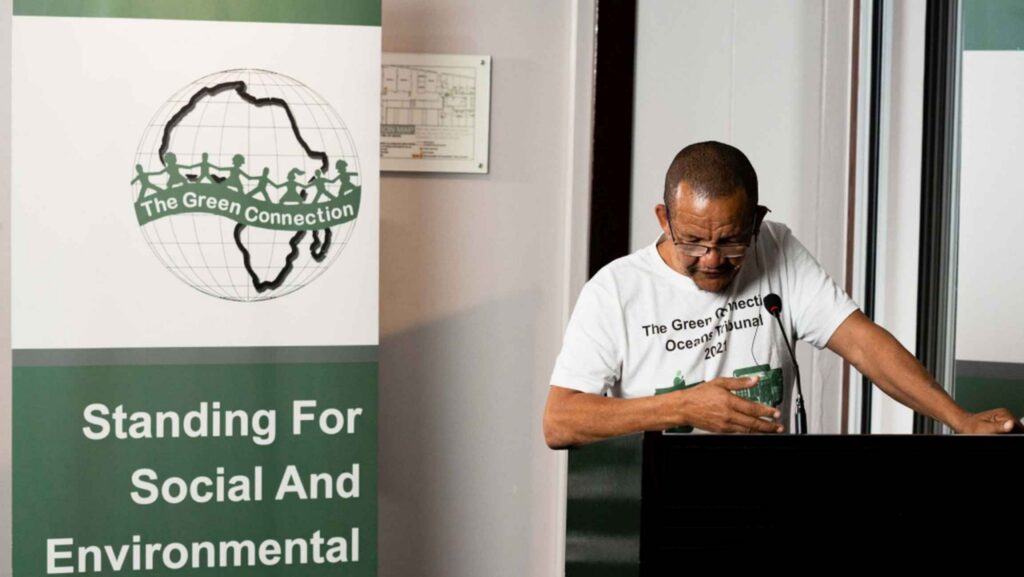
TOSACO EIA MET WITH PUSHBACK FROM CIVIL SOCIETY, TO PROTECT THE OCEAN AND SMALL-SCALE FISHER LIVELIHOODS
This week, The Green Connection submitted its comments critiquing several aspects of the Environmental Impact Assessment (EIA) process, particularly the lack of procedural fairness, as well as the conclusions reached – notwithstanding information gaps and scientific uncertainty – that should form part Tosaco Energy’s request to undertake various activities in Block 1, off the West Coast.

RECENTLY GRADUATED GREEN CONNECTORS, EQUIPPED FOR THE POLLS AND READY TO WEIGH-IN ON COP26
Following their recent graduation from The Green Connection’s Legacy Champions Programme, these newly empowered Green Connectors say they feel equipped with the necessary advocacy skills to make positive changes in their communities, starting with their vote in the local elections (1 November) and weighing in on the discussions around COP26 (which starts on 31 October) – as part of their efforts to oppose oil and gas developments in the country and offshore.
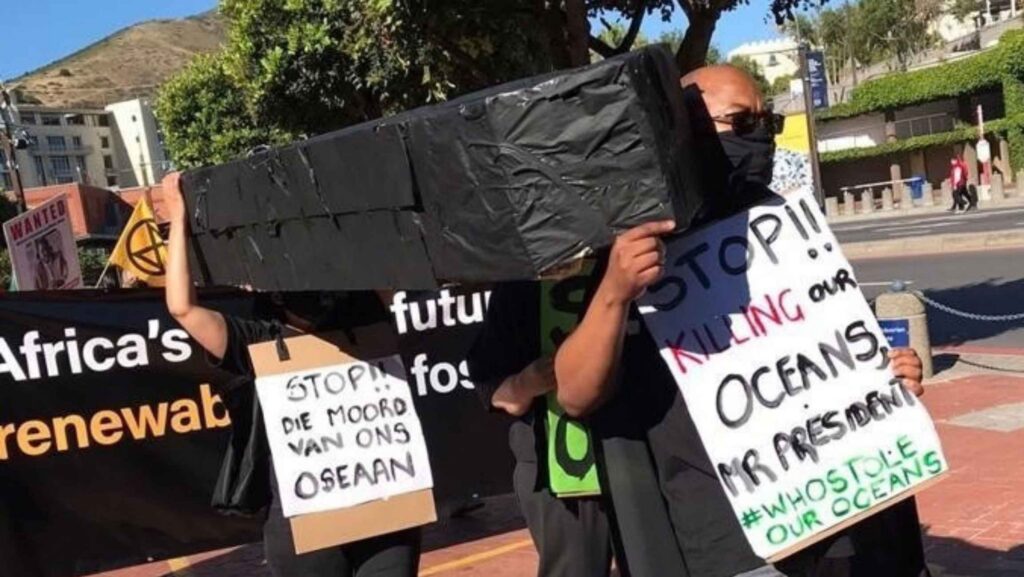
GREEN CONNECTION’S ‘FUNERAL FOR THE CLIMATE’ (AFRICAN ENERGY WEEK) AND COMMENT ON YESTERDAY’S BUDGET SPEECH
This week (10 November 2021), we joined other environmental defenders in Cape Town to peacefully demonstrate outside the African Energy Week #AEW2021 conference venue demanding an end to fossil fuels and the immediate pivot toward the just transition to a renewable energy future.
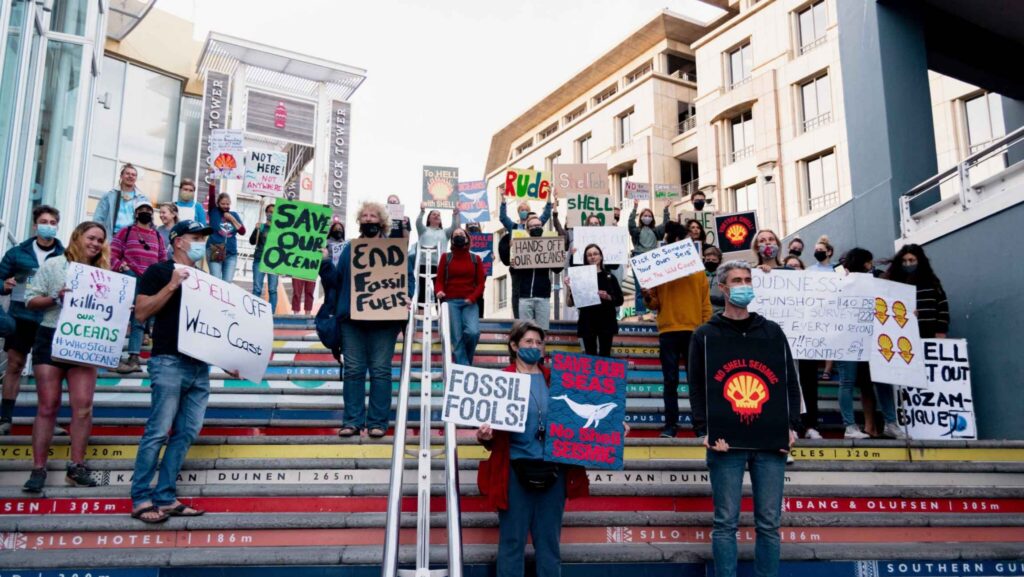
CLOSE TO 200 PEOPLE RISE AT CRACK OF DAWN TO PROTEST THE ARRIVAL OF SHELL’S SEISMIC MONSTER, AMAZON WARRIOR
On Sunday morning, (21 November 2021), before the crack of dawn, nearly 200 concerned environmental defenders took to the Waterfront to get a glimpse of Shell’s seismic testing vessel, Amazon Warrior, as it made its way into Cape Town harbour. The vessel travelled down the West coast of Africa, on its way to the Wild Coast, to conduct seismic surveys for an estimated five (5) months.
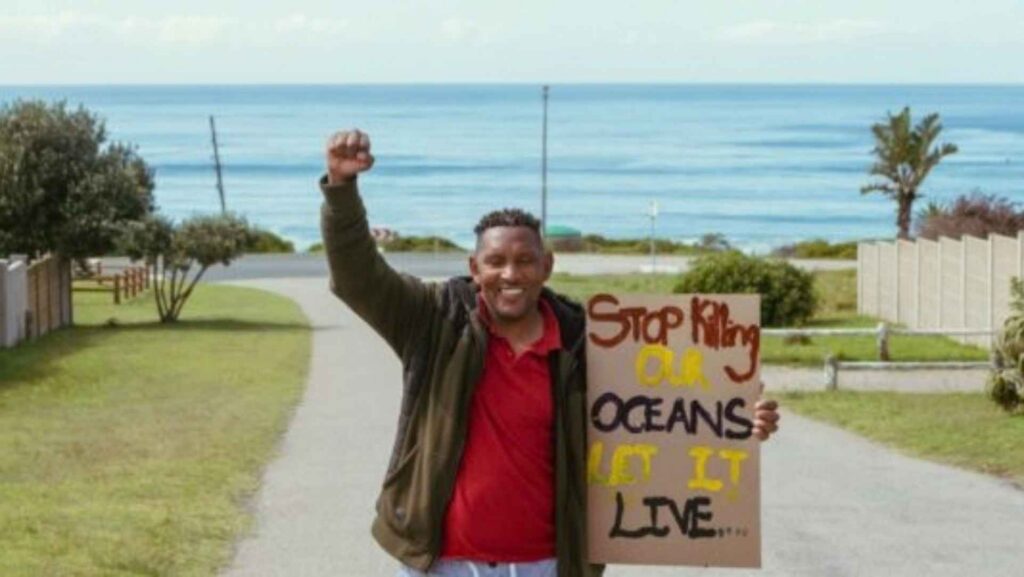
ENVIRONMENTALISTS DOUBLE-UP ON EFFORTS TO OPPOSE UPCOMING AND FURTHER SEISMIC TESTING IN SOUTH AFRICA’S OCEANS
As the groundswell of opposition against Shell’s upcoming 3D seismic survey off the Transkei builds, the Green Connection – an ecojustice NGO that supports small-scale fishers in advocating for their livelihoods – reacted with astonishment to a press statement issued by the Department of Mineral Resources and Energy (DMRE) on 9 December 2021.
