While it is clear that South Africa is making little headway to resolve the electricity loadshedding crisis – which is where citizens want to see government putting its efforts and delivering results – there is, instead, a lot of movement on other energy projects, particularly for offshore oil and gas. This was one of the concerns raised by The Green Connection, last week (9 May), in its comment to the Department of Forestry, Fisheries and the Environment (DFFE) on ten draft Marine Sector Plans (MSP). The eco-justice organisation also points out that the draft Offshore Oil and Gas Sector Plan fails to consider the climate crisis, nor does it account for the impact it could have on the country’s international obligations to combat climate change.
According to The Green Connection’s Strategic Lead Liziwe McDaid, “This month alone, The Green Connection is already responding to three (3) deadlines for offshore oil and gas projects, at various stages and there are more still in progress. Yet, none of these will address our most urgent short�term issue of diminished electricity generation capacity. Instead, all these fossil fuels projects are bad news for climate change, are a risk to ocean health and a potential threat to the livelihoods of those who depend on it. The Green Connection believes that a fundamental flaw in the MSP process is that it attempts to allow different incompatible sectors to put forward their plans to carve up the ocean, even though some will inevitably undermine others. And it will be those who are most vulnerable and the least resourced to be able to fight for their rights, who will lose in the end.”
McDaid says that attempting to spatially plan the ocean for opposing uses, while ignoring its unique properties, is naive and doomed to fail. Oil and gas exploration is particularly incompatible with other uses of the ocean – such as fishing, ecotourism, and conservation – as the toxic pollution from cumulative operational oil spills or major spills (should there be a catastrophic wellhead blowout) will be carried by ocean currents and wind and will not respect spatial boundaries (such as declared marine protected areas or defined critical biodiversity areas) in the ocean’s fluid and dynamic environment.
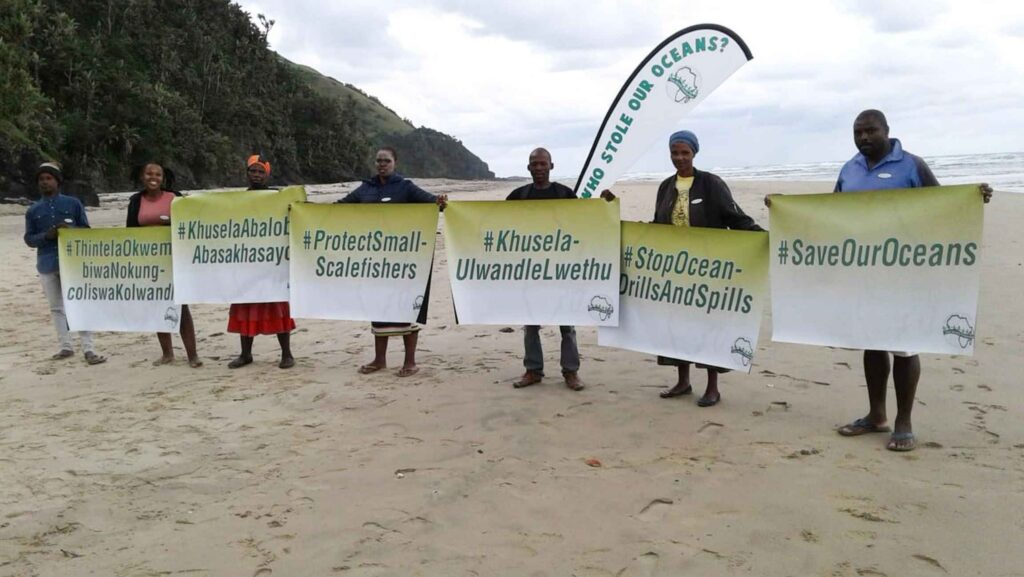
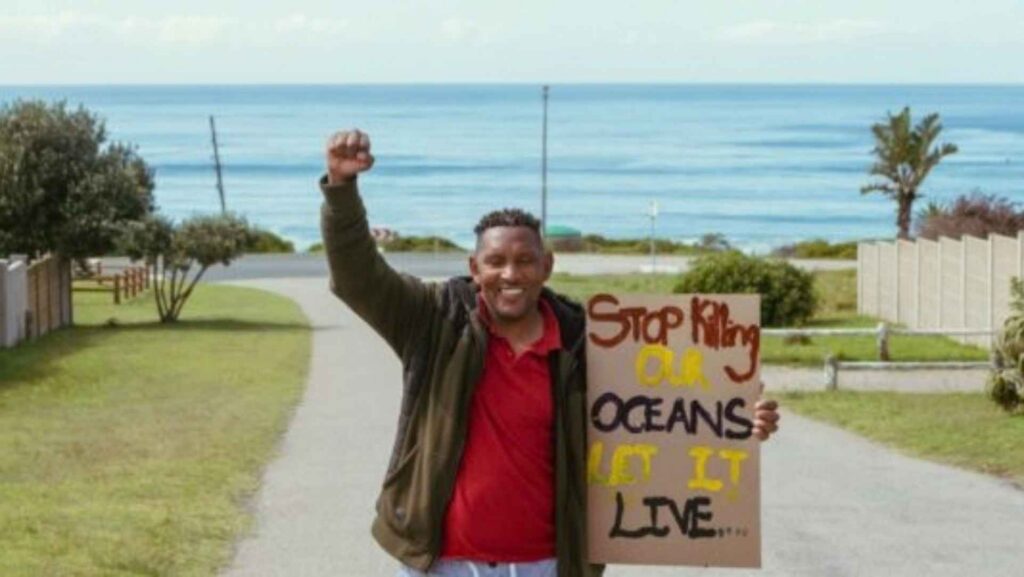
The Green Connection’s Community Outreach Coordinator Neville van Rooy says, “Small-scale, subsistence fishers have depended on the ocean long before the proliferation of offshore oil and gas began. These are communities, who for generations, have mostly lived in harmony with the ocean and nature. Yet, these fishing-dependent communities have had little if any opportunity to have their say in and influence the development of Operation Phakisa, government’s Oceans Economy policy. Coastal communities’ voices have been marginalized on many of the issues that affect them, including being able to meaningfully participate in ocean governance to ensure that it is sustainable and consistent with their economic, cultural and spiritual needs.”
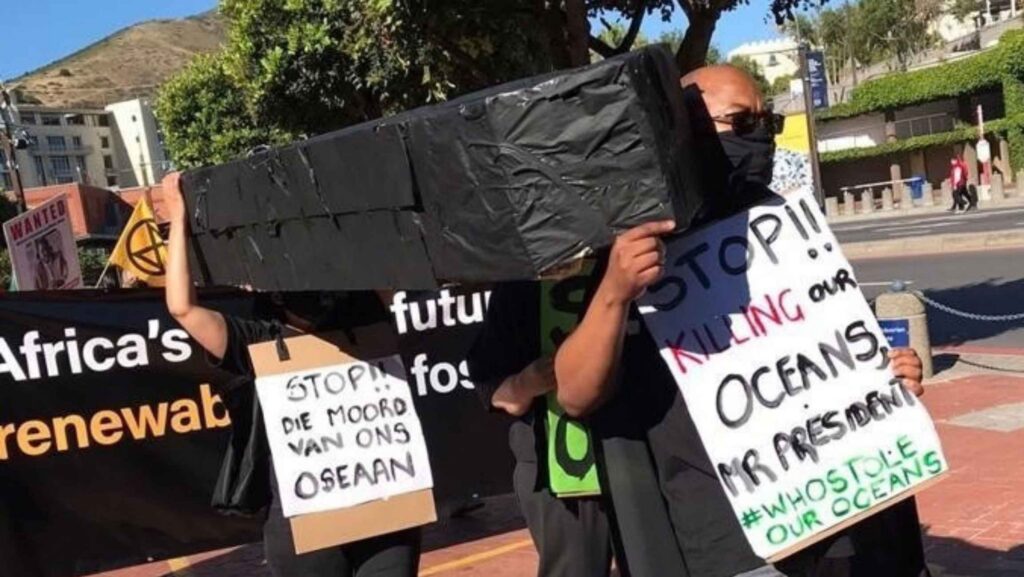
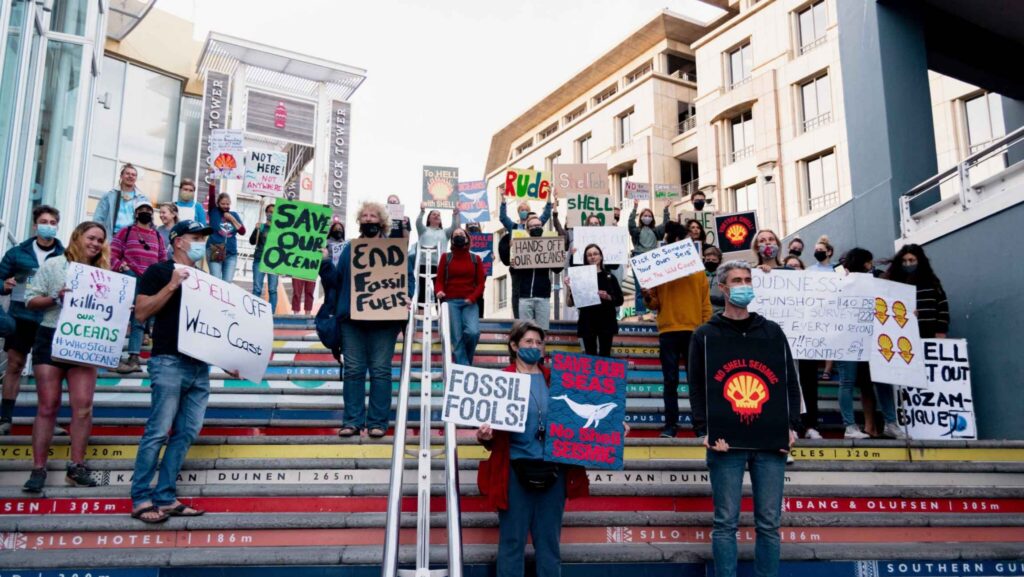
He says that government’s failure to recognize small-scale fisher and coastal livelihoods, and its failure to ensure meaningful public participation in environmental impact assessment and other authorisation or permitting processes has been highlighted in recent legal cases against oil and gas exploration by Shell on the Wild Coast and Searcher on the West Coast. And yet, ocean planning continues to take place amidst several community-based fights, currently underway, to stave-off any further offshore oil and gas projects.
He adds, “When public participation is poor and not meaningful, it paves the way for irresponsible decision-making. For instance, if The Green Connection did not interrogate the Draft Scoping Report for TEEPSA’s application, we might have missed that the applicant downplayed the risks associated with a major oil spill, focussing more on the ‘unlikely’ probability of a major spill and, in our view, not adequately assessing the potentially devastating environmental and socio-economic consequences should such a spill occur. However, this becomes a major concern when we consider that thirteen (13) years after BP’s devastating Deepwater Horizon disaster, where a well blowout led to over 3 million barrels of crude oil spilling into the Gulf of Mexico, the affected fisheries, beaches, and coastal wetlands are still struggling to recover from the devastating environmental damage.”
He also points out that the public comment period is insufficient for small-scale fishers to adequately peruse and understand what has been presented, not only because these types of documents are very technical but because they are mostly self-employed, working very long hours. He says, “Even academics need time to work through these documents, what then about career fisherfolk who may not have any tertiary education? Take the TEEPSA Draft Scoping Report for Blocks 5/6/7, for example. Just this one document contains about 3000 pages!”
The reality is, certain sectors are more compatible with a healthy ocean than other sectors, which may require some adjustment to ensure they do least harm. Then there are those, such as the offshore oil and gas sector, that we believe are completely incompatible with a healthy sustainable ocean. These fossil fuel extractive sectors present no benefits for the ocean life or for those who rely on it to live and go about their daily lives, only risks and threats.
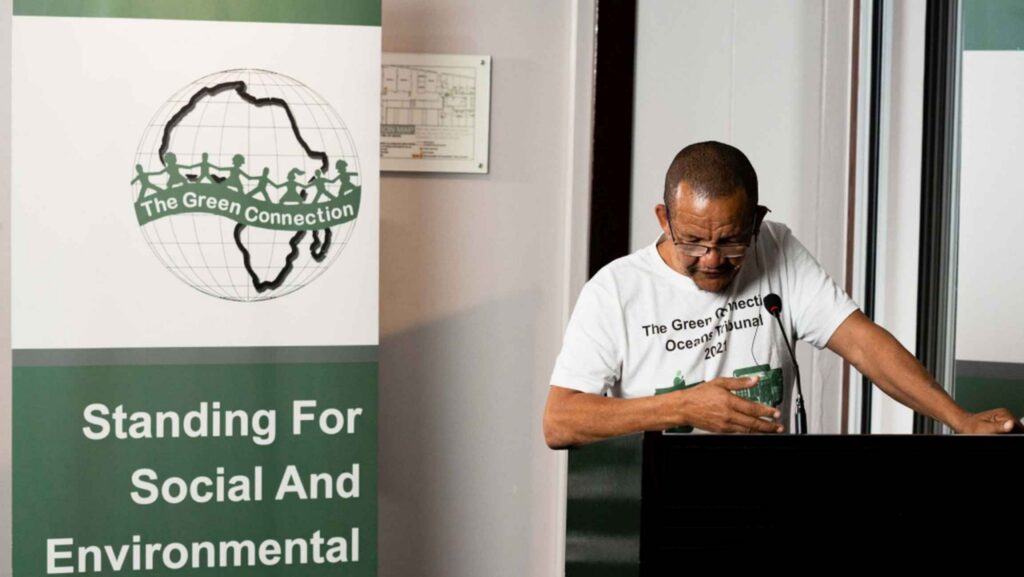
In September 2021, The Green Connection hosted its first Oceans Tribunal, in a bid to provide coastal communities with a platform to unpack the threats that oil and gas could pose to their livelihoods because despite having rights on paper, small-scale fishers struggle to secure the right to real, meaningful participation. These discussions revealed that coastal communities want economic development that does not threaten them nor the environment they rely on, and they want their right to fish and other living marine resources to be recognised and respected by government, along with their ancestral right to access and control the land of their forebearers.
MSPs based on Operation Phakisa, the current guiding policy, are deeply flawed because it is not based on consultations with fishing communities. It therefore does not draw on their historical, traditional, and customary knowledge and wisdom, which seeks to preserve the oceans and coast as a shared resource for the benefit of current and future generations. Instead, Operation Phakisa seeks to commodify and exploit the ocean for the benefit of a minority of corporate and political elites.
The Green Connection says that addressing the climate crisis – through a just transition towards renewable energy – should be central to all other development, economic and social decisions. The next 20 years should see a dramatic decrease and ultimate phasing-out of fossil fuel projects, because these add to greenhouse gas (GHG) emissions and make climate change worse. “With so much evidence warning about the consequences of climate-change-causing fossil fuels, we hope that the department responsible for protecting the environment will do just that, by declining any further oil and gas projects and instead promote renewable energy sources.”