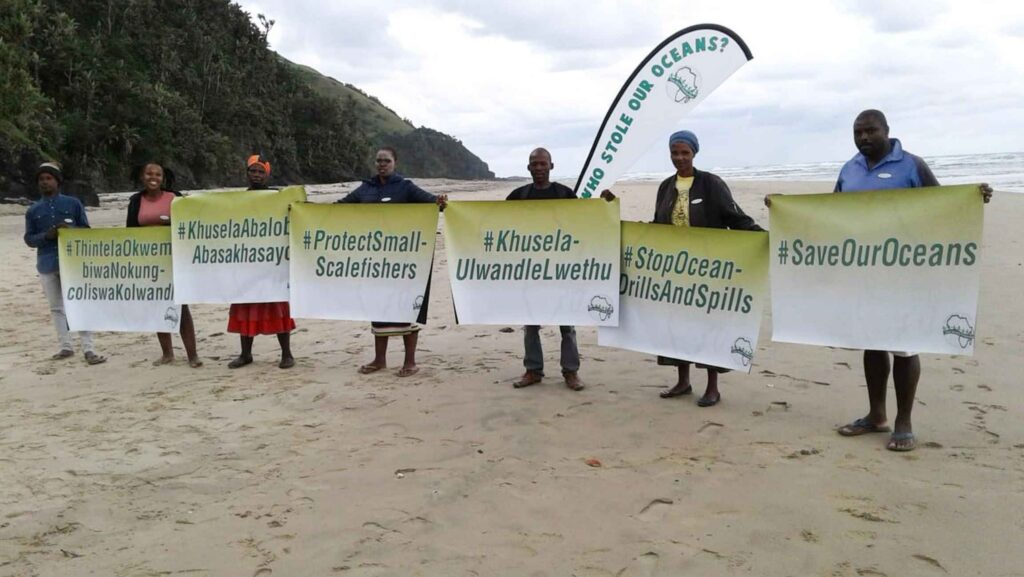
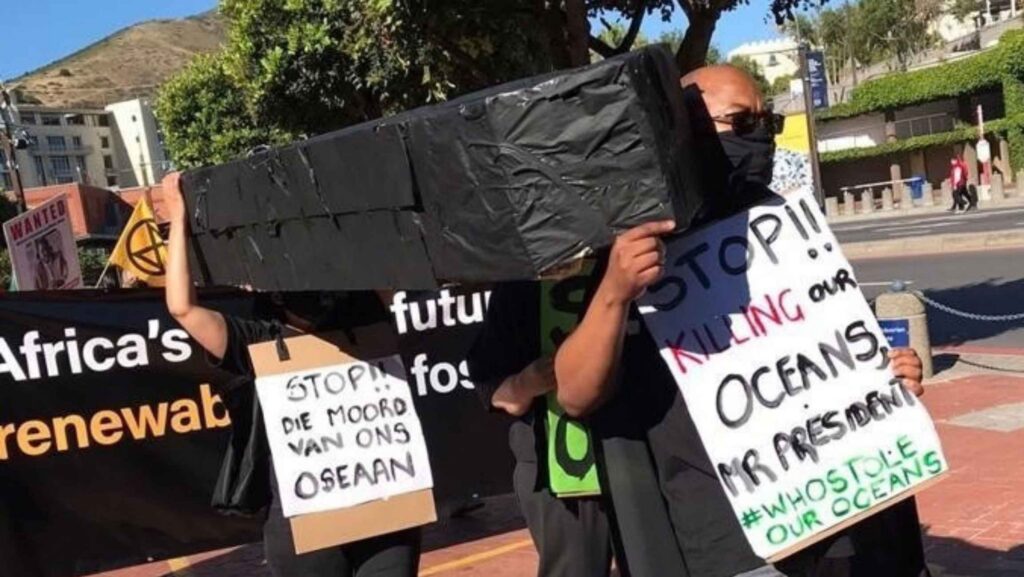
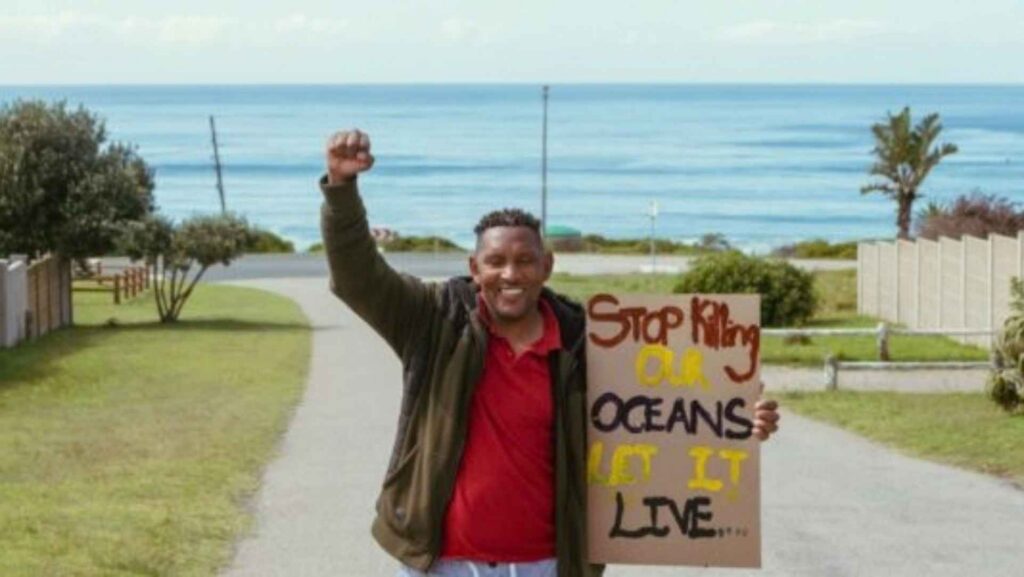
As an eco-justice organisation that works with coastal communities to help them better protect the natural resources they depend on – as part of its Who Stole Our Oceans campaign – for The Green Connection and the small-scale fishers working with them, every day is Oceans Day. After 31 years of claiming to pay homage to this precious resource, decision-makers the world over, still mistreat the ocean. And South Africa is no different. Far too many foreign companies – which are based in countries that claim to promote and drive the just transition – want to drill up and potentially destroy our oceans, in search of offshore oil and gas, neither of which is needed or desirable for dealing with the climate emergency we face.
According to The Green Connection’s Community Outreach Coordinator Neville van Rooy, “Here in South Africa, the onslaught on our oceans has become a major cause for concern. From seismic surveys to drilling and extraction, which comes with the possible threat of major oil spills, these activities all spell disaster for marine life and ecosystems. This, in turn, affects many well-established livelihoods of coastal communities. And while these companies continue to show record profits, the state of the ocean continues to deteriorate, increasing the threat on coastal livelihoods.”
“South Africa’s coast, from West to East, is under attack. And, when we consider the facts, it becomes even more troubling to know that our government means to continue the onslaught of oil and gas projects on our oceans, and in the process, trample on people’s right to an environment that is not harmful to their health and well-being. On the West Coast, there are no less than eight different applications for projects in various stages. On the east coast, there are at least two application processes on the go, with another currently on hold due to ongoing legal action. And let us not forget that three of our harbours may also need to deal with the impacts of Karpowerships, the supposed 20-year, ‘short-term’ energy crisis solution being punted by government. And these are just the ones that The Green Connection is currently opposing,” says van Rooy.
The ocean is a self-contained, intricate network of ecosystems. It produces about 50% of the Earth’s oxygen, which is used to sustain marine life. And it absorbs about 30% of all the carbon dioxide (CO2) produced by humans. Globally, the United Nations estimates that 3 billion people rely on the ocean for their livelihoods, with more than thirty thousand (30 000) of them living in ocean-dependent communities in South Africa’s four coastal provinces. However, human activities – including burning fossil fuels – are producing far too much CO2, which is depleting the ocean’s oxygen and resulting in acidification. This affects the water quality and ultimately destroys the rich biodiversity of the ocean’s marine ecosystems and coral reefs. And the added stress that would come from offshore oil and gas projects, only makes the situation more precarious.
The Green Connection’s Advocacy Officer Kholwani Simelane says, “There are many different ways that offshore oil and gas exploration, extraction and production could potentially harm our precious ocean and adversely impact marine life. The threats begin with seismic surveys, which take place during the reconnaissance phase. Here marine life is subjected to regular airgun explosions, both day and night, often for months at a time. So, when we consider CGG’s current application to conduct seismic surveys on South Africa’s Southeast Coast, we are not only concerned about the impacts to marine mammals but also the various other species that could be affected. From what we understand happens in this part of the coast throughout the year, there is no good time to conduct seismic surveys. From the juvenile loggerhead and leatherback sea turtles which can be found in the Agulhas current from around February to April each year, to the Fin and Blue and Sei whales migrating/breeding from May to July, while Humpback whales can be found in the region from April all the way through to December, along with the Southern Right whale, for most of that period.”
Several small-scale fishers add that it is “illogical” to think that marine life, outside of the survey area, would not be affected because the entire ocean is connected. “Take squid, for example. As fishers we know that squid lay their eggs along the coast between Port Alfred and Plettenberg Bay. The growing squid larva move beyond our fishing areas into the Agulhas current where they grow up and return as adult fish to mate and lay their eggs. The proposed CGG seismic survey area lies within the Agulhas current and takes place during a time when the fish that we depend on, is growing up outside our traditional fishing grounds. Squid do not live long. If these young fish are damaged, our people suffer.”
Fishers say, “As fishers we know that the health of all ocean life is connected. Sardines need safe passage from where they start spawning along the south coast before migrating up the Eastern Cape coast. As do the small turtle hatchlings that swim along the Agulhas current from their birth places in KwaZulu Natal to where they grow up. However, the CGG seismic survey will take place during this period. What impact will it have on these baby animals and their chances of survival?”
According to van Rooy, “The risks only increase during the extraction phase because, no matter how government or the oil companies try to underplay it, oilwell blowouts and spills are a very real threat. Just ask the people in Mexico, Mauritius, and Nigeria – to name a few – who suffered the massive devastation of an oil spill. The Green Connection firmly believes that prevention is better than cure and would urge government to err on the side of caution, when considering the many applications currently on the table.”
The Green Connection also highlights another dark side to the oil industry, from a story currently unfolding in Yemen – a country torn apart by civil war. The United Nations had to assist with funds to prevent 1.1 million barrels of oilfrom spilling into the Red Sea, which could destroy the livelihoods of many fishers. It has been reported that “such a spill would completely close Yemeni fisheries, which support 1.7 million people”.
With regard to TEEPSA’s application for environmental authorisation (EA) to undertake exploration well drilling (up to 10 exploration wells) in License Block DWOB, The Green Connection is of the view that a proper assessment of the No-Go alternative should be completed. This should identify and assess the potential ecological and socio-economic benefits of the no-go option for small-scale fishers and fishing dependent communities. The application should also contain a balanced and properly researched assessment of alternative means to generate energy and provide sustainable feedstocks for associated industrial applications, including renewable energy alternatives that do not pose a significant inter-generational, ecological and socio-economic risk. The next deadline is 12 June.
Simelane says, “The ocean is of utmost importance to me and the lives of small-scale fishers. As an individual, the ocean provides me with a sense of tranquillity, adventure and inspiration. Its beauty and biodiversity captivate me. For small-scale fishers the ocean is their livelihood. It represents their cultural heritage, traditional knowledge and a way of life. Protecting the health of the ocean is essential in preserving the livelihoods of these fishing communities. Our country’s energy choices should not harm our natural environment and it certainly should not disadvantage any of our fellow South Africans. Unfortunately, this has not been the official approach, up to now. We therefore call on the public to take a stand for our oceans.”
More comments from small-scale fishers:
S’thembiso Mgele from UBH from KZN says, “Oceans are a gift from God and they also play a big role in our economy. It helps feed and sustain families and also offers us healing and places to enjoy ourselves with our friends and families. The ocean is a sacred place that needs to be preserved and kept clean, because it offers us so much – economically, physically and spiritually.”
Israel Nkosi from Northern Natal in Mtubatuba says, “The ocean means life to me, it is a part of me – if anything were to happen to the ocean, I would be incomplete. We go to the ocean to get cleansed and to connect with our ancestors and the very same ocean feeds us and is a big part of our livelihood. We must preserve what we have for the present and future generations and be included in all decision-making processes that will affect us and our ocean.”
30 September 2021 was supposed to be the commercial close – a date set by the Department of Mineral Resources and Energy (DMRE) – for bidders in the Risk Mitigation Independent Power Producers Procurement Programme (RMI4P).
This week, The Green Connection submitted its comments critiquing several aspects of the Environmental Impact Assessment (EIA) process, particularly the lack of procedural fairness, as well as the conclusions reached – notwithstanding information gaps and scientific uncertainty – that should form part Tosaco Energy’s request to undertake various activities in Block 1, off the West Coast.
Following their recent graduation from The Green Connection’s Legacy Champions Programme, these newly empowered Green Connectors say they feel equipped with the necessary advocacy skills to make positive changes in their communities, starting with their vote in the local elections (1 November) and weighing in on the discussions around COP26 (which starts on 31 October) – as part of their efforts to oppose oil and gas developments in the country and offshore.
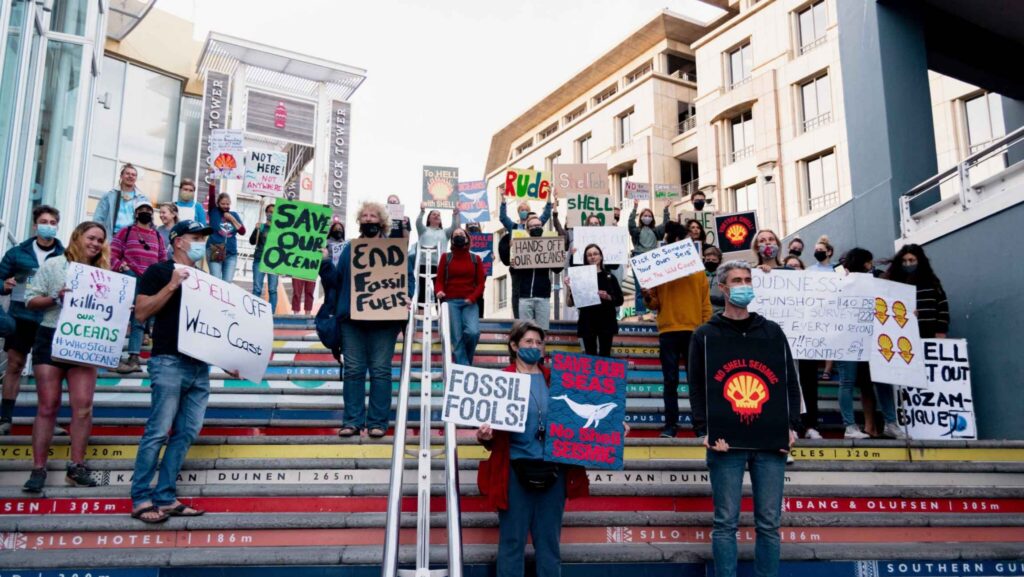
This week (10 November 2021), we joined other environmental defenders in Cape Town to peacefully demonstrate outside the African Energy Week #AEW2021 conference venue demanding an end to fossil fuels and the immediate pivot toward the just transition to a renewable energy future.
On Sunday morning, (21 November 2021), before the crack of dawn, nearly 200 concerned environmental defenders took to the Waterfront to get a glimpse of Shell’s seismic testing vessel, Amazon Warrior, as it made its way into Cape Town harbour. The vessel travelled down the West coast of Africa, on its way to the Wild Coast, to conduct seismic surveys for an estimated five (5) months.
As the groundswell of opposition against Shell’s upcoming 3D seismic survey off the Transkei builds, the Green Connection – an ecojustice NGO that supports small-scale fishers in advocating for their livelihoods – reacted with astonishment to a press statement issued by the Department of Mineral Resources and Energy (DMRE) on 9 December 2021.