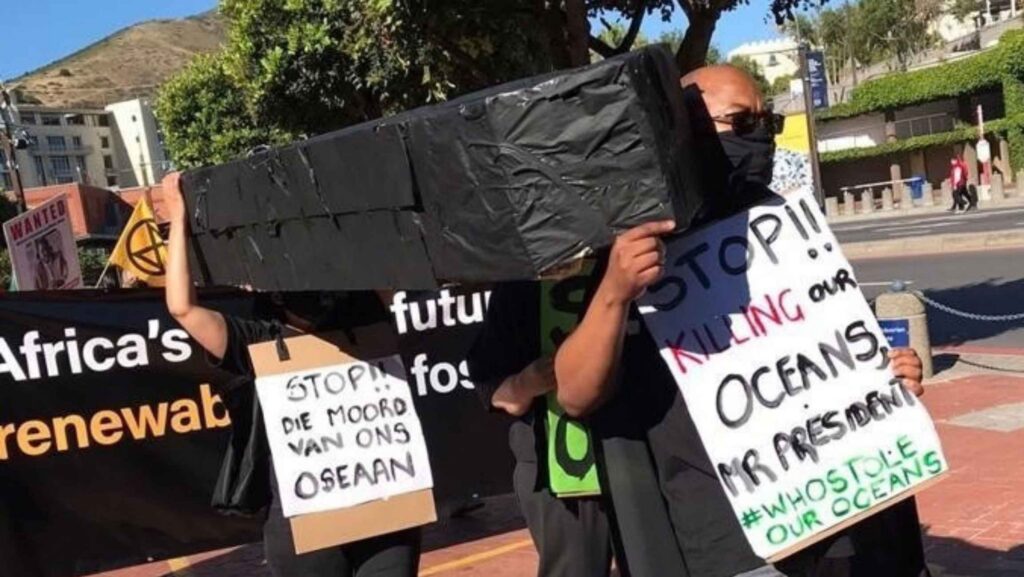
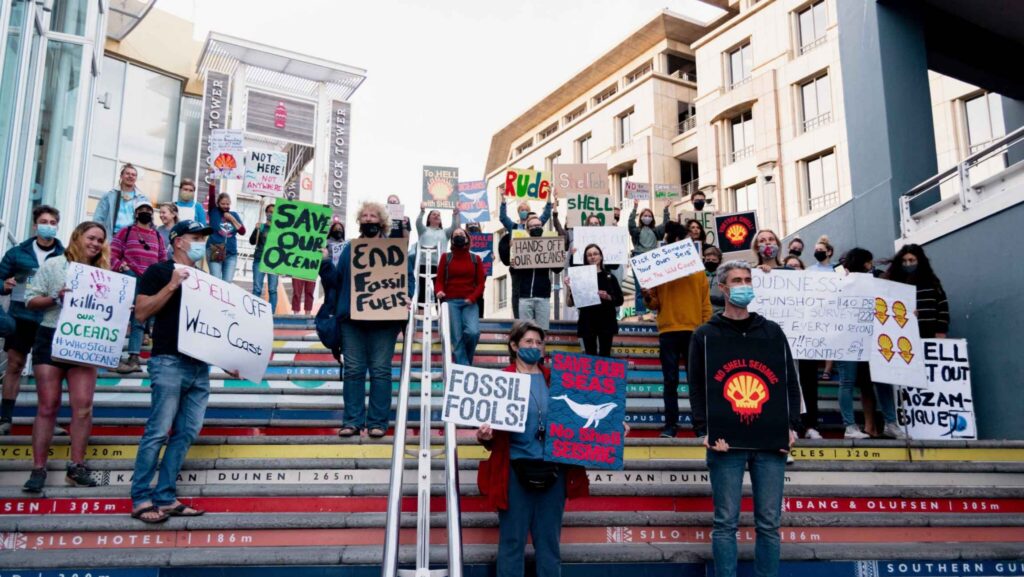
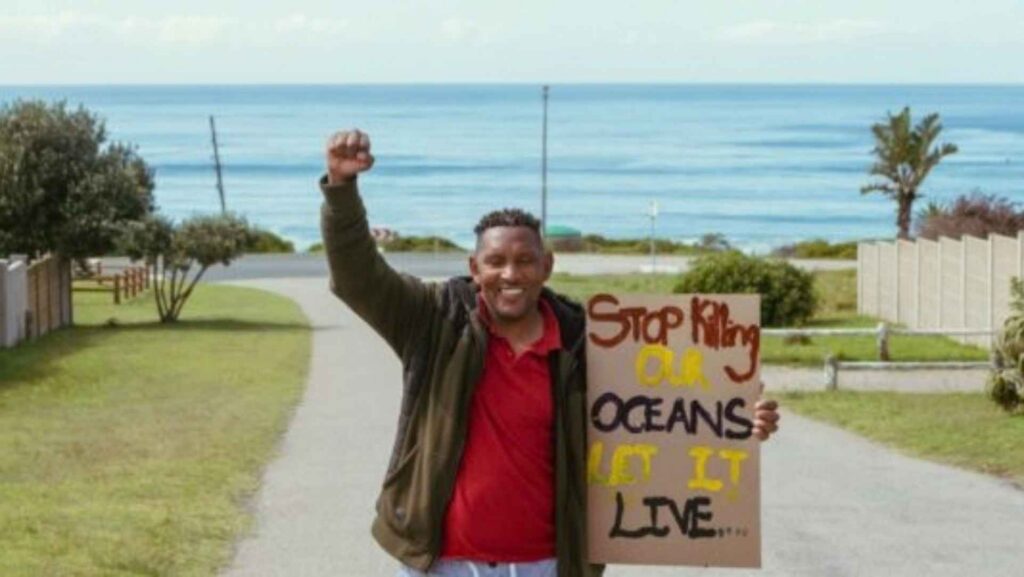
COP27, the international climate action negotiations, ran from 6-18 November 2022 and yet, in that time, fossil fuel companies have released a stream of oil and gas application documents for public comment. This is starting to feel like a stuck record. Dear decision-makers, we are in a climate crisis, a massive threat to food security! We must stop exploring for more offshore oil and gas, and rather invest in more renewable energy,” says Liziwe McDaid Strategic Lead at The Green Connection.
Last week, on 25 November 2022, the eco-justice organisation submitted comments on a draft Basic Assessment Report (BAR), which forms part of the environmental impact assessment (EIA) process for TGS Geophysical Company UK’s (TGS) application to undertake a 3D seismic survey over multiple petroleum licence blocks off the West Coast of South Africa.
“Even in the wake of the war in Ukraine, the International Energy Agency (IEA) says that 2021 was essentially the cut-off for investment in new fossil fuel supply in its net zero pathway. That means no new oil and gas field developments should be approved. However, with the ongoing high rate of offshore oil and gas exploration applications in South Africa it feels like a fossil-fuel free-for-all. These projects, if approved and successful in locating more commercially exploitable oil and gas reserves, will likely overshadow the country’s climate change commitments which are supposed to be geared at rapidly reducing global greenhouse gas emissions,” she says.
“How will finding, extracting, and burning more offshore fossil fuels help us honour these commitments? And how can we expect South Africa’s largely indigenous coastal communities to willingly risk the precious oceans that they rely on to live and make a living, to look for oil and gas that should not be burnt if we are to have a chance of keeping global warming below the 1.5 ̊Celsius threshold?” says McDaid.
The Green Connection’s Community Outreach Coordinator Neville van Rooy says, “While there are a number of technicalities surrounding the TGS application that are highlighted in our submission, our main concerns are the climate impact of extracting and using more oil and gas should commercially exploitable sources be discovered, and the unnecessary risk to our oceans and marine ecosystems of conducting seismic surveys – which are critical to mitigating climate change and for sustaining small�scale fisher livelihoods.”
“Since the primary purpose of an offshore seismic survey is to locate oil and gas reserves, it is only reasonable to expect that the environmental impact assessment should, at least in a broad sense, consider the climate impacts if commercially exploitable reserves are found, and in the future extracted and used. However, since the assessment in the draft BAR only covers the potential impacts from the proposed 3D seismic survey itself, it ignores the actual need and desirability of exploring for (and ultimately producing and using) more oil and gas, both in the context of the climate change crisis and in terms of people’s right to food.”
The EIA indicates the that potential impacts of 3D seismic surveys to marine animals – such as certain whale species, large migratory pelagic fish (like tuna and billfish) and shark species, turtles and birds – can include physical injury and death (especially to species in relative close proximity to the seismic survey blasting). 3D seismic surveys can also result in behavioural avoidance and reduced reproductive successes (as well as other impacts). However, the potential significance of these impacts are downplayed by assuming that these impacts can be successfully mitigated (notwithstanding that some of the proposed mitigation measures are not effective – for example, reliance on marine mammal observers to do visual sightings is not effective at night or during adverse weather conditions).
The Green Connection is hopeful that common sense will prevail. Just like Shell, TGS should be required to demonstrate that seismic surveys do not cause irreparable harm to marine life, especially given that there is a growing body of scientific evidence available – including evidence provided by ten experts in the Shell court case – that it could cause such harm. And where there is not enough information about the impact to marine life, just as in the Searcher ruling, the decision must be to take the ‘precautionary approach’.
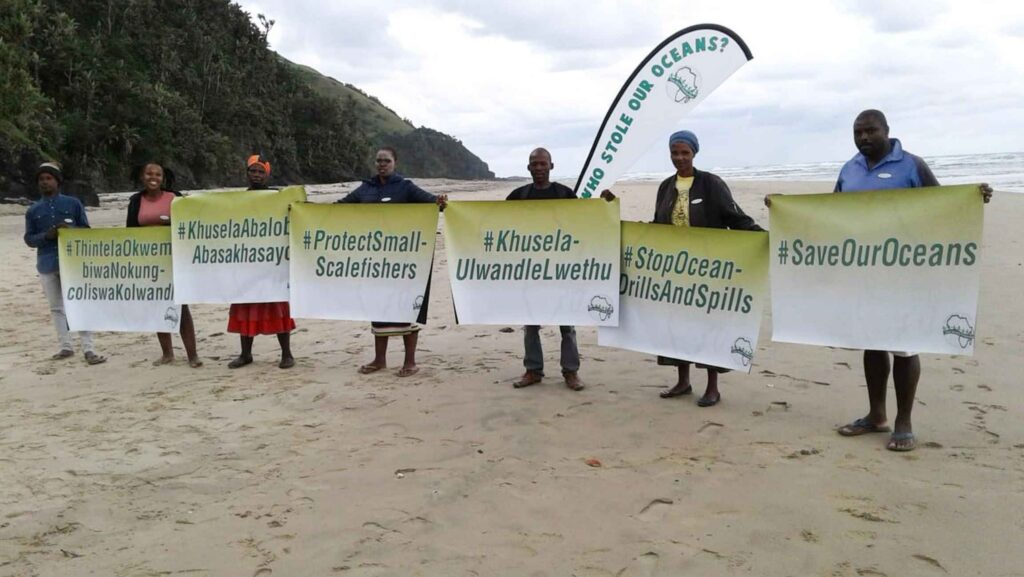
McDaid says that The Green Connection will continue to oppose offshore oil and gas exploration because of its climate impacts, the threat it poses to the ocean, and the threats it poses to small�scale fishers who rely on the ocean for their livelihoods. She says that the organisation recently launched an international campaign focussing on Total, which is the operator of one of the license blocks in which TGS seeks to conduct seismic surveys (Total has also applied for authorisation to conduct exploration drilling southwest of Cape Town and off the West Coast, and has applied for a production right off the South Cape Coast). The target area for TGS’s proposed seismic survey also overlaps with the area applied for by Searcher, which The Green Connection has long been opposing.
According to The Green Connection, two recurring themes remain prevalent in the cases that lead to legal challenges. These relate to the lack of consideration of climate change impacts should commercially exploitable oil and gas reserves be discovered, and the lack of meaningful consultation with affected communities. On 1 March 2022, the Western Cape High Court ruled in favour of small�scale fishing and indigenous communities on the West Coast when it granted an urgent interdict stopping Searcher’s seismic blasting. In September 2022, the Makhanda High Court ruled against Shell’s attempts to conduct seismic surveys offshore of the Wild Coast, ruling that the consultation carried out was inadequate and procedurally unfair. The judge also stated that had the decision�maker had the benefit of considering a comprehensive assessment of the need and desirability of exploring for new oil and gas reserves from a climate change and right to food perspective, it may well have concluded that the exploration was neither needed nor desirable.
“We are disappointed that Shell was back in court this week, making application for leave to appeal the Wild Coast judgment. It is clear that this company plans to continue with fossil fuel exploration, irrespective of the climate crisis.”
“Climate change is forcing us to reimagine our economy and energy systems, which must move away from fossil fuels to more sustainable, renewable sources. Given that the planet cannot afford increased extraction and burning of fossil fuels – to which seismic surveys are the precursor – The Green Connection is of the view that TGS should be refused authorisation to conduct its proposed seismic surveys off the West Coast of South Africa.”