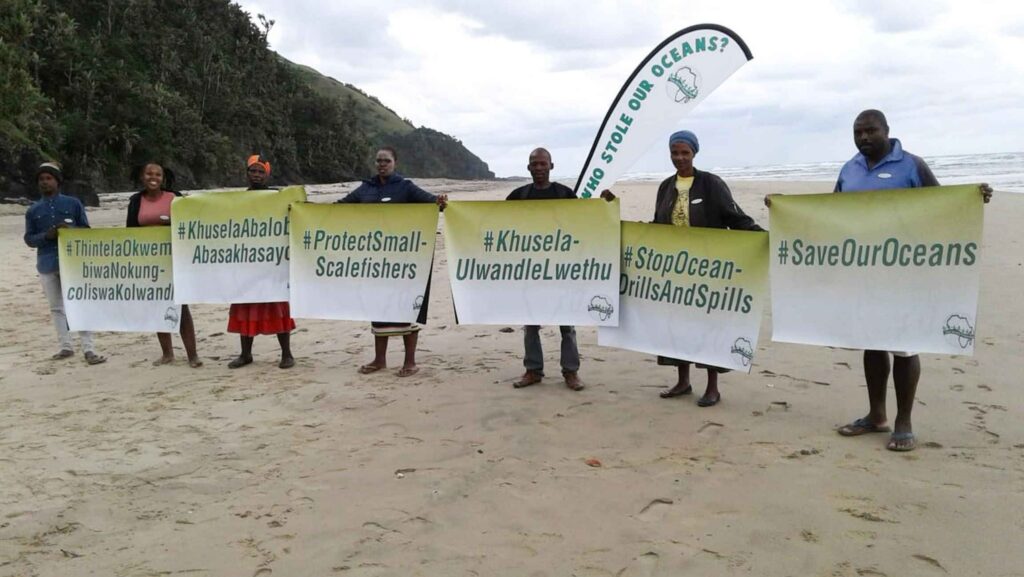
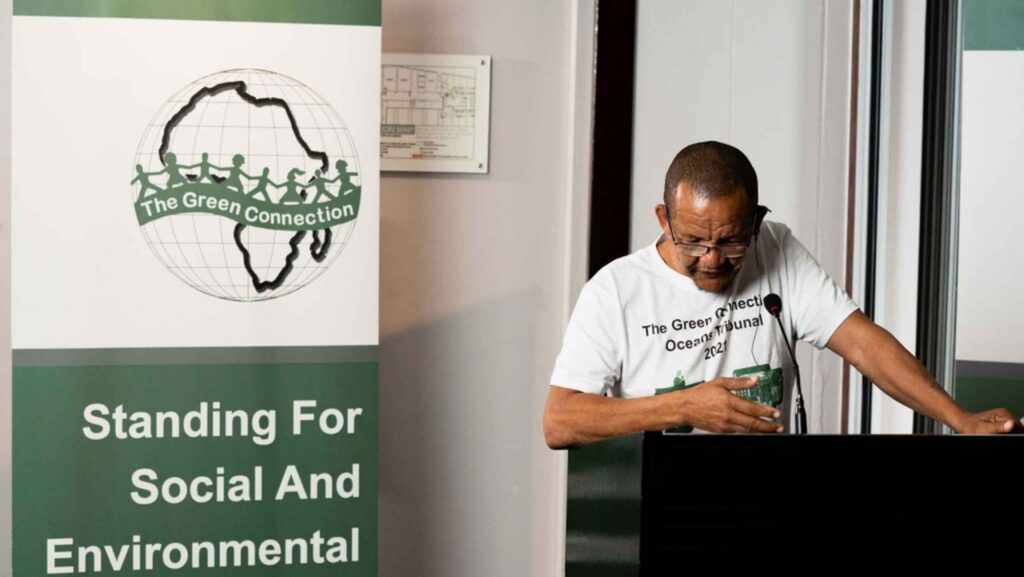
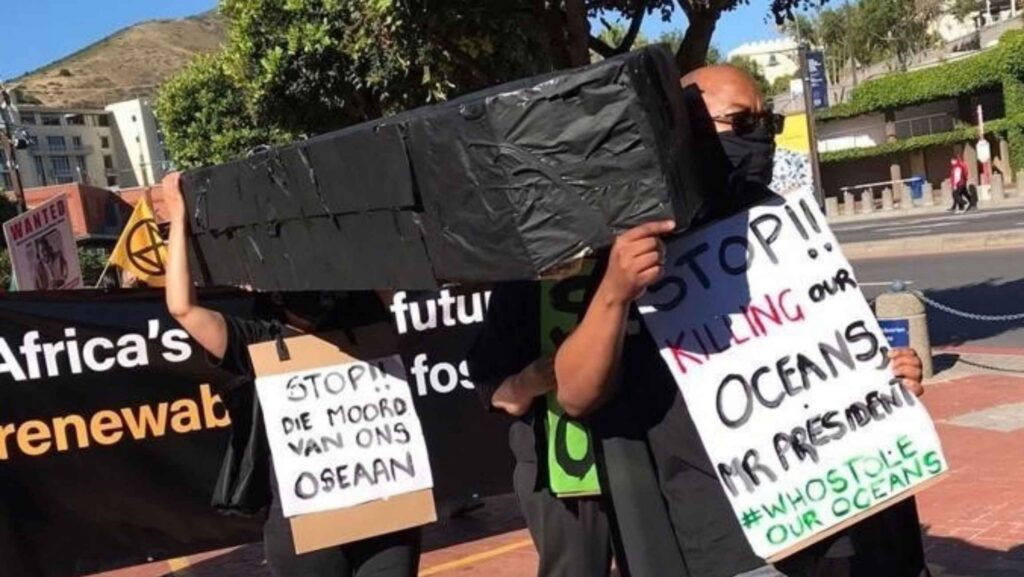
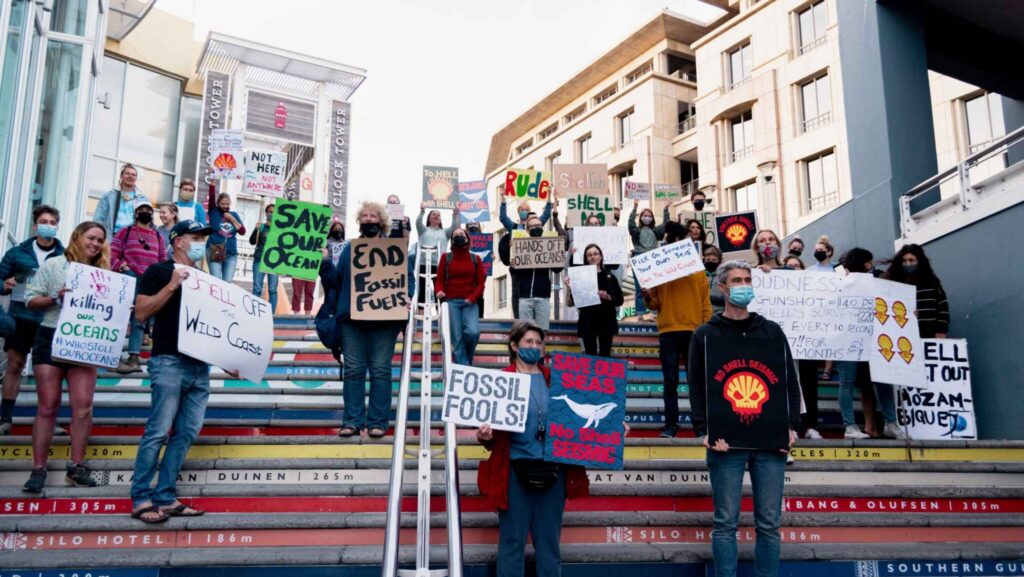
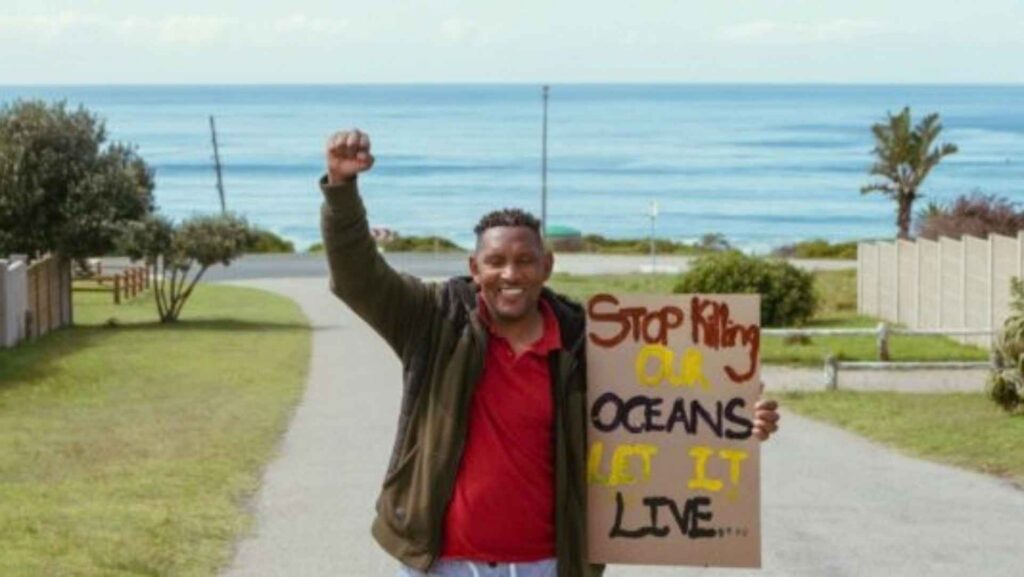
As South Africa enters a defining period for climate and environmental justice, The Green Connection and Natural Justice say they remain steadfast in their mission to protect the ocean and coastal livelihoods and heritage, for future generations. Last week, the organisations filed their answering affidavit in the Supreme Court of Appeal, firmly opposing attempts by the State and Shell to widen the grounds of appeal in the ongoing Block 5/6/7 offshore drilling matter. According to The Green Connection’s Outreach Ambassador, Neville van Rooy, “This case has always been about more than administrative legality. It is about good governance, climate responsibility, and the constitutional rights of coastal communities whose futures depend on a healthy ocean.”
Starting in 2022, the organisations submitted strong objections to TEEPSA’s plans as set out in its environmental impact assessment reports, highlighting threats to small-scale fishers, marine ecosystems, and the climate. However, in 2023, despite widespread public and scientific opposition, the Department of Mineral Resources and Energy (DMRE) granted the environmental authorisation. This prompted more than 20 formal appeals from affected communities, civil society organisations and experts – all of which were dismissed by the then-Minister of Forestry, Fisheries and Environment (DFFE). Community mobilisation intensified during this period, with hundreds of fishers, all along the coast, also voicing their objections to the exploration plans.
“Over and over again, civil society and small-scale fishers highlighted all the different problems with this application to drill up to 5 oil wells 60 km off Cape Point, but the authorisation was still granted. This is when we turned to the courts – to test the lawfulness of these decisions – because it should have, in the first place, been guided by the law. Our main goal is to defend the ocean and all those who depend on it from this potentially harmful decision,” says van Rooy.
In 2024, The Green Connection and Natural Justice launched a High Court review. This was followed by the announcement that TotalEnergies planned to abandon its applications for both Blocks 11B/12B and 5/6/7. Nevertheless, the case continued. And, in 2025, the Western Cape High Court delivered a landmark victory by setting aside the authorisation; the court recognised the serious flaws in the environmental assessment. But the State and Shell – the new applicant that had taken over from TEEPSA – were undeterred and applied to the court for leave to appeal its ruling.
“Last year, the Court already granted limited leave to appeal on two of the five grounds, those relating to the consideration of climate risks and transboundary harm. But because the Court has already scrutinised the process and found it severely lacking – in addition to earlier warnings from civil society and small-scale fishers from the West Coast to KwaZulu-Natal – we do not believe they should be allowed to appeal on any further grounds. Filing the answering affidavit in the Supreme Court of Appeal, marks the latest step in a multi-year effort to protect coastal communities, ocean ecosystems, and climate justice,” adds van Rooy.
Defending Oceans And Livelihoods
Small-scale fishers have consistently warned that offshore oil and gas threatens not just marine ecosystems, but the very heart of their cultures, economies, and identities. “For coastal communities and small-scale fishers who rely on the ocean for food security, livelihoods, and spiritual grounding, these are not abstract concerns,” says van Rooy. “If the ocean is harmed, these communities will suffer
the earliest and deepest impacts. You cannot compensate a community for a lost ocean or a destroyed way of life.”
Good Governance Is Non-Negotiable
The High Court found that the Environmental Authorisation (EA) for Block 5/6/7 was fundamentally flawed, including failures to assess socio-economic impacts and coastal protection requirements. Most troubling was that critical oil spill and blowout contingency plans were hidden from the public until after approval – denying communities their legal right to scrutinise the risks.
He says, “Good governance requires transparency, full information, and genuine public participation. Anything less places people, ecosystems, and the public trust at risk. These failings go to the core of South Africa’s environmental law – and to why they cannot step back now.”
Climate & Energy Justice: South Africa Cannot Afford New Fossil Fuel Expansion
South Africa is Africa’s highest CO₂ emitter, contributing about 1% of global emissions. Expanding offshore oil and gas directly undermines the country’s climate obligations, while methane – up to 86 times more warming than CO₂ over 20 years – poses an even greater threat.
Climate impacts are already being felt. From shifting fish stocks to extreme weather and warming oceans. In a just transition era, civil society argues that investing billions into fossil fuels that could become stranded assets is irresponsible and diverts resources away from sustainable, community-centred energy solutions.
A Court Case That Matters For The Whole Country
Block 5/6/7 has become one of the national test cases for environmental governance in South Africa. It is about ensuring constitutional rights are upheld, community voices are heard, and precaution guides decision-making in the face of climate uncertainty. It is about defending food security, livelihoods, and our shared marine heritage.
“The Court has already been clear – the final Environmental Impact Report (EIR) did not assess the socio-economic consequences of a well blowout, nor did it meet the requirements of the Integrated Coastal Management Act (ICMA). And without a proper oil spill or blowout contingency plan, the risks to the ocean and coastal communities are simply unacceptable,” says van Rooy.
The Road Ahead
The Supreme Court of Appeal will now decide whether Shell and the State may broaden their appeal to include the remaining three grounds relating to socio-economic impacts, coastal protection requirements and the contingency plans. Whatever happens, The Green Connection and Natural Justice say they will continue to defend the principles at stake. They say, “This is a defining moment for climate justice and human rights in South Africa. Our oceans, our communities, and our future are not expendable.”