On the back of Human Rights Month, it would be an injustice to neglect to confront the glaring systemic corruption which continues to erode the nation’s economy and undermine fundamental human rights of its citizens. With the current pressure on day-to-day affordability threatening livelihoods on a large scale, South Africans are facing a further financial squeeze from the upcoming increase in value-added tax (VAT) coming into effect on International Workers’ Day – 01 May 2025.
The proposed Budget, from the National Treasury will raise VAT by 0.5 percentage points on 01 May 2025 and by the same margin on 01 April 2026, bringing the rate to 16%. As if that was not enough, the electricity price tariffs are going up by a further 12.7% on 01 April 2025. These increases threaten to further deepen inequality and disproportionately affect the most vulnerable especially as the cost of essential grocery items continues to rise.
Taxation
Pay-as-you-earn (PAYE) income tax in South Africa is between 18 – 45 percent. Adding a further 16% taxation for every purchase plus 12.7% increase on already-expensive, and unreliable electricity is nothing short of putting the rope on taxpayers’ necks. The continuation of loadshedding in Saldanha disrupts the cold storage for fish, damages equipment, and forces small-scale fishers to sell their catch quickly at lower prices, cutting into their already tight margins.
Corruption
Government corruption levels have led to the misallocation of public funds, poor service delivery, and economic stagnation. The Koeksister Project is a community-driven initiative that applies Doughnut Economics, transition towns and commoning principles to promote economic resilience in the West Coast. It aims to empower small-scale fishers, small businesses and informal traders by advocating for better market access, cooperative business models, and local economic governance.
The project works to dismantle structural barriers that prevent fishers from accessing infrastructure and fair markets by challenging restrictive zoning laws, advocating for designated trading spaces, and supporting community-led business initiatives. By promoting alternative economic models, the Koeksister Project not only supports livelihoods but also contributes to economic justice and long-term sustainability for West Coast communities.
Small-scale fishers
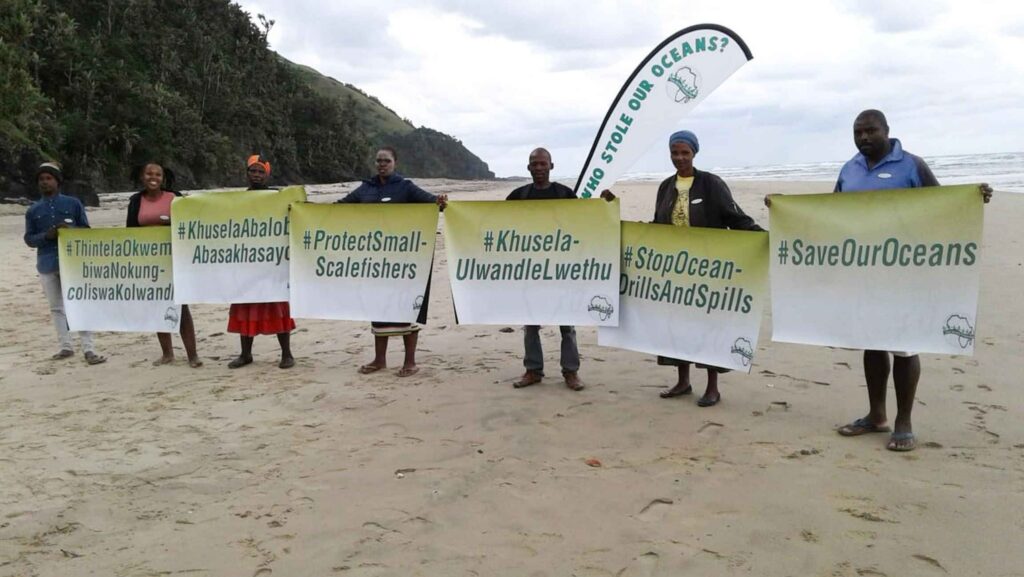
Small-scale fishers along South Africa’s West Coast, particularly in Port Nolloth and Saldanha Bay, face significant challenges in accessing government-owned buildings and essential infrastructure. These obstacles hinder their ability to store, process, and sell their catch effectively. Government is failing to provide access to markets and harbours for small-scale fishers to launch their boats, while lengthy processes and excessive red tape further hinder their ability to operate sustainably.
In Port Nolloth, the Aukotowa Small-Scale Fisheries Cooperative, supporting over 60 households, lacks suitable office space and is forced to conduct administrative tasks from the home of its administrative clerk, despite provisions in the Memorandum of Agreement (MOA) with the Department of Forestry, Fisheries and the Environment (DFFE) and the Department of Public Works and Infrastructure (DPWI) which provide for access to government facilities.
The government undertook refurbishment initiatives to revitalise the Saldanha Bay Harbour. Minister Sihle Zikalala paid a follow up visit in May 2023 to assess progress. An additional R72 million investment deal was announced to repair equipment and improve infrastructure at the harbour, with the aim to enhance access for small-scale fishers and local businesses.
Despite these commitments, small-scale fishers report that the promised improvements are slow to materialise, leaving them without the necessary facilities to support their operations and realise tangible results. The ongoing delays in refurbishing small harbours and providing access to government-owned buildings continue to impede the economic stability of these fishing communities.
Infrastructure development
Addressing the slow movement in much-needed infrastructure requires prompt action from government to fulfil their commitments, to ensure that small-scale fishers have equitable access to infrastructure to sustain their livelihoods. The human rights implications are clear: economic policies that deepen poverty and inequality infringe on citizens’ rights to dignity, access to basic services, and economic participation.
The proposed VAT hike represents an unjust economic policy which shifts the burden of corruption onto the taxpayers and marginalised communities, who suffer the consequences and live in low-income households, endure degrading levels of poverty, inequality and crime.
Instead of resorting to tax increases that further impoverish the population, South Africa must adopt a budget that prioritises: anti-corruption measures – strengthening the National Prosecuting Authority (NPA) and the Special Investigating Unit (SIU); sustainable development – investing in renewable energy and mine rehabilitation projects to create employment and reduce environmental degradation; and economic justice – funding community-led initiatives to build resilient local economies.
Opinion – Khetha Buthelezi (The Green Connection Economics Officer)
BENDING OVER BACKWARDS, DMRE GIVES KARPOWERSHIPS ANOTHER BREAK
30 September 2021 was supposed to be the commercial close – a date set by the Department of Mineral Resources and Energy (DMRE) – for bidders in the Risk Mitigation Independent Power Producers Procurement Programme (RMI4P).
TOSACO EIA MET WITH PUSHBACK FROM CIVIL SOCIETY, TO PROTECT THE OCEAN AND SMALL-SCALE FISHER LIVELIHOODS
This week, The Green Connection submitted its comments critiquing several aspects of the Environmental Impact Assessment (EIA) process, particularly the lack of procedural fairness, as well as the conclusions reached – notwithstanding information gaps and scientific uncertainty – that should form part Tosaco Energy’s request to undertake various activities in Block 1, off the West Coast.
RECENTLY GRADUATED GREEN CONNECTORS, EQUIPPED FOR THE POLLS AND READY TO WEIGH-IN ON COP26
Following their recent graduation from The Green Connection’s Legacy Champions Programme, these newly empowered Green Connectors say they feel equipped with the necessary advocacy skills to make positive changes in their communities, starting with their vote in the local elections (1 November) and weighing in on the discussions around COP26 (which starts on 31 October) – as part of their efforts to oppose oil and gas developments in the country and offshore.
GREEN CONNECTION’S ‘FUNERAL FOR THE CLIMATE’ (AFRICAN ENERGY WEEK) AND COMMENT ON YESTERDAY’S BUDGET SPEECH
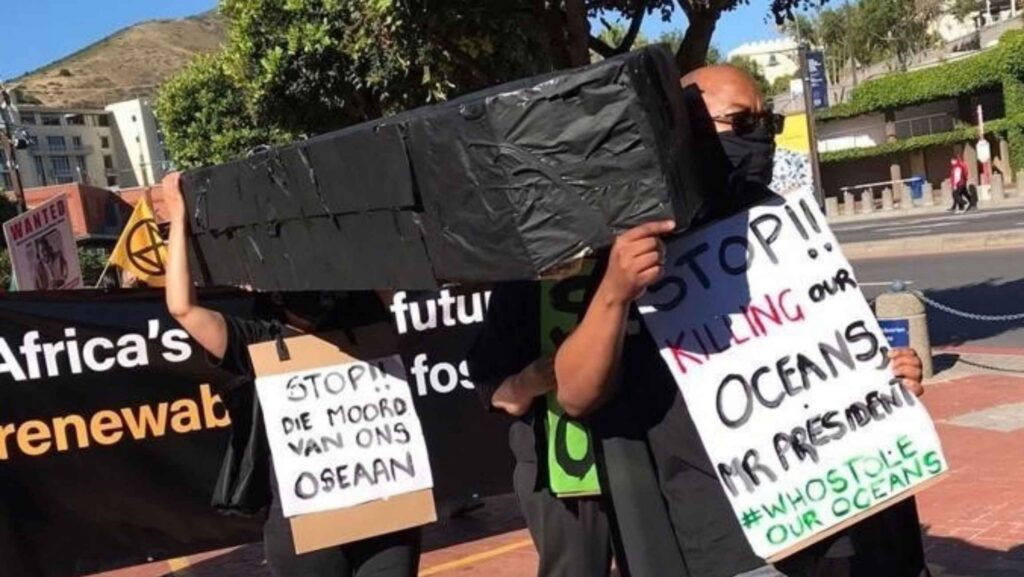
This week (10 November 2021), we joined other environmental defenders in Cape Town to peacefully demonstrate outside the African Energy Week #AEW2021 conference venue demanding an end to fossil fuels and the immediate pivot toward the just transition to a renewable energy future.
CLOSE TO 200 PEOPLE RISE AT CRACK OF DAWN TO PROTEST THE ARRIVAL OF SHELL’S SEISMIC MONSTER, AMAZON WARRIOR
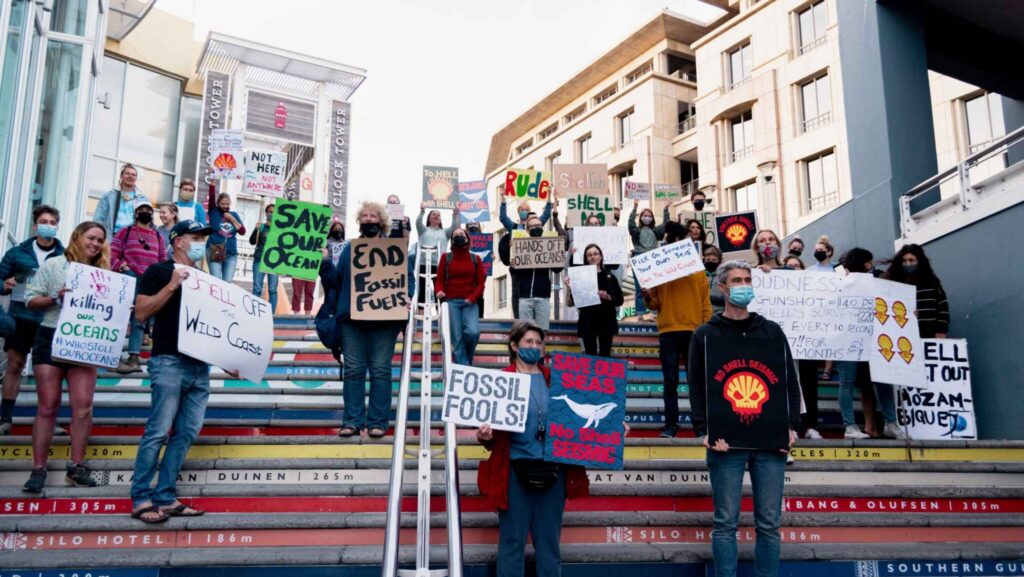
On Sunday morning, (21 November 2021), before the crack of dawn, nearly 200 concerned environmental defenders took to the Waterfront to get a glimpse of Shell’s seismic testing vessel, Amazon Warrior, as it made its way into Cape Town harbour. The vessel travelled down the West coast of Africa, on its way to the Wild Coast, to conduct seismic surveys for an estimated five (5) months.
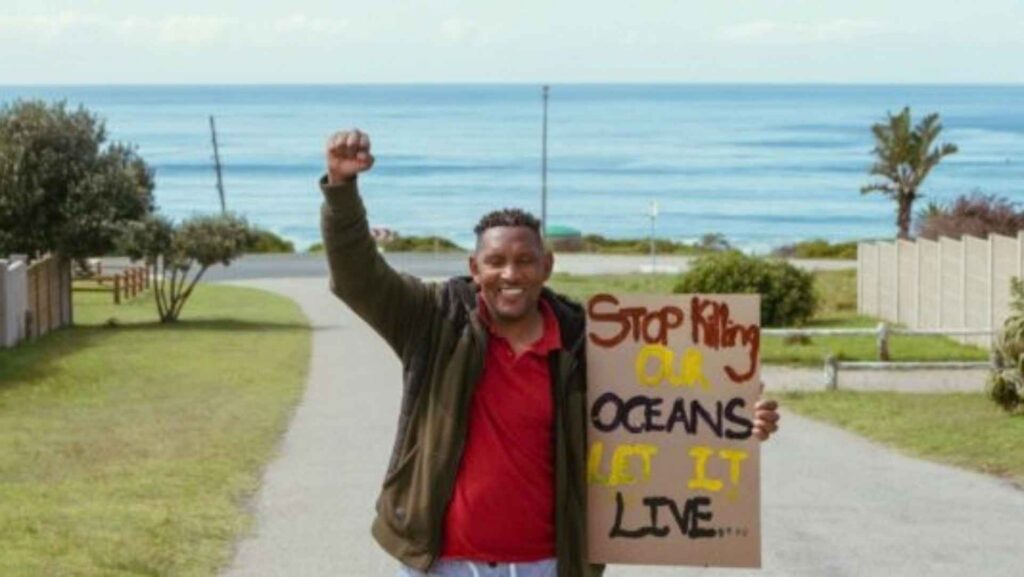
ENVIRONMENTALISTS DOUBLE-UP ON EFFORTS TO OPPOSE UPCOMING AND FURTHER SEISMIC TESTING IN SOUTH AFRICA’S OCEANS
As the groundswell of opposition against Shell’s upcoming 3D seismic survey off the Transkei builds, the Green Connection – an ecojustice NGO that supports small-scale fishers in advocating for their livelihoods – reacted with astonishment to a press statement issued by the Department of Mineral Resources and Energy (DMRE) on 9 December 2021.


