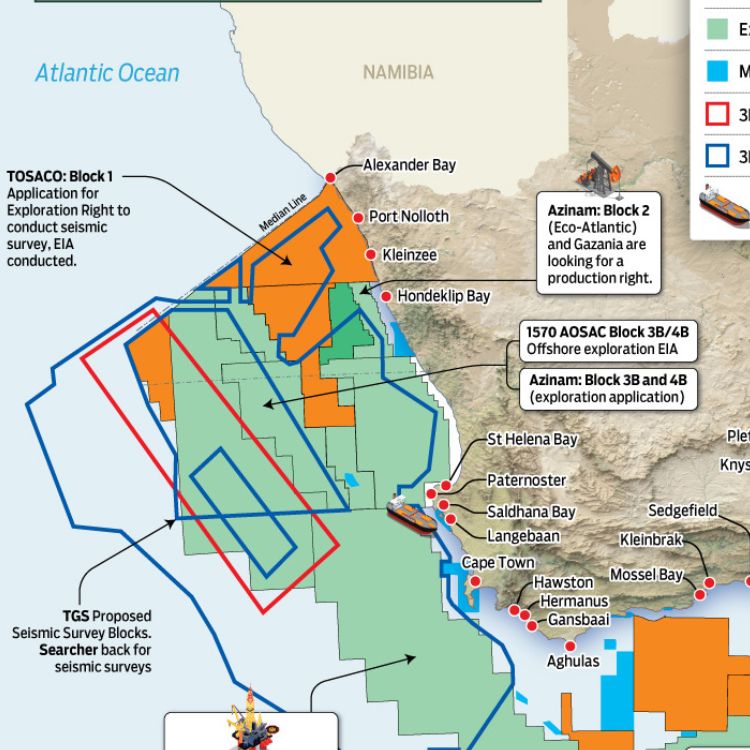
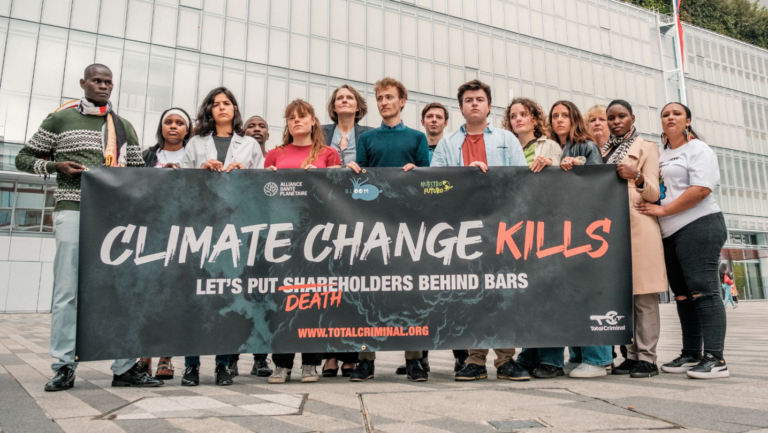
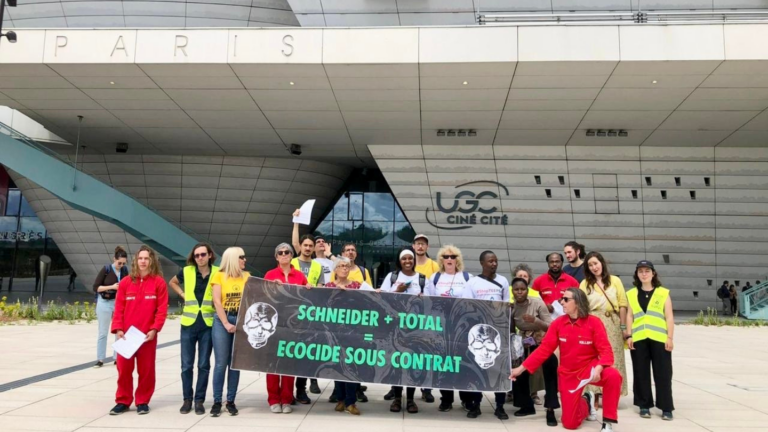
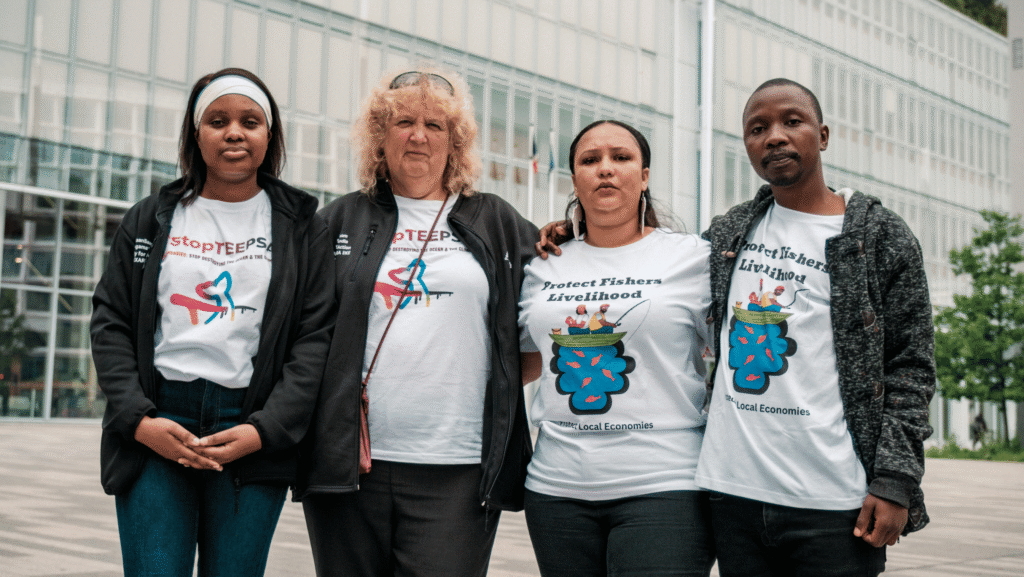
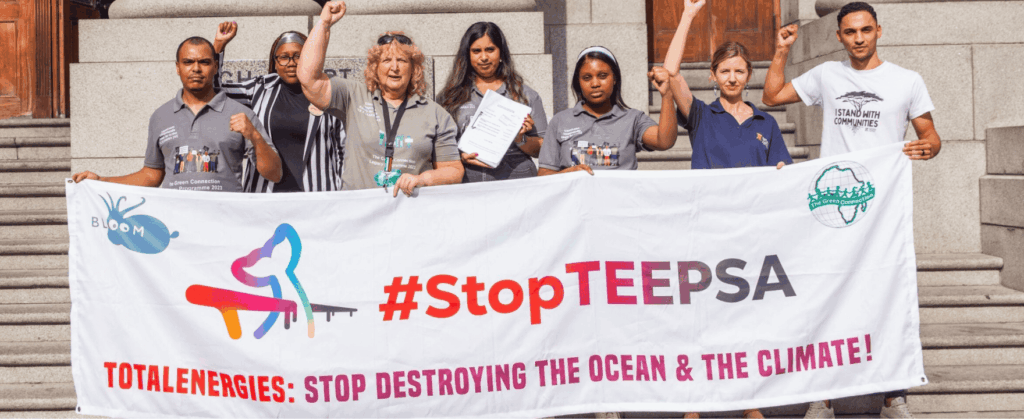
This Women’s Month, small-scale fisherwomen on South Africa’s West Coast, supported by The Green Connection and Natural Justice, are raising their voices against Searcher – an Australian company, now notorious for its contentious attempts to conduct seismic surveys in this region. They are now back for round three, even though a previous court judgment sent them packing. Small-scale fishers argue that its operations could harm the ocean, which would then affect fisher livelihoods and the coastal way of life, and the eco-justice NGOs agree. In their comments on the Environmental Impact Assessment (EIA) Basic Assessment Report (BAR), submitted on 26 July, several alarms are raised, once again, about the potentially devastating impacts of these operations on the marine environment and local inhabitants.
Small-scale fisher from the West Coast, Carmelita Mostert says, “Because we depend on the ocean, our biggest worry is, once these oil and gas companies are done, that we won’t be able to fish anymore. If marine ecosystems are destroyed or damaged, this will take the food off our tables and kill our small businesses. As we see it, there are no positives for the small-scale fishing sector – which employs many women in our communities – only disadvantages.” It is precisely due to the harm that could be caused that The Green Connection and Natural Justice emphasize the need to invoke the precautionary principle, an established environmental law principle that necessitates caution in the absence of scientific certainty on the significance of a proposed project’s harm.
The Green Connection’s Priyanka Naidoo says, “As there is no scientific consensus on the harm posed by seismic surveys and its cumulative impacts have not been studied, the precautionary principle must be invoked. However, despite the judgment in 2022, the Department of Mineral Resources and Energy (DMRE) decided against the precautionary approach and granted Searcher Environmental Authorisation for offshore seismic surveys, later that year. Although Searcher began its seismic survey in January 2024, it was unable to complete it before winter. Searcher now wishes to recommence with this survey in early 2025, however their reconnaissance permit is set to expire on 10 November 2024. This means that Searcher now has to apply for a new environmental authorisation to survey the same area to continue early next year. This public participation process relates to this application for a new environmental authorisation.
Seismic surveys involve transmitting powerful sound waves into the ocean to map the seabed for oil and gas deposits. These sound waves can cause physiological injuries, behavioural changes, and reduced reproductive success in marine life, posing significant risks to marine ecosystems. The eco justice organisations say that they are not convinced that the “mitigation” measures were adequate. And, as a result of Searcher’s lack of transparency, have requested the monitoring reports that provide evidence of this, especially since these reports should have been provided to the public.
According to Mostert, “One of the key reasons for the previous court judgement that halted its operations (in 2022), was Searcher’s lack of consultation with small-scale fishers and its failure to recognise that seismic survey activities would affect our lives and livelihoods. They only told us about the so-called advantages, but nothing about what could go wrong or how our livelihoods will be affected. We grew up with this ocean and we have a right to protect it for our children and theirl children.”
The Green Connection’s Saldanha Bay Koeksister Project Coordinator, Natalie-Jane van Wyk says, “We believe that the cultural and living heritage of those dependent on fisheries and ocean subsistence, particularly indigenous communities, are at risk, should Searcher be allowed to go ahead with the seismic surveys. And we are particularly concerned about whether it is worth risking the rights of women and children, their food security and their right to a healthy environment, on fossil fuels that are no longer needed nor desirable (because of the harm it can cause, to people, the environment and the climate).”
Deborah De Wee from Spirit of Endeavour Fisher Folk Women in Doringbaai says, “We are a fishing community. Ninety percent (90%) of our livelihoods and our entire way of life comes from the ocean. Snoek, mussels, crayfish, and more. These are the foods were live from. That is why I oppose any and all activities that could cause harm to our marine ecosystems, like those associated with offshore oil and gas. If we allow all these things to happen, then in a few years we could be left with a dead ocean. How are we supposed to live and earn a living to put our children through school? From what we can see, these projects threaten our local jobs and means of feeding our community. This is why we fight, to maintain our dignity because this can affect our people very badly.”